

PCE Inflation Holds Firm at 3.8%—Fed Still Confronting Elevated Price Pressures
Sunday, November 29, 2026
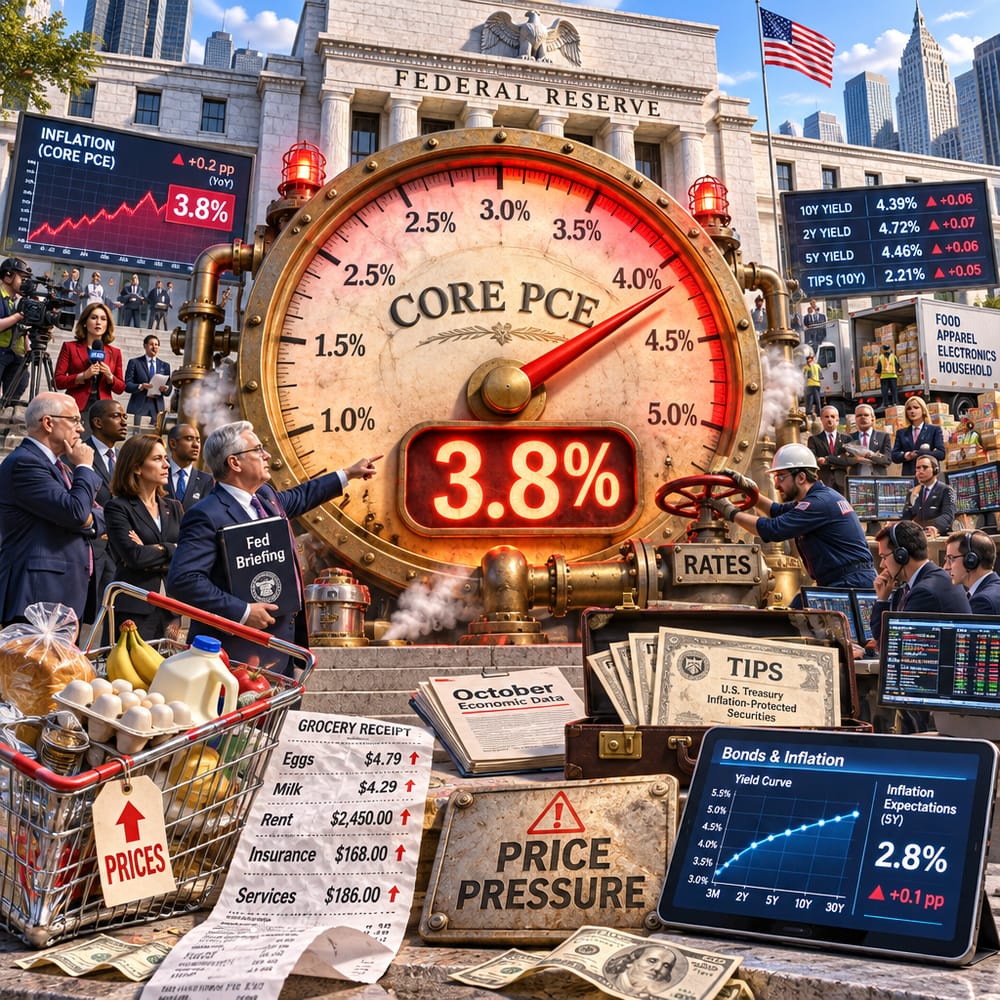
THE FED'S INFLATION TIGHTROPE: WHY YOUR WALLET ISN'T OUT OF THE WOODS YET
Inflation might be a dry topic, but when it sticks around like a bad Tinder date, it's anything but boring. This October, the core Personal Consumption Expenditures (PCE) price index—the Fed's inflation detective—clocked in at a stubborn 3.8% year-over-year. So, what does that mean for you, the everyday retail investor? Let's just say, if you're dreaming of a world where your groceries don't cost a small fortune, you might need to keep dreaming for a while longer.
FIRST, WHAT IS THE CORE PCE?
In the world of economics, where jargon is the native tongue, the core PCE price index is a big deal. It's like the Sherlock Holmes of inflation indicators for the Federal Reserve, stripping out the volatile elements like food and energy to get a clearer picture of long-term trends. It's the Fed's way of gauging just how much heat is in the economy. And at 3.8%, the heat is still on.
WHAT DOES THIS MEAN FOR YOUR WALLET?
When inflation digs its heels in, your cash doesn't stretch as far. Have you noticed your grocery bill creeping up or your favorite coffee becoming a splurge rather than a staple? That's inflation's sneaky work. A steady 3.8% rise might not seem like much, but it chips away at your purchasing power, making every dollar feel a bit lighter.
For consumers, persistent inflation means making tough choices. It might be time to skip that avocado toast or think twice before adding yet another streaming service. People could start prioritizing essentials over luxuries, leading to a shift in spending habits. And let's not forget about those on fixed incomes who feel the squeeze even more.
HOW DOES THIS AFFECT YOUR INVESTMENTS?
Inflation isn't just a consumer issue; it's an investor's challenge too. If inflation stays elevated, the Federal Reserve might decide they need to intervene. Cue the ominous music: that could mean higher interest rates.
Higher interest rates can be a buzzkill for stocks, making borrowing more expensive and potentially slowing down economic growth. But if you're holding onto inflation-linked bonds, you might find yourself in a sweet spot, as these can offer some protection against rising prices. Sectors like consumer goods and essentials—think toothpaste and toilet paper—might become your new best friends in this environment, as demand tends to hold up even when wallets tighten.
THE FED'S NEXT MOVE
With inflation about as stubborn as a toddler refusing broccoli, what will the Fed do next? Their goal is a 2% inflation rate, and they're not there yet. The million-dollar question (or perhaps trillion-dollar) is how aggressive the Fed will get to bring inflation down. More rate hikes? It's a possibility, and that could ripple through everything from mortgage rates to the stock market.
Some economists argue that rate hikes are like trying to steer a boat with a broken rudder—if you're not careful, you might overcorrect and crash the economy. But if they do too little, inflation could keep eroding purchasing power. It's a delicate balance, and the Fed is walking a tightrope without a safety net.
WHAT SHOULD YOU DO?
So, what's an investor to do in these topsy-turvy times? First, keep a diversified portfolio. It’s like a financial smoothie—throwing in a bit of everything lowers your risk. Consider assets that traditionally perform well during inflationary periods, like commodities or certain real estate investments.
And hey, maybe it's time to brush up on your financial knowledge. Understanding these economic indicators can give you a leg up, much like knowing the secret menu at a coffee shop.
In the face of persistent inflation, patience is key. It might feel like you're treading water now, but keeping a steady strategy can help keep you afloat. As the Fed grapples with their inflation conundrum, keep your eyes on the market and your options open. You might not be able to control inflation, but with some savvy moves, you can control how you react to it. In the game of inflation, being informed is your best weapon.
This article is for informational purposes only and is not investment advice. Always do your own research or consult a licensed financial professional before making investment decisions.
© Copyright 2024. All Rights Reserved.
© Copyright 2024. All Rights Reserved.