

PCE Inflation Held Steady at a High 3.7% in July
Friday, August 28, 2026
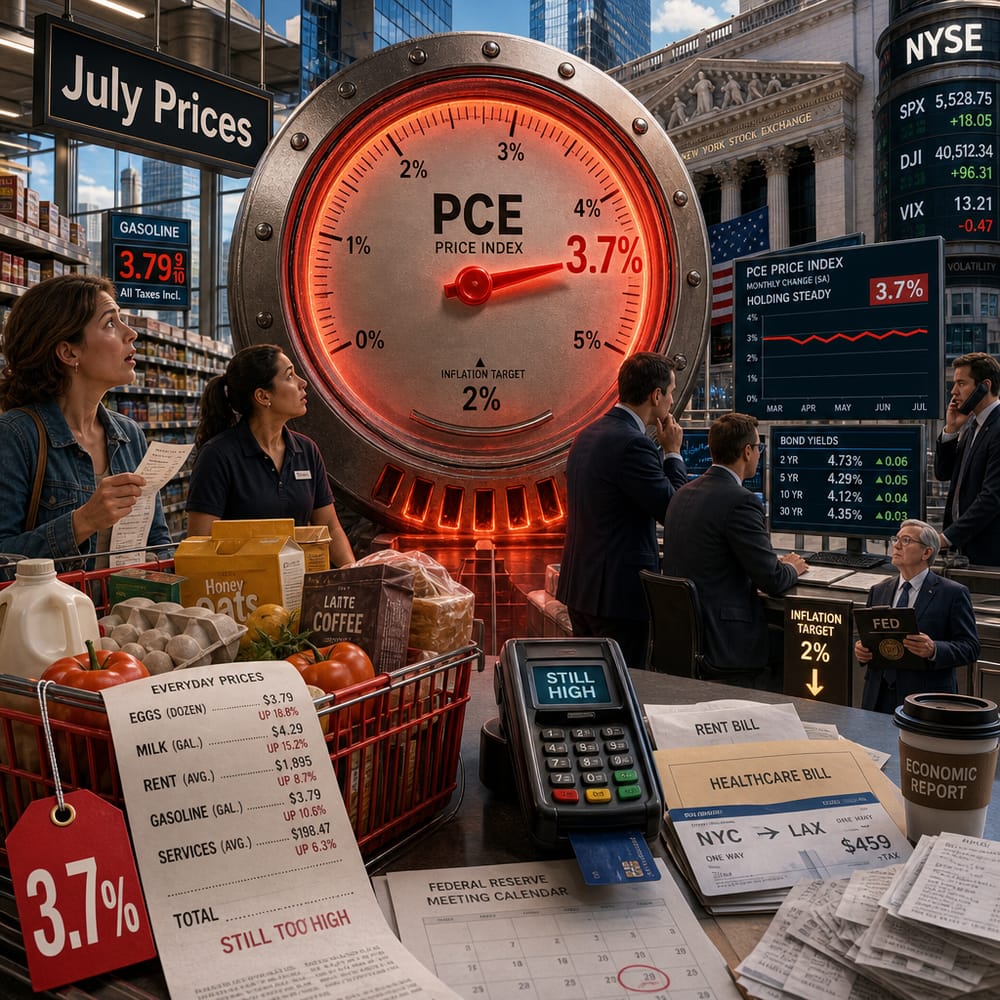
PCE Inflation Tops the Charts at 3.7%: Why the Fed May Be Sweating Bullets
Inflation is like that uninvited guest who just won't leave the party. It’s been lingering around, stealing the spotlight, and making everyone a bit uncomfortable. As of July, the Personal Consumption Expenditures (PCE) inflation rate decided to plant its flag firmly at 3.7% year-over-year, a number that's been giving the Federal Reserve sleepless nights. But why does this number matter to you, dear retail investor? Let’s break it down.
First, here’s the deal with PCE inflation: it measures the average changes in prices for goods and services that people are buying. Think of it as the Fed's favorite gauge for inflation’s temperature—its Fitbit, if you will—designed to help them keep track of how fast, or slow, prices are moving and whether they’re staying fit or eating too many donuts. The Fed aims to keep this rate at a nice, comfy 2%. But at 3.7%, it's more than just a mild fever—it's a potential migraine.
WHY IT MATTERS
This isn't just bad news for the Fed; it’s something that could affect your wallet and portfolio. Persistent inflation isn’t just about rising grocery bills or pricy lattes. It can have broader economic repercussions, like pressuring the Fed to hike interest rates further. Higher interest rates can slow down an economy by making it more expensive to borrow money—think housing mortgages, car loans, or business investments. It's like raising the hurdle for economic growth and saying, “Jump higher, I dare you!”
THE FED'S DILEMMA
Kevin Warsh, our Federal Reserve Chairman-in-Chief, is set to give his much-anticipated talk at Jackson Hole. But in the halls of monetary power, the big question echoes: what will he do with this stubborn inflation rate? Increase interest rates even more and risk stalling the economy, or hold steady and roll the dice on inflation cooling off on its own? It’s a classic game of monetary chicken, and Warsh is in the driver’s seat.
The stakes are high. Raising rates too aggressively might curb inflation, but it could also slam the brakes on economic growth. On the flip side, doing too little could let inflation run amok, harming everything from consumer confidence to savings accounts. It’s a tightrope act, and the safety net might just be a bunch of spreadsheets and some collective finger-crossing.
WHAT'S AT RISK?
Still wondering how this all plays into the market magic? Imagine if your favorite tech stock suddenly found itself caught in the crossfire of an interest rate hike. Stocks, especially the high-flying tech ones, are like delicate soufflés—too much heat (in the form of higher rates) and they deflate. Investors tend to steer away from riskier assets during times of economic uncertainty, opting instead to stash their cash under the metaphorical mattress of safer investments like bonds or—dare we say—gold, which is currently sitting pretty at $4,608 per ounce as a safe haven.
And, it’s not just stocks that feel the burn. Companies, especially those reliant on borrowing, may face higher costs, affecting everything from expansion plans to hiring. In a domino effect, this can trickle down to consumers, impacting jobs, wages, and ultimately, consumer spending—the backbone of the economy.
TIME TO PANIC?
Before you start eyeing your portfolio with existential dread, let’s put things into perspective. While inflation remains elevated, the Fed isn’t exactly piloting a ship lost at sea. They have tools and strategies, and if we’ve learned anything from past rollercoasters, it’s that these economic tides are cyclical. Markets have their ups and downs, but they also have an uncanny tendency to find an equilibrium.
For retail investors, this isn’t a signal to flee to the hills but a reminder to stay informed, diversified, and flexible with your investments. Diversifying across different sectors, considering inflation-proof investments, and keeping an eye on the Fed’s next moves can equip you to weather the storm.
So, as we wait for Warsh’s big reveal at Jackson Hole, keep your ears perked and your strategy nimble. Because in the ever-entertaining saga of inflation and interest rates, the only constant is change. And maybe, just maybe, a little drama too.
This article is for informational purposes only and is not investment advice. Always do your own research or consult a licensed financial professional before making investment decisions.
© Copyright 2024. All Rights Reserved.
© Copyright 2024. All Rights Reserved.