

PCE Inflation Cools Bonds: Treasury Yields Slide Ahead of December Fed Decision
Wednesday, November 25, 2026
PCE Inflation Cools Bonds: Treasury Yields Slide Ahead of December Fed Decision
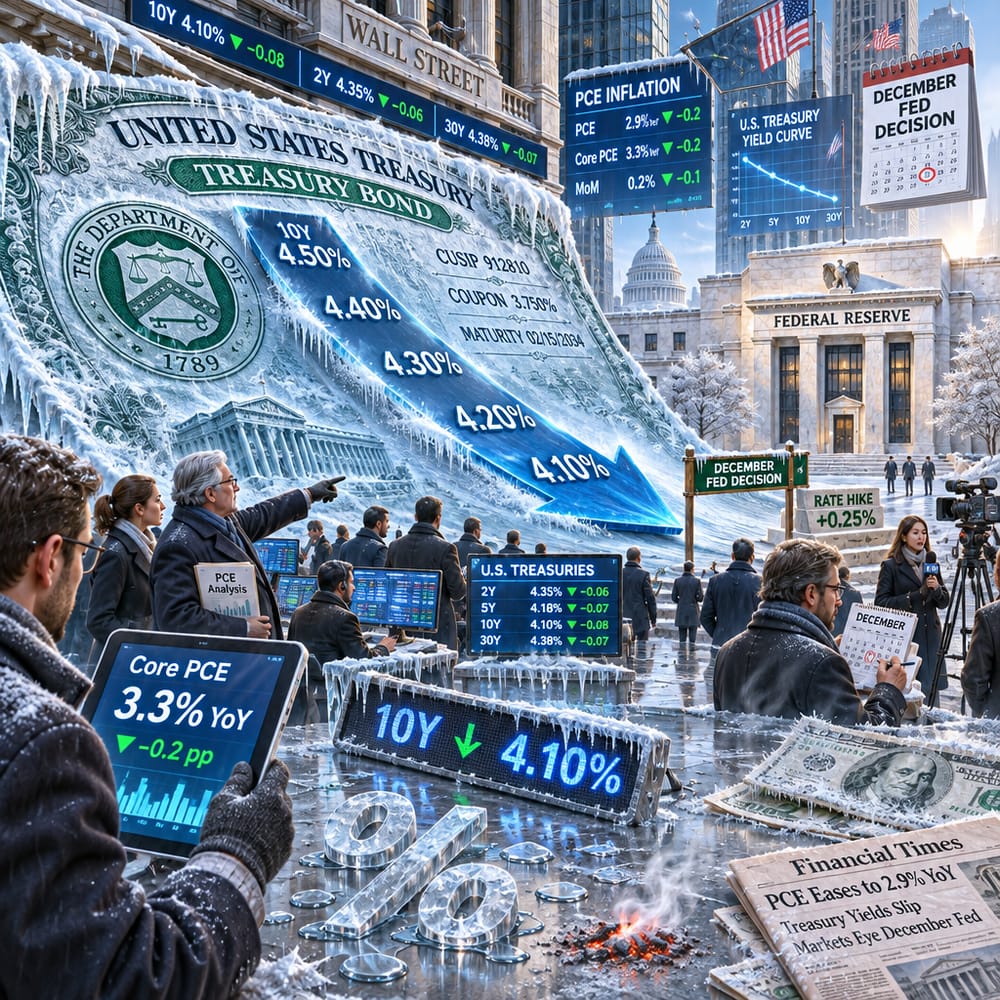
If investing were a cooking show, Treasury yields just served up a surprise dish that’s leaving everyone scratching their heads. Imagine expecting spicy salsa and getting mild guacamole instead—October’s Personal Consumption Expenditures (PCE) inflation data just did that to the bond market. The core PCE index rose 3.3% year-over-year, hotter than your Thanksgiving leftovers. Yet, instead of yields soaring, they slipped and slid like they're on a Disney on Ice tour. What gives?
THE UNEXPECTED BOND MARKET TWIST
The bond market is supposed to act like an emotionless robot. Inflation goes up, bond yields go up—simple, right? But not this time. Investors decided to throw a plot twist by snapping up bonds, sending yields lower. The 10-year Treasury yield—the bellwether for everything from mortgages to auto loans—took a dip, leaving market watchers in a state of surprise.
So why did the bond market take a chill pill despite inflation heated enough to fry an egg? The short answer: investors sense that the Federal Reserve might not go full “Hulk smash” on rate hikes in December. They’re betting that the Fed’s stance will be more gentle nudge than aggressive shove.
FED’S DECEMBER GAME PLAN: FEATHER TOUCH OR IRON FIST?
Here’s where things get spicy. The Fed’s game plan for its December meeting is the $64,000 question. The central bank has been walking a tightrope, balancing the need to cool inflation without sending the economy into a tailspin. But this latest inflation data has investors thinking the Fed will opt for a more measured approach.
Why? Because the market sees these numbers as manageable. Inflation has been the Fed’s nemesis, yet the consensus is shifting. Investors believe the Fed might raise rates just a smidge, allowing the economy to keep humming without derailing growth. Picture a chef adding a pinch of salt rather than upending the salt shaker.
INVESTOR STRATEGIES: TIME TO JUMP ON THE BOND BANDWAGON?
With the bond market in a tizzy, what's an investor to do? Bonds, traditionally the boring old uncle at the investment family dinner, are suddenly the life of the party. Falling yields usually mean rising bond prices. So, investors are rushing to grab bonds like they’re Black Friday deals.
For those new to the game or considering a strategy shift, it’s crucial to understand the seesaw relationship: when bond prices go up, yields go down and vice versa. With predictions of a more dovish Fed, bonds might see more investor love in the short term. However, it's vital to keep an eye on the Fed's next moves and broader economic indicators. As always, making investment decisions based on a single data point without considering the full economic picture is like diving into shallow water—dangerous.
WHAT THIS MEANS FOR YOUR WALLET
Let’s break this down for your bottom line. Lower Treasury yields can filter through the economy, impacting the interest rates on loans, mortgages, and even credit cards. So, if you’re in the market for a home loan or looking to refinance, now might be a good time to lock in those rates before any more Fed shenanigans.
On the flipside, if you’re saving with bonds, the lower yields mean you might not see the returns you were hoping for if inflation keeps chugging along. It’s a mixed bag, really.
LOOKING AHEAD: DECEMBER AND BEYOND
As the world gears up for the end-of-year festivities, all eyes are on the Fed’s December meet-up. Will they drop a lump of coal or a gift-wrapped interest rate decision? It’s impossible to say for sure, but one thing is clear: the market is playing its cards close to its chest, betting that the Fed won’t rock the boat too hard.
For the everyday investor scrolling through their feed, this is a reminder that markets are fickle and sometimes inexplicable. Just when you think you’ve got it figured out, the bond market throws you a curveball. So, stay informed, keep your strategy flexible, and remember—financial markets, like holiday dinners, are full of surprises.
This article is for informational purposes only and is not investment advice. Always do your own research or consult a licensed financial professional before making investment decisions.
© Copyright 2024. All Rights Reserved.
© Copyright 2024. All Rights Reserved.