

Payrolls Fall by 23,000 in July, Unemployment Rate Drops to 4.1%
Friday, August 21, 2026
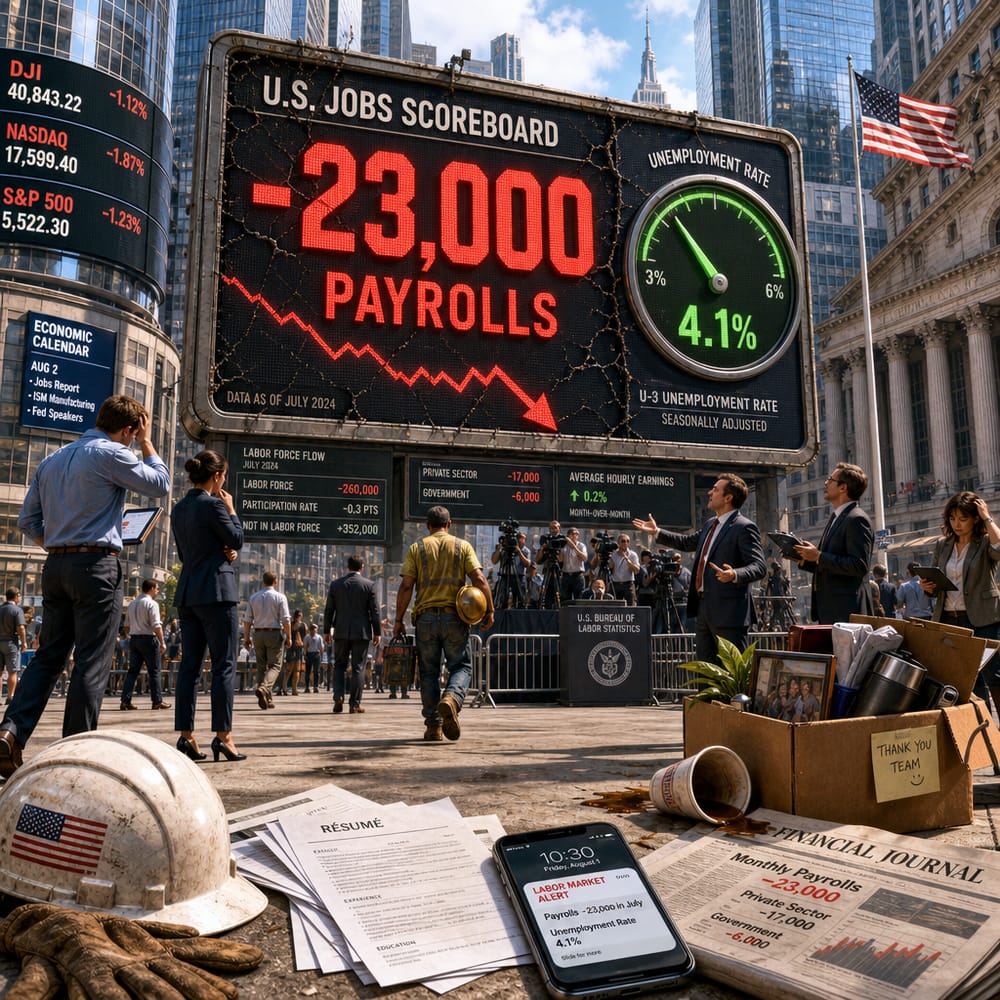
DON'T LET THE DROP FOOL YOU
If it looks like a duck and quacks like a duck, it might just be the U.S. labor market in July — seeming healthy on the outside but harboring some sneaky undercurrents. You see, while the headline unemployment rate dropped to a seemingly feel-good 4.1%, payrolls surprised everyone by declining by 23,000 jobs. So what's really going on here? Let’s dive into the murky waters of these numbers.
THE SMOKE AND MIRRORS OF UNEMPLOYMENT
First things first, that drop in the unemployment rate isn't the hero of this story. It's more of a mirage. The reason it fell wasn't because everyone suddenly started landing dream jobs. Nope, a significant drop in labor force participation was the real puppet master here. This means fewer people are actively looking for work, either because they've retired, thrown in the towel due to job market frustration, or are perhaps reinventing themselves as the next big TikTok sensation. When fewer folks are counted as job-seekers, the unemployment rate can fall even if actual employment doesn't really improve. Sneaky, right?
SECTOR BLUES
Now, let’s talk shop. Specifically, which sectors are losing and bruising? Manufacturing, once the darling of the industrial heartland, took quite a few on the chin. Automation keeps rolling in like a steamroller, and international competition is still a mean beast. Retail, too, with its ongoing dance with e-commerce, saw employment numbers dip. Think about it: brick-and-mortar stores are feeling about as relevant as fashion advice from the early 2000s.
LONG-TERM WHIPLASH?
But wait, there's more — and it’s not exactly good news. A decline in labor force participation could spell trouble down the road. If people stop looking for work long enough, it can lead to skill erosion. Imagine a prized vintage car left in the garage, slowly gathering dust and rust. Eventually, getting it road-ready takes serious work. Similarly, a workforce that’s out of practice might struggle to meet the demands of future job markets, where tech-savviness and adaptability reign supreme. In short, the labor market’s engine might sputter when it needs to roar.
BEYOND THE HEADLINES
With such numbers, how should Main Street be feeling? Well, a little cautious optimism and a good deal of realism wouldn’t go amiss. The payroll drop might be a head-scratcher for now, but it's not panic time. Think of it more as a nudge to keep an eye on economic indicators beyond just the unemployment rate. This isn't just numbers on a spreadsheet: it's a reminder that the economy is a complex beast with moods and whims.
LOOKING AHEAD
So, what's next for the U.S. labor market? The crystal ball’s a bit cloudy, but a few things are clear. As sectors like tech continue to evolve, there's hope that new opportunities will arise. After all, when one door closes, a window to the metaverse might just open.
For now, retail investors and everyday folks are wise to watch how these employment trends unfold, because where jobs go, consumer spending (and market dynamics) often follow. Keep your wits sharp, your savings plan sharper, and don’t forget to check in on your friendly neighborhood economic indicators every now and then. Who knows what tricks the labor market will pull out of its hat next?
This article is for informational purposes only and is not investment advice. Always do your own research or consult a licensed financial professional before making investment decisions.
© Copyright 2024. All Rights Reserved.
© Copyright 2024. All Rights Reserved.