

PayPal Surges 16% on Acquisition Buzz
Sunday, August 02, 2026
PAYPAL SURGES 16% ON ACQUISITION BUZZ
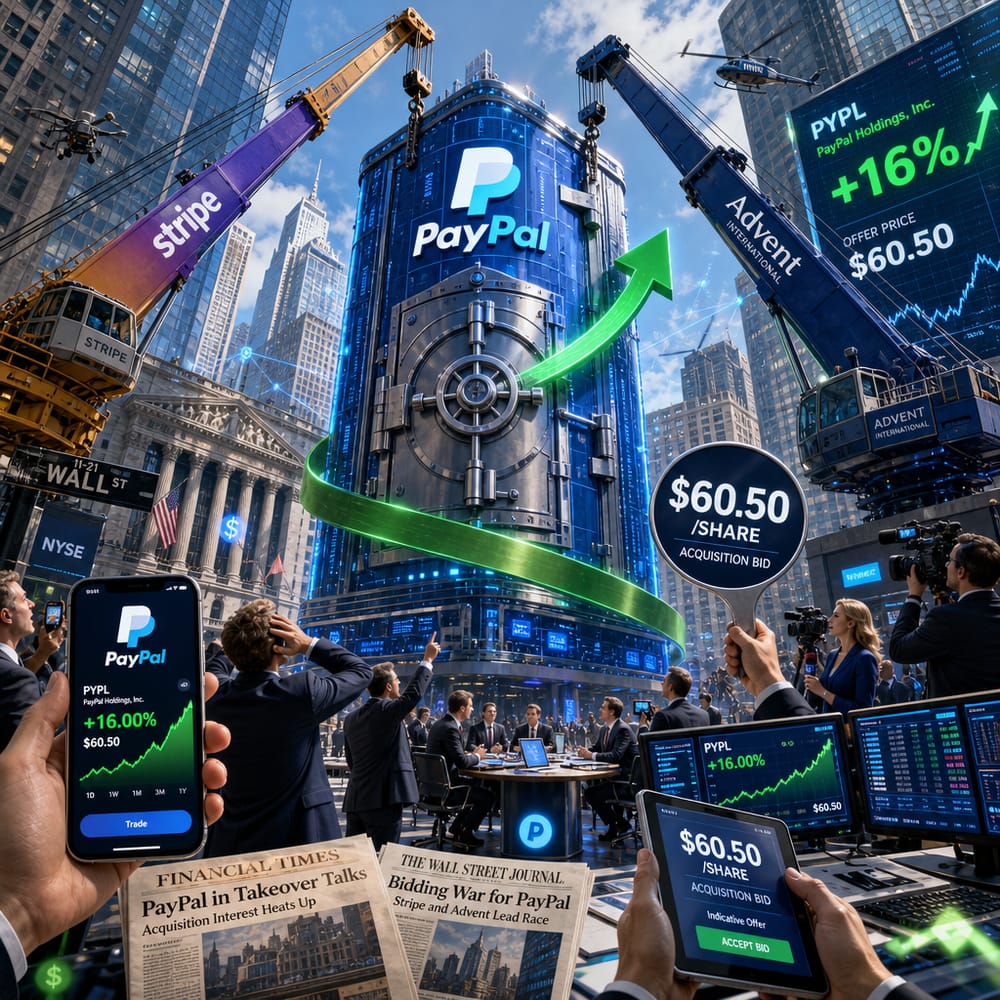
Let's face it: PayPal's stock just got a shot of adrenaline, and it's not slowing down anytime soon. After news broke that fintech heavyweights Stripe and Advent International are eyeing PayPal like it's the next tech unicorn, the company's shares leaped around 16% faster than you can say "cha-ching." The offer? A cool $60.50 per share, marking a roughly 28% premium over PayPal's last close. While investors are buzzing, you might be wondering: what does this all mean for PayPal's future? Buckle up, because this potential acquisition could shift the fintech landscape as we know it.
THE OFFER ON THE TABLE
First, let's unpack the juicy details. Stripe and Advent International have reportedly put their cards on the table, offering to scoop up PayPal at $60.50 per share. This isn't just a friendly neighborhood buyout; it's a premium deal that suggests these players see more gold in PayPal than the market currently values. It's like bidding on an art piece at Sotheby's—clearly, they believe there's untapped potential under the surface.
IMPACT ON PAYPAL'S STRATEGIC DIRECTION
Now, why are these suitors so interested? For starters, acquiring PayPal could be a game-changer for Stripe and Advent. Imagine the fintech trifecta they'd form, potentially taking the lead in digital payments. This move could bolster their market share, sprinkle some fairy dust on their tech capabilities, and boost their global presence. For PayPal, it could mean a strategic pivot—an opportunity to leverage new resources, innovate quicker, and maybe even shake off any cobwebs of stagnation.
But let's not get ahead of ourselves. Integrating giant companies is no walk in the park; just ask anyone who's tried to assemble IKEA furniture without instructions. There are cultural differences to navigate, tech systems to merge, and, of course, the relentless scrutiny of regulators who won't hesitate to pop anyone's bubble if they smell a whiff of monopoly.
POTENTIAL BENEFITS AND RISKS FOR INVESTORS
The potential benefits for investors are as tempting as a Black Friday deal. A successful acquisition could mean a stronger, more competitive PayPal. More resources can lead to innovation in areas like cryptocurrency, global payments, and even AI-driven financial products. Investors might find themselves holding a golden ticket to a bigger slice of the fintech pie.
However, no investment comes without its hiccups. The risks? Well, the market's as predictable as a cat in a room full of laser pointers. There's always the chance that negotiations could fizzle out, leaving shareholders with dashed hopes and unchanged stock prices. Then there's the possibility of regulatory roadblocks. If Uncle Sam decides this merger is too much of a powerhouse, all bets could be off.
WHERE DOES THE FINTECH INDUSTRY GO FROM HERE?
This potential merger could signal a new era for the fintech industry. It's a call to arms for other contenders to innovate or get left behind. Companies may ramp up their acquisition strategies, focus more on seamless tech integration, and aim for global expansion. We're talking a fintech arms race where the spoils go to those who evolve fastest.
But let's not forget the consumer in all this. With more robust fintech offerings, users could reap the benefits of smoother transactions, better rates, and heightened security. Less friction means more adoption, and that could see the everyday consumer finally bidding adieu to their dusty old wallets.
In the end, the PayPal acquisition talk is like a blockbuster sequel in the fintech saga—full of suspense, potential plot twists, and a cast of big-time players. Whether the deal goes through or hits a roadblock, retail investors should keep their eyes peeled, as the outcome could reshape the landscape in more ways than one. So, grab your popcorn and stay tuned; this story is just beginning to unfold.
This article is for informational purposes only and is not investment advice. Always do your own research or consult a licensed financial professional before making investment decisions.
© Copyright 2024. All Rights Reserved.
© Copyright 2024. All Rights Reserved.