

PayPal Shares Plummet After Consortium Pulls Out of Takeover Talks
Friday, August 28, 2026
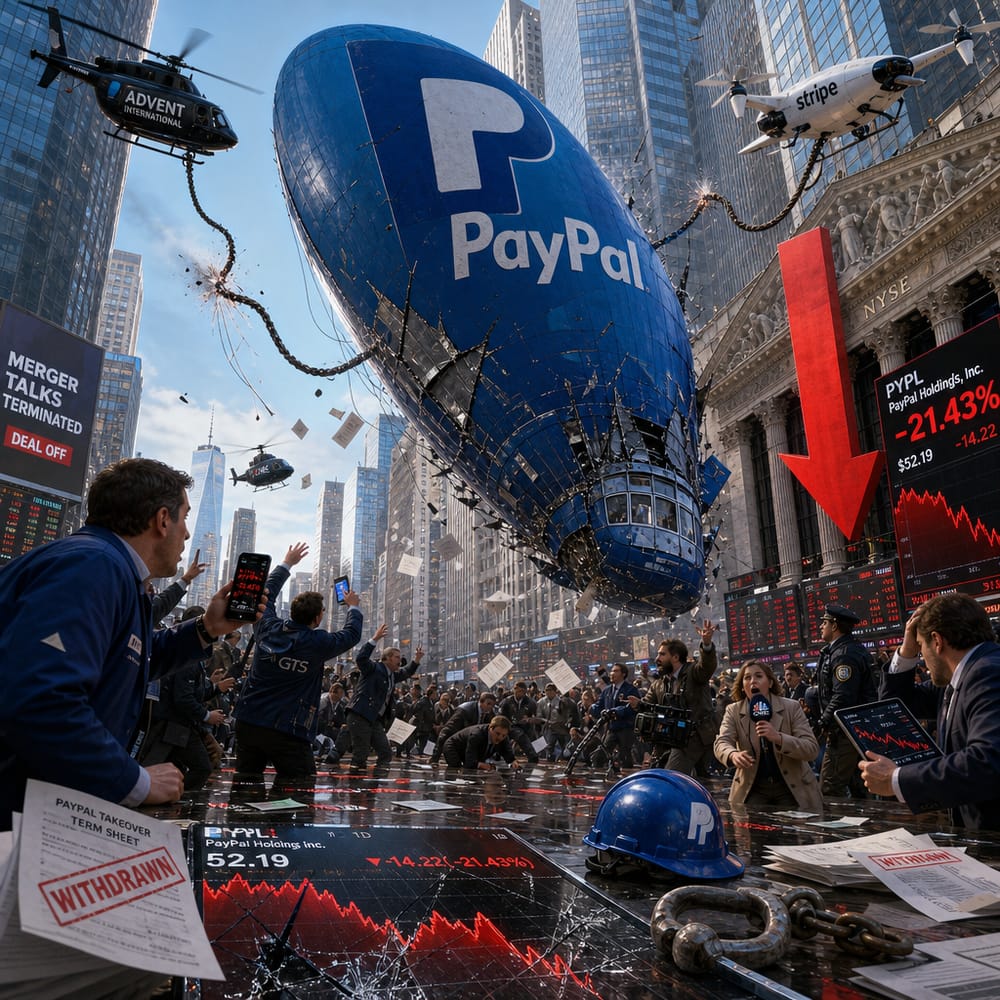
PAYPAL WOES AS CONSORTIUM SAYS "NO DEAL": WHAT'S NEXT FOR THE FINTECH GIANT?
It was going to be the fintech merger of the century. Or at least, that's what everyone thought until the consortium, led by Advent and Stripe, gave PayPal the cold shoulder and walked away from acquisition talks. PayPal's stock didn't just slip; it straight-up tripped and fell when this news hit the press. But what happened, and more importantly, where does this leave PayPal now?
WHO CALLED IT OFF AND WHY?
Behind closed doors, the Advent-Stripe consortium was supposedly gearing up to take PayPal on a wild ride towards new heights. But suddenly, they slammed on the brakes and bailed out of the deal faster than you can say "transaction fee." Why? Well, rumors are swirling faster than a bad Tinder breakup, but the consensus seems to be a mix of economic concerns, valuation disputes, and perhaps the awkward little matter of market volatility. It seems the consortium had second thoughts, wondering if PayPal's current price tag was more "steep" than "sweet deal."
It's also worth noting that while fintech is supposed to be the cool kid on the block, it's not immune to the not-so-glamorous realities of inflation and interest rates. The Federal Reserve's current stance on interest rates isn't exactly putting anyone in a risk-taking mood, and the uncertainty may have added a dash of cold water to the hot acquisition talks.
IMPACT ON PAYPAL'S MARKET VALUATION
The market's reaction was as predictable as a Monday morning coffee spill: PayPal's stock sank. When investors heard the acquisition was off, they were about as thrilled as you are when your favorite café runs out of coffee.
This nosedive in stock value wasn't just a knee-jerk reaction; it reflects deeper concerns about PayPal's future. Without the boost of a shiny acquisition, investors are left to ponder whether PayPal can keep its strut in the street of fintech giants or if it's going to be waving goodbye to its high valuation.
THE FUTURE: PAYPAL'S NEXT MOVE
So, what's a fintech giant to do when a big deal falls through? PayPal's at a crossroads, and if it wants to keep investors interested, it's going to need a strategic makeover. Here's what we might see:
1. Back to Basics: PayPal could double down on its existing business model. Think of it as hitting "refresh" on a webpage that's just not loading. By focusing on enhancing user experience and expanding its merchant services, PayPal can strengthen its core and remind everyone why it was such a big deal in the first place.
2. Innovation Station: Alternatively, PayPal could roll out a new line of products or services. Whether it's diving deeper into the world of crypto, integrating AI to make transactions smoother than ever, or tapping into the latest tech trends, being seen as an innovator could boost investor confidence.
3. Partner Up: If solo success seems evasive, PayPal might seek partnerships or smaller acquisitions to beef up its offerings. This could mean collaborating with emerging tech companies to enhance its digital wallet features or branching into new areas of e-commerce.
4. Global Expansion: Finally, PayPal might set its sights internationally. There's a whole world of unbanked and underbanked individuals who could benefit from PayPal's services, potentially opening up vast new markets for growth.
In a world where fintech is constantly evolving, PayPal can't afford to sit still. The consortium might have left the table, but there's still plenty of room for PayPal to make a strategic comeback. Investors are watching, and every move counts.
CONCLUSION
The aborted takeover might sting, but it's not necessarily game over for PayPal. The fintech world is full of twists, turns, and surprise turnarounds. What's certain is that PayPal will need to flex its strategic muscles and perhaps even reinvent itself to maintain its market position and investor appeal. So, while the consortium might have walked away, don't count PayPal out just yet—this is one narrative that’s far from over.
This article is for informational purposes only and is not investment advice. Always do your own research or consult a licensed financial professional before making investment decisions.
© Copyright 2024. All Rights Reserved.
© Copyright 2024. All Rights Reserved.