

PayPal M&A Breakdown Sparks 13% Drop as Buyout Talks Collapse
Sunday, August 30, 2026
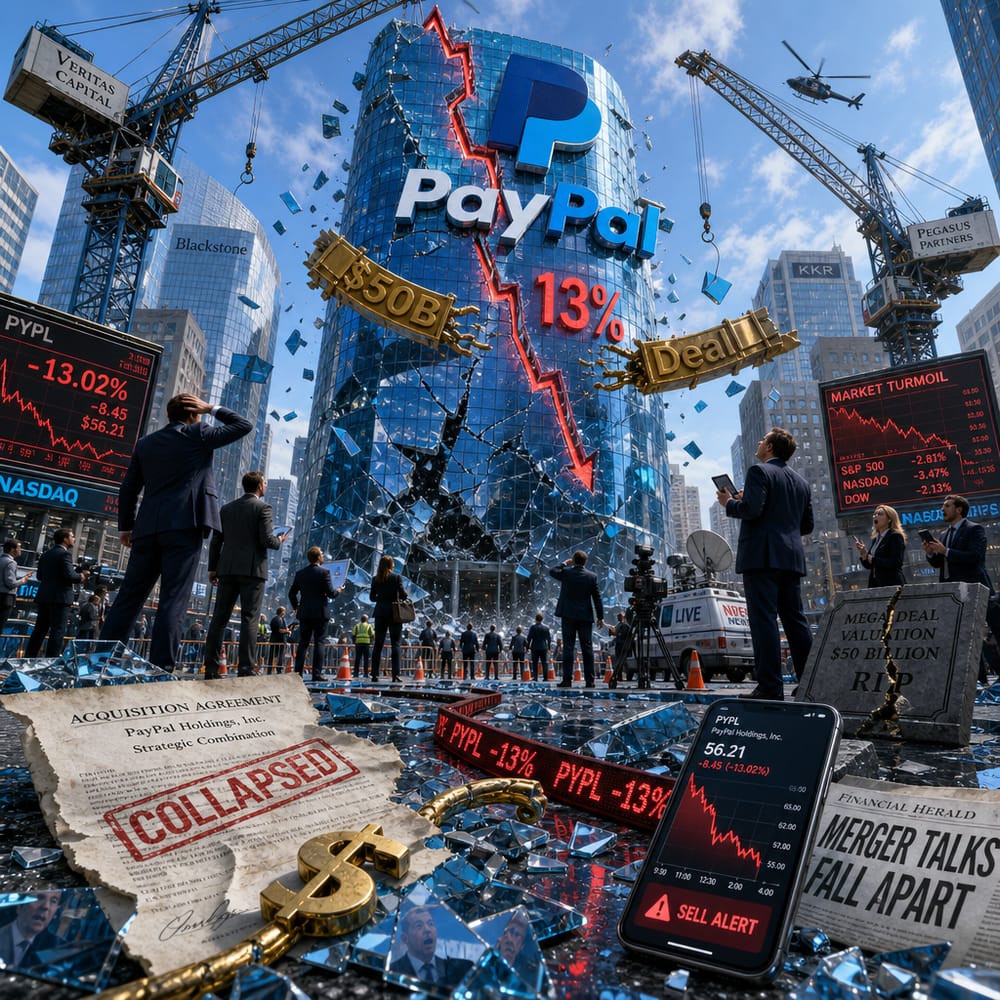
PAYPAL M&A BREAKDOWN SPARKS 13% DROP AS BUYOUT TALKS COLLAPSE
Break out the popcorn, folks, because the PayPal drama just went full soap opera. Investors woke up to a harsh dose of reality as PayPal's plans for a $50 billion blissful union with Advent and Stripe hit the rocks, sending its stock diving a painful 13%. It's the financial equivalent of your favorite couple's engagement breaking up on reality TV—only with more zeros involved.
What happened? Let's rewind. PayPal, the darling of digital payments, was courting some serious big-league partners: private equity powerhouse Advent and fintech sensation Stripe. Together, they had all the makings of a fintech fairy tale. But, as it turns out, happily ever after isn't in the cards—at least not this time. Rumor has it, the deal crumbled under the weight of disagreements on valuation. So, no “I do's” on this $50 billion deal.
The collapse of such a massive deal sent shockwaves through the market and has left many wondering what's next for PayPal. With its stock looking like it took a wrong turn on a rollercoaster, the company is now surveying its options. Is PayPal left fishing for compliments in the fintech sea, or is there a strategic pivot in its future?
This is more than just a juicy headline; it's a window into the turbulence rocking the fintech sector. Investor confidence took a hit reminiscent of a rogue wave at sea—swift and unsettling. With the promise of consolidation vanished, investors are left questioning PayPal's next moves in a game where digital payment is king, and innovation is the ace up one's sleeve.
Let's face it: PayPal isn't just any player on the block. It's the granddaddy of online payments, making it a staple in the wallets of millions around the world. But as the fintech landscape shifts faster than a New York minute, it's facing fierce competition, not just from the likes of Stripe, but from newcomers equipped with cutting-edge technology and fresh ideas. The buyout would have been a power move, potentially fortifying PayPal’s defenses against the mounting competitive pressures. Now, with the deal off the table, PayPal's next steps could very well redefine its future.
In the broad sweep of the fintech opera, the collapse of PayPal's acquisition rings an ominous bell for the sector. The era of easy money and endless acquisitions may be facing a reality check, as economic uncertainties and rising interest rates force everyone to tighten their belts. Companies now need to prove their worth with not just grand visions, but hard numbers. Investors are looking for substance over sizzle, and fintech firms must adapt or risk becoming footnotes in business history.
For PayPal, which has ruled the digital payment world for decades, the task is clear but challenging. The company needs to innovate aggressively—think out-of-the-box, tech-savvy solutions that make it indispensable in the global financial system. This means potentially doubling down on its core competencies while exploring untapped markets and services. It's not just about staying relevant; it's about setting the pace in an industry known for rapid-fire change.
While the drama over mergers and acquisitions might grab the spotlight today, seasoned investors know that it's only part of the story. The real question is how PayPal navigates this pivotal moment. With its growth trajectory facing scrutiny, PayPal's ability to adapt and innovate will be crucial.
In the meantime, anyone holding onto PayPal stock might want to buckle up for a wild ride. As the company regroups, there could be opportunities for those brave enough to buy on the dip, assuming they believe in PayPal’s ability to regain its footing.
Ultimately, the failed buyout is a reminder that even in the fast-moving world of fintech, patience and strategic thinking can't be overvalued. Investors and companies alike will need to play their cards wisely as they steer through turbulent waters. For PayPal, the race is on to chart a new course—one that ensures it remains a titan of the digital payments industry for years to come.
This article is for informational purposes only and is not investment advice. Always do your own research or consult a licensed financial professional before making investment decisions.
© Copyright 2024. All Rights Reserved.
© Copyright 2024. All Rights Reserved.