

Owens Corning Downgrade: A Sector-Wide Signal?
Thursday, October 08, 2026
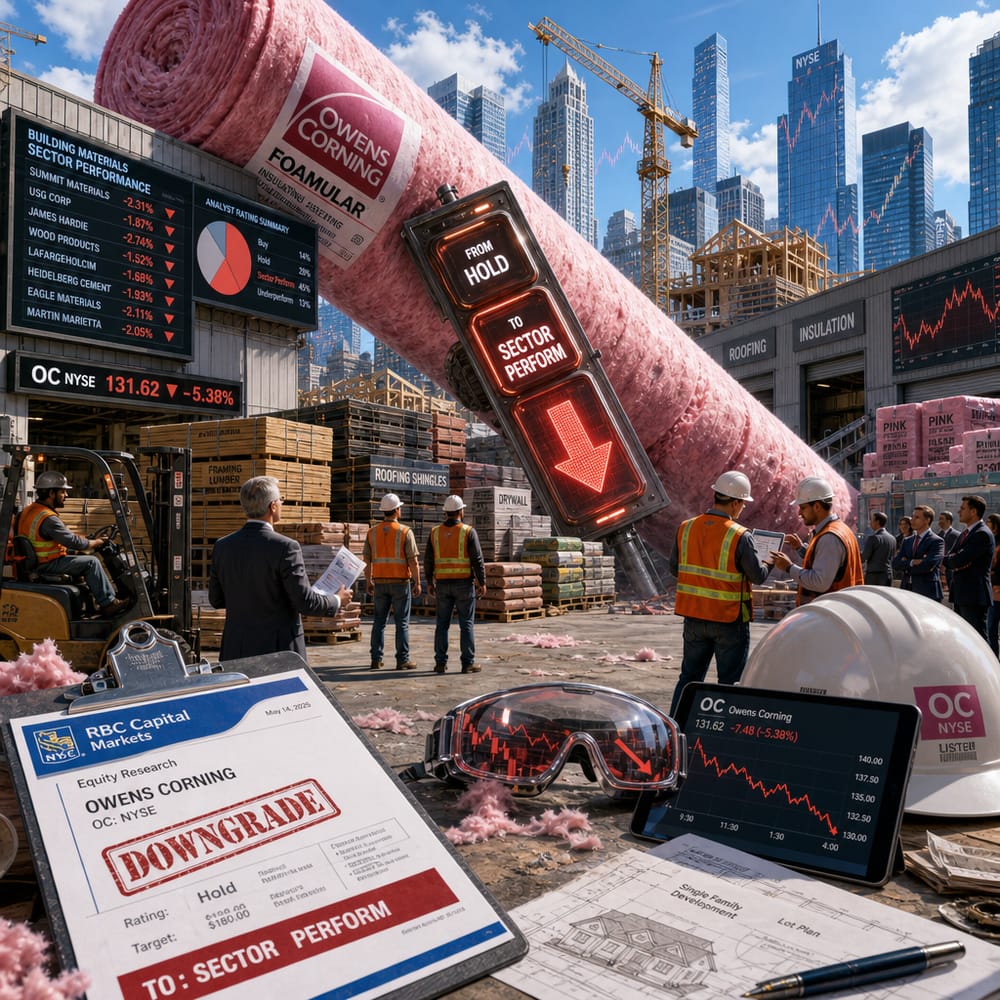
When you hear the name Owens Corning, you might think of pink insulation, the stuff that keeps your house warm while your finances get a little frosty. Well, this fiberglass giant just got a reality check from RBC Capital, and it wasn't the kind you frame on the wall. RBC downgraded Owens Corning from Hold to Sector Perform, and it’s not just a slap on the wrist; it might be a signal of stormy weather for the entire building materials sector.
RBC's downgrade is like that awkward moment in the middle of a party when the music stops, and everyone’s left wondering what's next. So why exactly did RBC make this move? It's not because they suddenly have a vendetta against insulation. It’s because the construction industry, a cyclical beast that rises and falls with the economy, is starting to look a little wobbly. Rising interest rates have made borrowing more expensive, and with oil prices surging thanks to geopolitical tensions, the cost of building is also going up. When you put it all together, it's a classic case of higher costs squeezing the profit margins like a boa constrictor on its prey.
Now, you might be wondering, how did Owens Corning take the news? Picture a toddler being told they can't have candy: not well. Their stock took a nosedive, reflecting that investors are skittish about any sign of trouble in an industry that has been one of the economy’s more robust sectors in recent years. This downturn isn't just a company-specific issue; it's possibly a canary in the coal mine for the broader building materials sector.
So what does this all mean for the sector as a whole? If Owens Corning is hitting turbulence, others could follow. The building materials sector, which was once riding high on the post-pandemic construction boom, is now feeling the pinch. With the Federal Reserve’s hawkish stance on interest rates, borrowing costs are likely to remain high, cooling down the frantic pace of building we've seen. Add in the hot oil prices, and you've got a recipe for a slowdown.
For retail investors, the question is whether to hold on for the long term or jump ship before the sector hits an iceberg. The key here is diversification. If your portfolio is too heavily weighted in building materials, consider spreading the risk. The market might be on the brink of a rotation—those cyclical sectors don’t shine forever, after all.
Of course, there are always contrarians out there. Some might see opportunity in the chaos, akin to a shopper hunting for Black Friday deals. With stocks down, there’s potential for a bargain if you believe the sector will bounce back once interest rates stabilize and geopolitical tensions ease. But remember, playing the market is a bit like gambling in a casino; be prepared for some losses along the way.
In the end, RBC’s downgrade of Owens Corning is more than a single stock story; it’s a reflection of broader economic trends. As retail investors, staying informed and adaptable is your best bet. Keep an eye on the Federal Reserve, watch those oil prices, and don’t forget to diversify. After all, in the investment world, being caught off guard is as fun as finding out your favorite cake has raisins instead of chocolate chips. Nobody wants that surprise.
This article is for informational purposes only and is not investment advice. Always do your own research or consult a licensed financial professional before making investment decisions.
© Copyright 2024. All Rights Reserved.
© Copyright 2024. All Rights Reserved.