

OpenAI IPO delay fears: why Oracle, CoreWeave, and SoftBank are moving
Friday, June 26, 2026
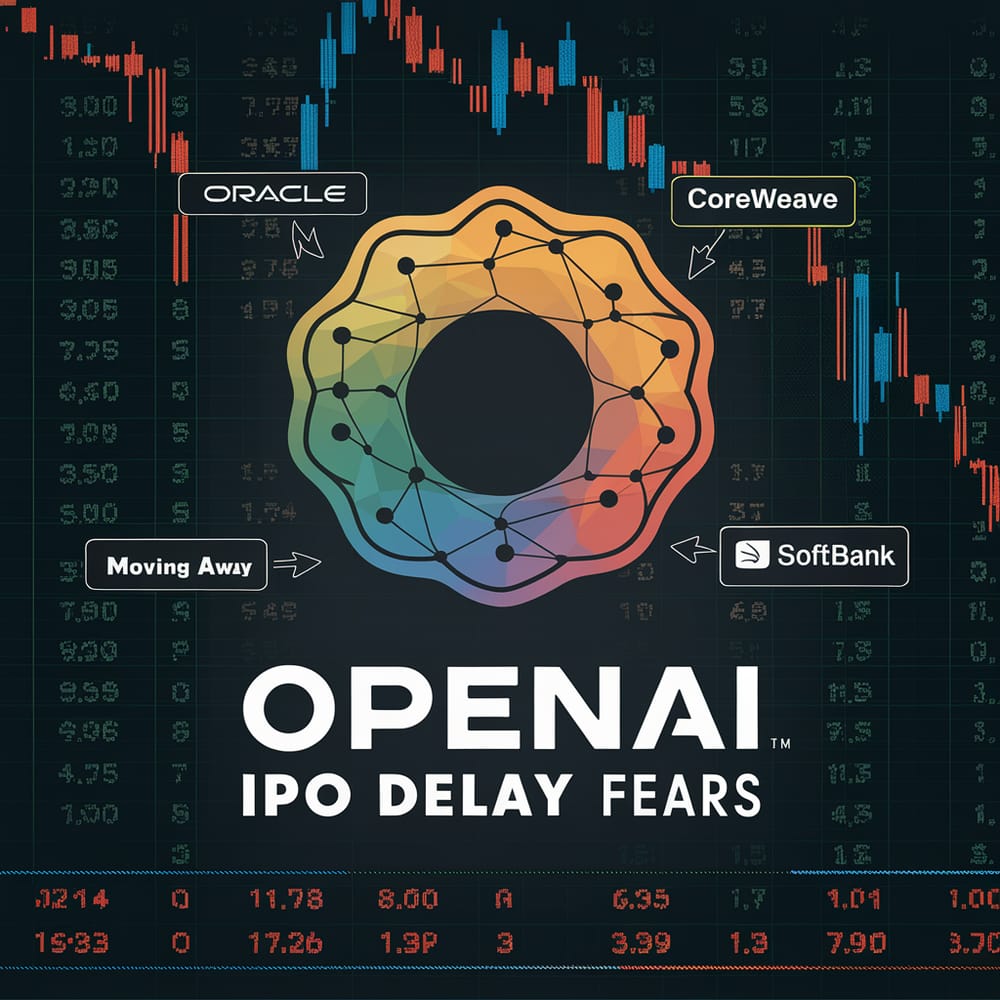
For months, the public markets have been pricing AI infrastructure stocks to absolute perfection under one grand assumption: the imminent, historic public debut of OpenAI would validate the sector's jaw-dropping valuations. But rumors that the ChatGPT creator is leaning toward pushing its initial public offering (IPO) back to 2027 have shattered that complacency.
The response across the trading floor was instant. Even though OpenAI remains a private company, the ripple effect of its shifting timeline triggered a sharp selloff across the public companies that build, fund, and power its artificial intelligence ambitions.
Why a Private Startup Controls Public Markets
Normally, public market investors don't sweat the internal boardroom deliberations of a private startup. But OpenAI isn't just any startup—it is the cornerstone "anchor tenant" of the entire generative AI economy.
To power its massive models, OpenAI doesn't just build its own infrastructure; it rents unprecedented amounts of computing power from a web of interconnected tech giants. When OpenAI signals that it may remain private for longer, it fundamentally changes the liquidity, valuation expectations, and capital expenditure timelines for every company tied to its supply chain. If OpenAI slows down or delays its public validation, the massive growth assumptions baked into its partners’ stock prices suddenly face intense scrutiny.
The Exposure Matrix: Who Slipped and Why
The sheer scale of what these companies have riding on Sam Altman’s firm explains why their stock prices reacted so sharply to the IPO delay rumors:
-SoftBank Group: SoftBank holds a massive estimated 13% equity stake in OpenAI and serves as a key partner in the ambitious $500 billion Stargate AI infrastructure project. Its stock slid as investors realized immediate portfolio revaluation gains would be pushed further into the future.
-CoreWeave: As a specialized AI cloud provider, CoreWeave is locked into a massive multi-year infrastructure partnership with OpenAI worth up to $22 billion. Its shares slipped over fears that the monetization timeline for these enormous cloud contracts could stretch out longer than expected.
-Oracle: Oracle signed a staggering $300 billion multi-year deal to build out specialized data centers for OpenAI through 2030. Its stock dropped as investors began to question the long-term funding and deployment timeline of these massive data center builds.
The $1 Trillion "Non-Starter" and Capex Fatigue
The driving force behind the potential delay boils down to a clash between boardroom caution and executive ambition. Wall Street advisers have reportedly urged CEO Sam Altman to move carefully, pointing to a recent post-listing slump in Elon Musk's SpaceX—which dropped 24% off its post-IPO highs—as evidence that public market appetite for massive AI hardware outlays is experiencing some fatigue.
Advisers cautioned that an earlier listing might force OpenAI to debut at a valuation below its targeted threshold. However, Altman has reportedly made it clear that anything less than a $1 trillion valuation is a complete non-starter for the company's public debut.
The Liquidity Exit Lock: For major backers like SoftBank, a delayed IPO means they must continue to carry massive AI investments on their private balance sheets for much longer. Without the clean exit valve of a public market capitalization, public investors are starting to look at these massive, debt-funded capital expenditures as a long-term cash drag rather than a short-term jackpot.
The Takeaway for Investors
The selloff triggered by OpenAI's IPO delay fears is a classic reality check for the AI infrastructure trade. It highlights a hidden vulnerability in the market: many of today’s hot public tech stocks aren't just being valued on their current earnings, but on the perceived financial health and timeline of a single private startup.
This isn't a sign that the AI buildout is grinding to a halt—Oracle still has a massive backorder of data centers to construct, and CoreWeave's chips remain highly coveted. Instead, it is a healthy valuation reset. Investors are realizing that the road to AI profitability is going to be longer, more expensive, and far more volatile than the initial hype suggested.
This article is for informational purposes only and is not investment advice. Always do your own research or consult a licensed financial professional before making investment decisions.
© Copyright 2024. All Rights Reserved.
© Copyright 2024. All Rights Reserved.