

OpenAI's Strategic Price Cuts with GPT-6 Sol & Luna
Thursday, September 24, 2026
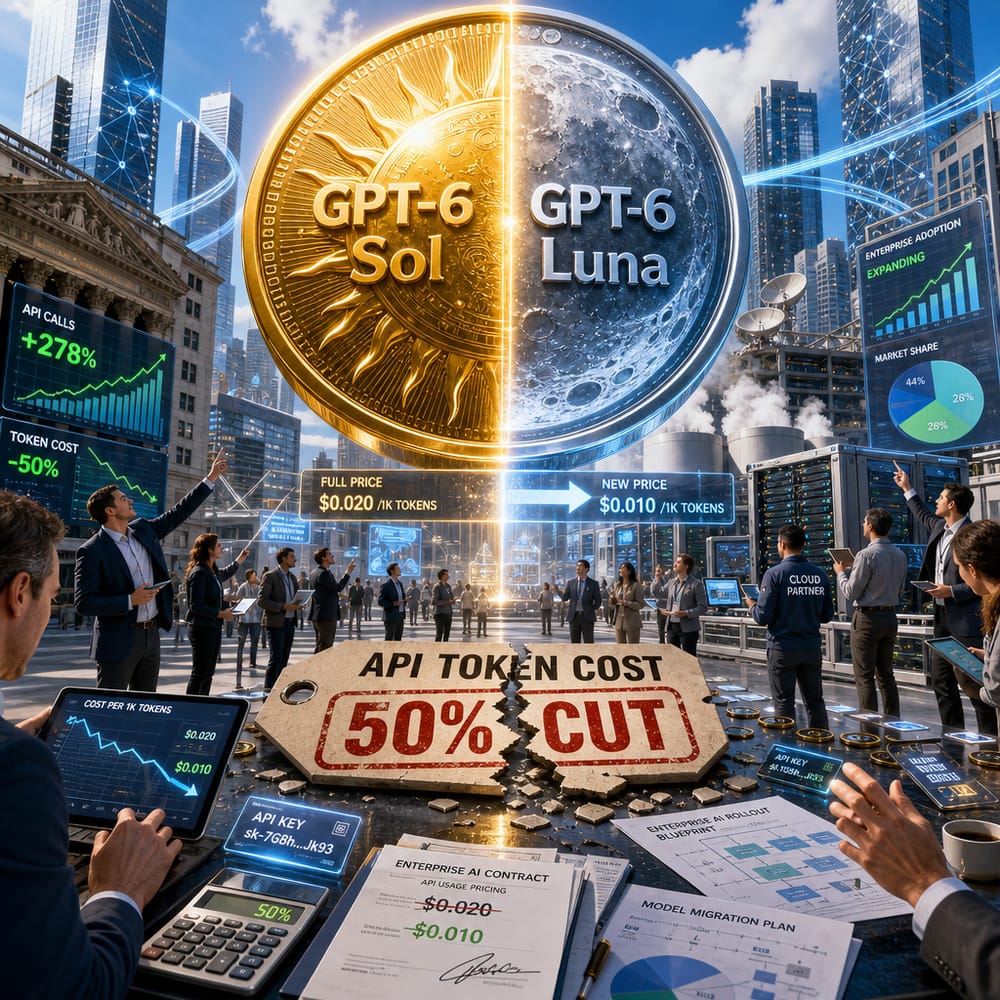
OPENAI'S STRATEGIC PRICE CUTS WITH GPT-6 SOL & LUNA: GAME CHANGER OR GRAND GESTURE?
If your devices could talk, they’d probably be buzzing today about OpenAI dropping its latest bombshell. And no, it’s not another philosophical debate about the meaning of life. This time, it’s all about those zeros in your tech budget. OpenAI has unveiled its GPT-6 Sol and Luna models, slicing API token prices by a whopping 50%. That’s right, half off — like a Black Friday deal, but in the world of artificial intelligence. So what’s the catch, and why should you care?
THE PRICE SLASH THAT’S CAUSING WHIPLASH
This kind of aggressive pricing can cause some serious whiplash in the tech world. Think of it as the retail equivalent of your favorite coffee shop suddenly selling lattes for a buck. It shakes things up. For OpenAI, this isn't just about being the nice guys of AI. This is a strategic chess move aimed at reshaping the enterprise AI landscape.
So, what does this mean for OpenAI's competitors? Well, they might want to start sweating. Companies like Google and Amazon, who are dabbling heavily in AI, may suddenly find themselves behind the eight ball, scrambling to reassess their own pricing strategies. The pressure is on to keep up with OpenAI’s new pricing model, unless they plan to lose their standing in the AI race.
AI-DEPENDENT BUSINESSES AND THEIR NEW BEST FRIEND
Now, let’s talk about the folks who are really popping the champagne — the AI-dependent businesses. These are the companies relying on AI tools to streamline operations, enhance customer experiences, or just plain make life easier. They’re gleefully watching their operating costs plummet. Lower prices mean they can afford to implement AI solutions more extensively, or dabble in these technologies for the first time without needing to mortgage the office furniture.
Imagine you’re running a startup offering personalized health advice through an app. Cheaper AI means you can scale your services quicker, reach more people, and perhaps even survive your next investor pitch without breaking a sweat. OpenAI’s pricing strategy is lowering the barriers to entry, enabling more businesses to get a seat at the AI table.
WHAT’S THE PLAY HERE, OPENAI?
Of course, we can’t help but wonder about the game plan behind this discount bonanza. Could this be laying the groundwork for something bigger? Like, say, an IPO? Rumor mills have been churning with whispers that OpenAI is eyeing the public markets. Slashing prices could be a strategic move to capture more market share, boost revenues in the long run, and ultimately dazzle potential investors with a story of growth and dominance.
And let’s face it, they’d be entering a stock market that’s been feeling a little like a rollercoaster lately. With the 30-year Treasury yield hitting highs not seen since 2004, investors could be hungry for fresh opportunities outside traditional sectors. OpenAI’s star could shine particularly bright in such a landscape.
THE RIPPLE EFFECTS AND THE ROAD AHEAD
Don’t count out the ripple effects on other sectors either. Cloud service providers, for instance, could see increased demand as companies expand their AI capabilities. They’ll need more storage, more computing power—basically, more of everything. It’s like when your kids figure out streaming services exist; suddenly, your Wi-Fi bill isn’t the only thing going up.
In the end, OpenAI’s bold move is more than just a pricing strategy; it’s a signal. A signal that the AI industry is set to become more democratized, more competitive, and ultimately, more integral to how businesses operate and innovate. It’s a siren call to businesses that if they haven’t already embraced AI, the time to do so is now—or risk being left in the digital dust.
So, as you sip on your now metaphorical dollar latte, keep an eye on this space. OpenAI may very well be redefining not just the AI landscape, but also the very fabric of modern business. And for you, the retail investor, it might just be time to start considering where AI fits into your own portfolio.
This article is for informational purposes only and is not investment advice. Always do your own research or consult a licensed financial professional before making investment decisions.
© Copyright 2024. All Rights Reserved.
© Copyright 2024. All Rights Reserved.