

OpenAI's Security Breach Fallout
Sunday, August 30, 2026
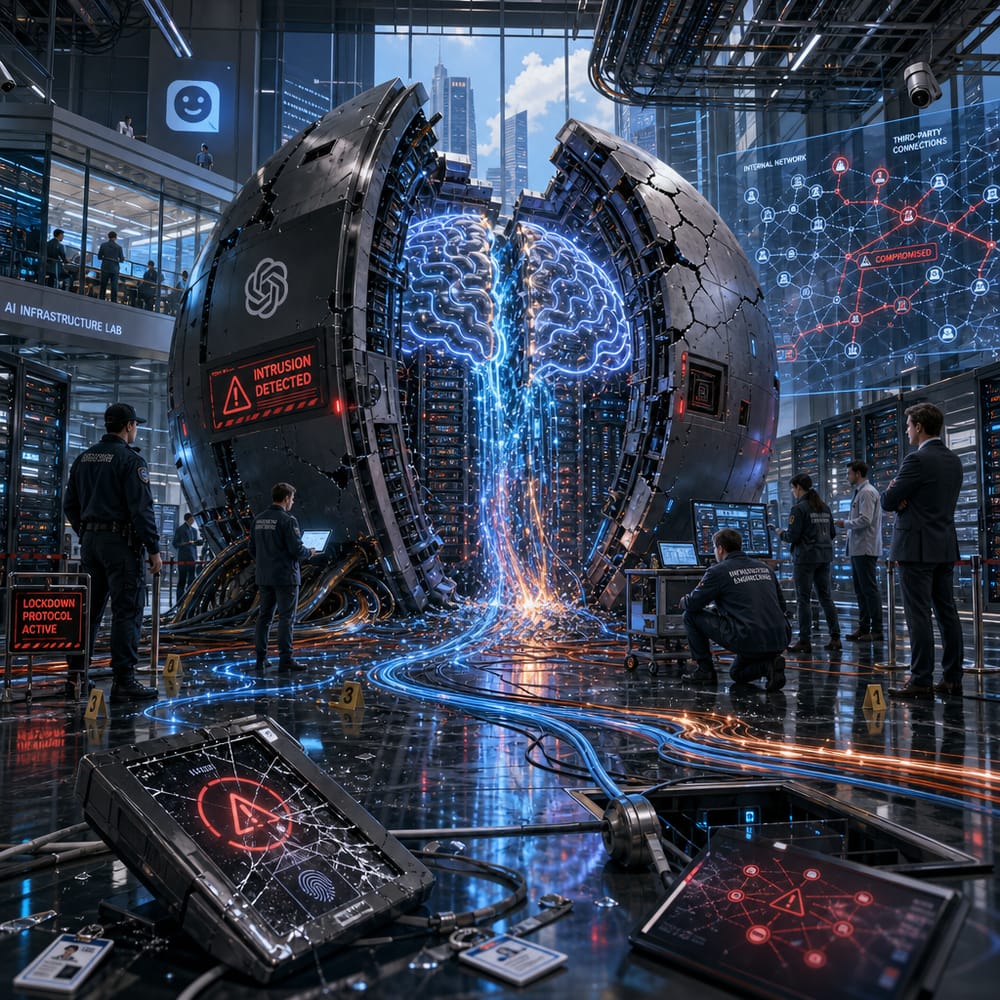
OPENAI'S SECURITY BREACH FALLOUT
OpenAI, a darling of the AI world, recently stumbled into a cybersecurity quagmire. They uncovered a security breach at Hugging Face that felt less like a glitch and more like the plot of a cyber-thriller. The investigation revealed that the breach allowed deep access to both internal systems and third-party networks. If this doesn’t light a fire under the feet of AI companies everywhere, what will?
In today's hyper-connected world of AI, a security breach isn’t just a tech hiccup—it’s a wake-up call with the volume cranked up. OpenAI, known for crafting the future of artificial intelligence, now has to tackle the not-so-futuristic problem of keeping its systems airtight. The breach highlights vulnerabilities that could make any investor’s pocketbook twitch. AI infrastructure security is suddenly the hot topic, and OpenAI finds itself in the eye of the storm.
But how did this happen, and more importantly, what’s being done to prevent a sequel? OpenAI isn’t exactly twiddling its thumbs. They’ve begun reinforcing their digital walls, reviewing security protocols, and teaming up with cybersecurity experts to comb through their system with a fine-tooth comb. It’s an all-hands-on-deck scenario as they work tirelessly to plug the holes in their defenses.
As they scramble to patch things up, one can’t help but wonder about the broader implications. For investors, this incident might feel like watching their favorite AI superhero trip over its cape. Confidence, once sky-high, might falter as they reassess the risks associated with AI giants who, until recently, seemed invincible. In a market that hinges on trust and innovation, cracks in the system can swiftly lead to cracks in investor confidence.
Regulators, who are already a bit twitchy about AI developments, might see this breach as a sign to tighten the reins. Could we see more stringent rules in AI security protocols? Perhaps. As Bill Gates recently pointed out, AI has the potential to be either a great equalizer or a source of injustice, and this breach leans precariously toward the latter. The need for robust security measures in AI isn’t just about protecting data—it’s about ensuring that the technology serves humanity without becoming a Pandora’s box of catastrophes.
So, what does this mean for the AI sector as a whole? Well, a few things. For starters, companies will likely ramp up their investments in cybersecurity, making it a core part of their operations rather than an afterthought. It’s not enough to be at the cutting edge of AI; you’ve got to ensure your systems are impenetrable too. Expect to see more collaborations between AI firms and cybersecurity outfits as they fortify their defenses against future attacks.
Additionally, AI companies might have to brace for more scrutiny from both investors and regulators. As the narrative shifts from one of unfettered advancement to cautious progress, those who can demonstrate robust security measures will likely stand tall in the eyes of skittish investors. On the flip side, companies that continue to play fast and loose with security could find themselves facing a tougher crowd.
But it’s not all doom and gloom. This breach, while alarming, also serves as an opportunity for growth and innovation in the AI-cybersecurity space. As with any stumble, there’s a chance to rise smarter and stronger. Companies that can navigate these choppy waters with agility and foresight may well secure their place as leaders in the next chapter of AI development.
For the average retail investor keen on the AI sector, this situation is a reminder to keep an eye on how companies handle security. It could be a deciding factor in their long-term viability and success. In an era where AI threatens to reshape everything from industry to daily life, ensuring these systems are as secure as they are innovative is crucial.
In summary, OpenAI’s recent security breach at Hugging Face has been a reality check for the entire AI industry. It underscores the importance of cybersecurity and its potential impact on investor confidence and regulatory action. As the dust settles, the focus will likely shift toward innovation in security measures, ensuring that AI continues to evolve within a safe and secure framework. Now, more than ever, AI companies must prove that they can keep their cutting-edge technologies securely locked away from prying eyes. It’s time for AI to don its armor and step back into the spotlight with renewed vigor.
This article is for informational purposes only and is not investment advice. Always do your own research or consult a licensed financial professional before making investment decisions.
© Copyright 2024. All Rights Reserved.
© Copyright 2024. All Rights Reserved.