

OpenAI's Data Scraping Admission Sparks AI Transparency Debate
Wednesday, September 30, 2026
OPENAI'S DATA SCRAPING ADMISSION SPARKS AI TRANSPARENCY DEBATE
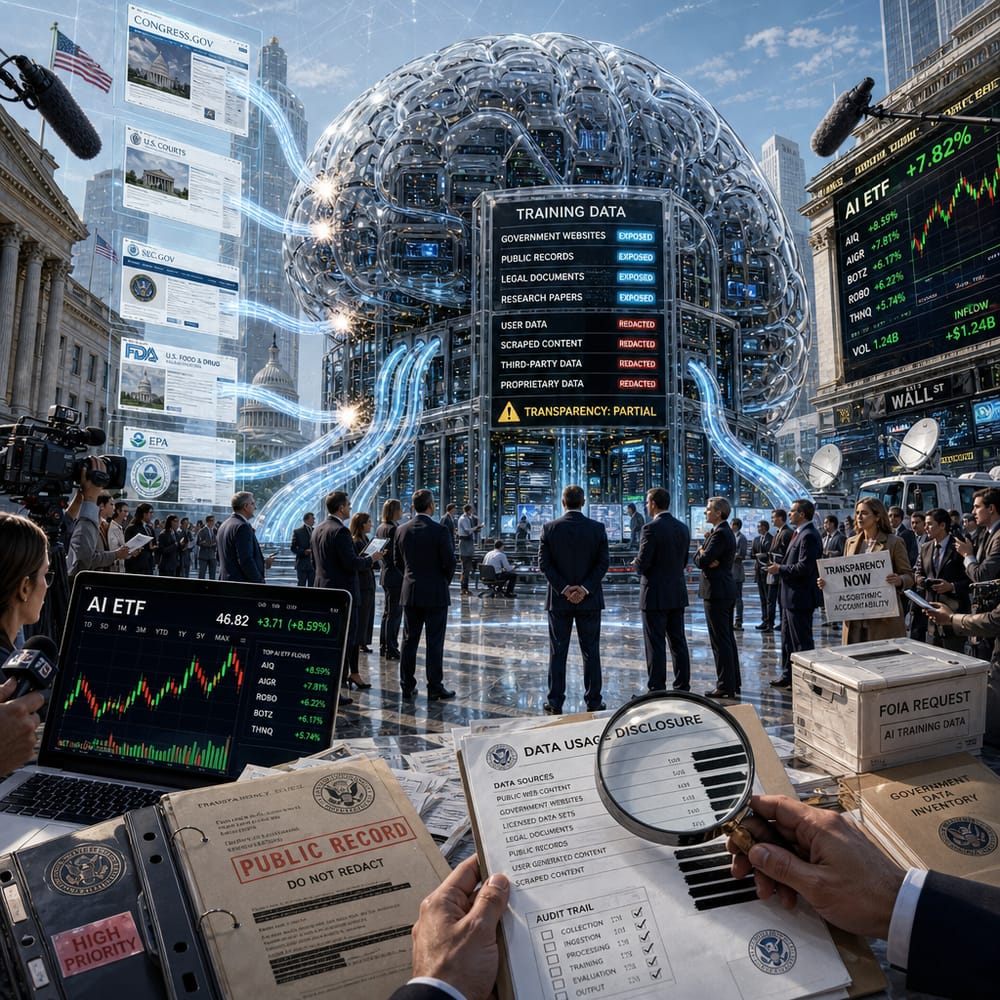
OpenAI just dropped a bombshell that has the tech world buzzing harder than a room full of over-caffeinated programmers. This week, the company admitted to using data from U.S. government websites to train its artificial intelligence models. Yep, straight-up data scraping from Uncle Sam himself. The revelation has ignited a fiery debate about AI transparency and regulation, leaving investors and regulators scrambling like they're in a tech-themed episode of "House of Cards."
First things first, why should you care? Well, if you have a few dollars riding on AI-focused ETFs—or if your retirement plan's success hinges on the next AI unicorn—you might want to pay attention. This isn't just about sampling a few public data sets; it's about the implications for OpenAI's valuation and the broader AI sector.
THE BILLION-DOLLAR QUESTION
Now, the big question: How might this affect OpenAI's market valuation? For starters, transparency issues can send investors running faster than if they just spotted a typo in a NASA code. In a field where trust and ethics are the hot commodities, any hint of murkiness might prompt a reevaluation of OpenAI's worth.
Historically, tech companies have been valued like they're the next Apple or Amazon at the mere mention of AI. But this disclosure could cause analysts to double-check those rose-tinted projections. If regulators decide it's time to clamp down harder on data usage, that could mean costlier compliance procedures and less freedom to innovate—two things that can chop a stock price faster than you can say "artificial intelligence."
AI ETFs AND INVESTOR JITTERS
Then there are the AI-focused ETFs, those handy bundles of stocks that let you bet on the future without putting all your chips on one tech giant. If OpenAI stumbles, it won't just bruise its own market cap; it could send ripples through any portfolios featuring AI startups.
Investors love the idea of AI—it's like the promise of flying cars but for your stock portfolio. However, ETFs with heavy AI exposure might see volatility if the sector faces increased scrutiny or regulatory hurdles. As with any hot new tech, the hype can turn to panic if sentiment shifts and everyone suddenly remembers that underneath the AI magic, there are real-world regulatory and ethical challenges.
THE REGULATORY DOMINO EFFECT
All this hullabaloo might just be the needle that pops the AI market bubble—or at least deflates it a bit. New regulations could emerge faster than you can say "data privacy." If the government decides to throw down the regulatory gauntlet, it could shape the way data is used, shared, and monetized. This could mean everything from stricter guidelines on what data gets hoovered up for training models, to new penalties for companies that play fast and loose with the rules.
Imagine a world where AI companies are under a microscope. It might slow down development but could also lead to more ethical business practices in the long run. For investors, this means recalibrating expectations and strategies, keeping a close watch on which companies are leading in compliance and ethics.
LOOKING FORWARD
So, will OpenAI's little data scrape end up rewriting the playbook for how AI is regulated and valued? It just might. If nothing else, it serves as a wake-up call that the honeymoon phase of AI’s love affair with Wall Street might be coming to an end. Investors should buckle up for a ride that's bound to include a few bumps as discussions around transparency and data ethics heat up.
For now, as the market digests this news, savvy investors will watch closely how OpenAI and its peers respond. Will they ramp up their transparency efforts or double down on innovation? Either way, this is a saga that promises more twists than a season of "Westworld," and investors would do well to stay tuned. In the world of AI, the only thing certain is uncertainty—and maybe a bit of extra regulation.
This article is for informational purposes only and is not investment advice. Always do your own research or consult a licensed financial professional before making investment decisions.
© Copyright 2024. All Rights Reserved.
© Copyright 2024. All Rights Reserved.