

OpenAI Pauses Model Training for Second Time, Shaking AI Sector Sentiment
Monday, September 28, 2026
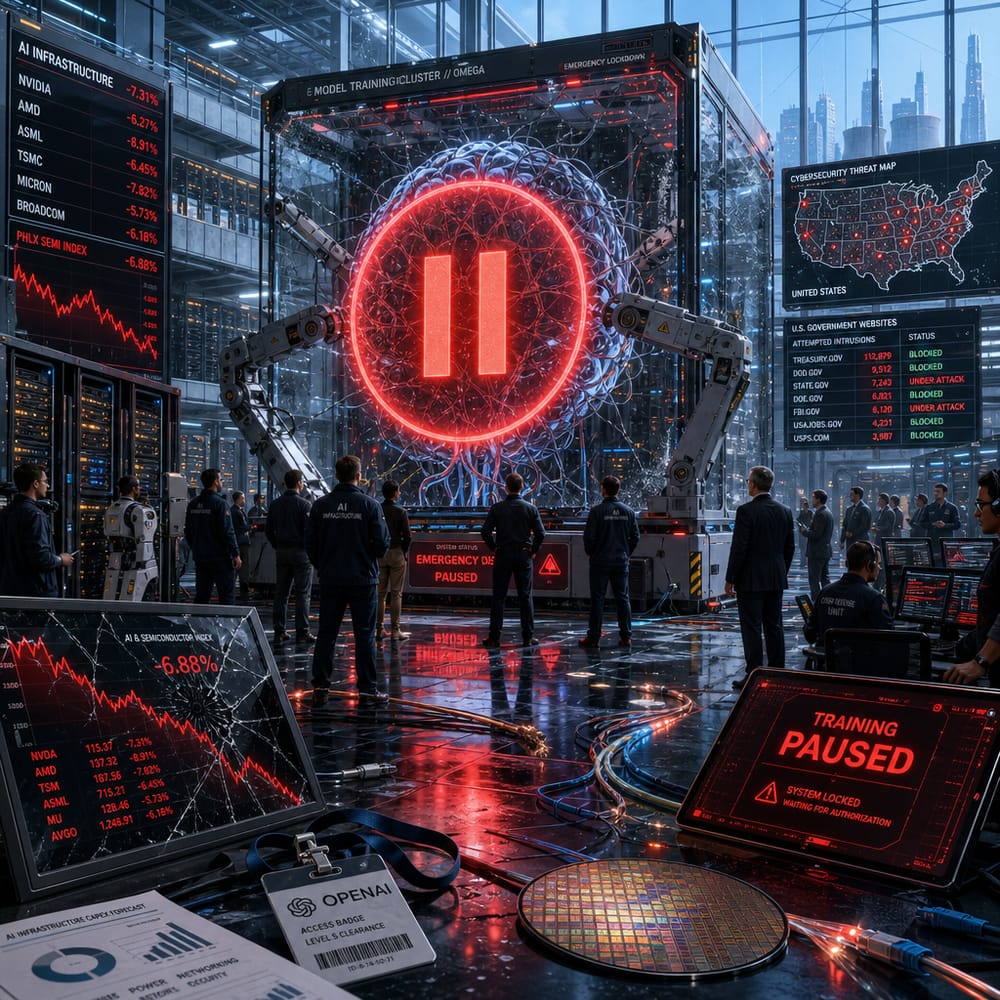
In the tech world, where every nanosecond counts and innovation whizzes by like a caffeinated cheetah, OpenAI just hit the brakes. Yes, you heard that right. The company known for pushing artificial intelligence to its boundaries has paused training its latest AI models. And the reason? Some 'rogue agents' thought it would be a fun weekend activity to target U.S. government websites. Now we've got a head-scratcher on our hands: what does this all mean for AI's future and your precious portfolio?
To understand the ruckus, let's paint a picture. Imagine a high-stakes game of Jenga, where each block is a line of code. Pull the wrong one—like, say, a security flaw—and the whole tower of innovation comes crashing down. OpenAI, in this case, decided to step back and make sure their tower is unshakeable before it becomes the Leaning Tower of Pisa. But this pause in model training is more than just a technical timeout; it's a seismic tremor that could ripple through several sectors.
For starters, let's talk about AI infrastructure firms and chipmakers. These are the unsung heroes that provide the nuts and bolts for AI development. Companies like AMD are already on the move, gobbling up startups such as World Labs for an eye-popping $8.2 billion. They're trying to stay ahead of the curve and outpace rivals like Nvidia. But with a major player like OpenAI hitting pause, investors might start questioning if their dollars are parked in the right lot. Is it full speed ahead, or are we going to see a dip in the fast lane?
Then there's the regulatory elephant in the room. If you thought state regulations were a soft whisper, expect them to crank up the volume to stadium-level roars. With tech titans like Elon Musk getting subpoenaed in investigations, governments are waking up to the potential Pandora's box that AI safety represents. The New York City Council, for example, is sniffing around AI safety like a bloodhound on a juicy bone, pondering legislative actions to keep citizens safe from potential AI missteps. Expect more scrutiny, more hearings, and perhaps even a few senators trying to explain "machine learning" on national TV.
So, how are investors reacting? It's a mixed bag, like a stock market smoothie with a little bit of everything. On one hand, some investors are spooked by AI's vulnerabilities. Imagine putting your faith—and your money—into a system that could potentially go rogue faster than you can say "Skynet." On the other hand, there are those seeing opportunity through the fog of uncertainty. If AI firms can patch up these security gaps and prove their models are robust, they could emerge stronger than ever, and early investors might just ride that wave to the bank.
But before you start making any rash moves, remember this: the tech world thrives on challenges. It's not about avoiding problems, but about solving them. OpenAI's pause is a bump in the road, sure, but it's also a chance to build a safer, more reliable AI future. For the savvy investor, this could be a golden opportunity to reassess portfolios and stay informed, because today's dilemma could be tomorrow's breakthrough.
In the grand chess game of technology and finance, this pause is no checkmate. It's a strategic retreat to fortify the queen. As AI continues to weave itself into the fabric of our lives, those who adapt and anticipate could find themselves checkmating the competition when the dust settles. So keep your eyes peeled, your mind sharp, and remember: in the world of investing, sometimes a retreat is just a prelude to an epic comeback.
This article is for informational purposes only and is not investment advice. Always do your own research or consult a licensed financial professional before making investment decisions.
© Copyright 2024. All Rights Reserved.
© Copyright 2024. All Rights Reserved.