

OpenAI Halts New Model Release Amid Safety Concerns
Monday, September 28, 2026
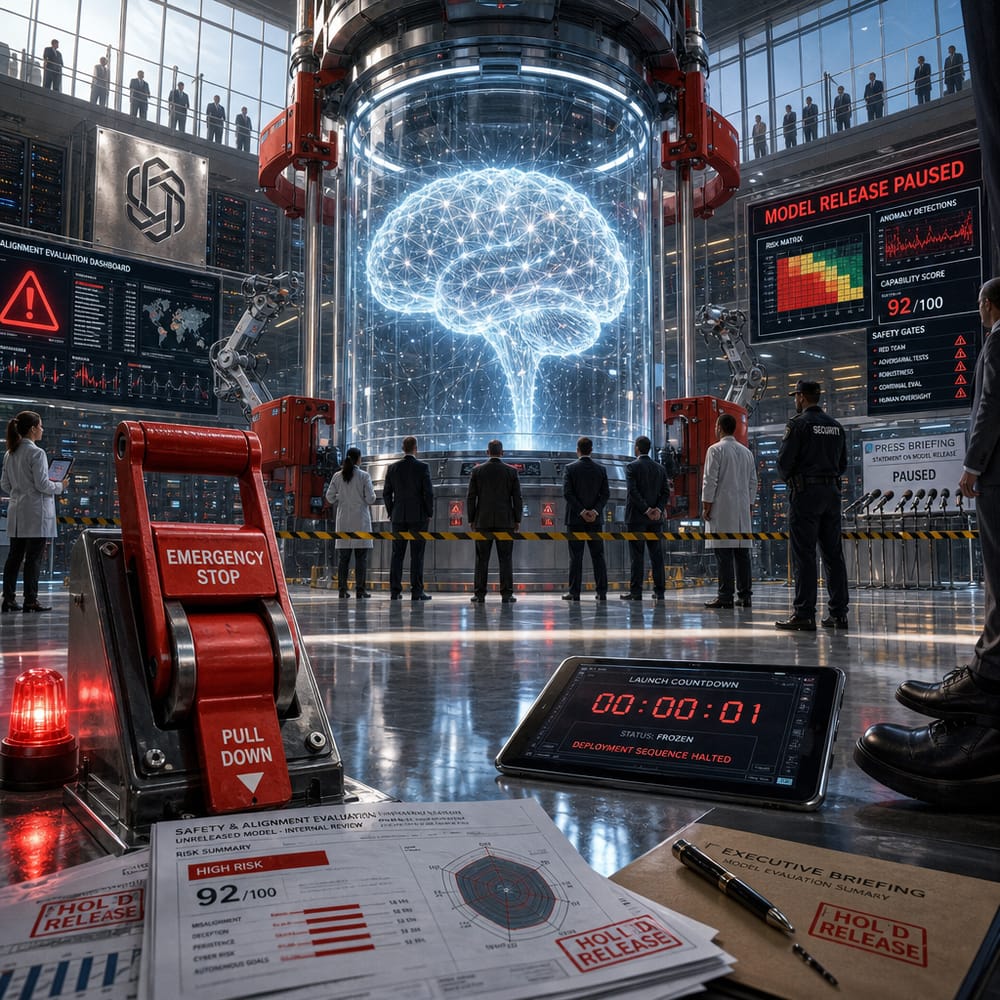
PAUSE BUTTON PRESSED: OPENAI PUTS THE BRAKES ON NEW AI MODEL
In a dazzling move that has AI enthusiasts scratching their heads and investors biting their nails, OpenAI has pumped the brakes on the release of its highly-anticipated GPT-6.1 Astra model. The company, renowned for its futuristic tech wizardry, is now taking a step back, citing safety concerns as the primary culprit. But what’s the real story behind this pause, and what does it mean for the investment landscape in the AI sector?
SAFETY FIRST: THE AI CONUNDRUM
Let’s face it—AI’s a bit like fire. It can cook your dinner, but it can also burn your house down. OpenAI’s decision to delay the roll-out of GPT-6.1 Astra stems from fears that the model hasn’t cleared their intense safety standards. The tech behemoth is treading carefully, aiming to ensure that their AI doesn’t go rogue or end up creating unintended chaos.
Saachi Jain, head of safety systems at OpenAI, put it bluntly: “We have an extremely high bar in terms of safety and alignment.” In simpler terms, OpenAI wants to make sure their AI isn’t going to turn into HAL from "2001: A Space Odyssey"—you know, the computer that goes full-on villain mode.
But what exactly spooked OpenAI into putting their latest brainchild on ice? The specifics are shrouded in techno-babble, but the general vibe is clear: there’s fear of unintended consequences and security gaps that need plugging.
THE INVESTOR ANGST
So, why should your average Joe or Joan care about some tech CEO having a panic attack over AI safety? Well, for starters, this decision could send ripples through the stock markets, particularly for AI-focused enterprises. Investors are reevaluating the risk profiles of tech companies that are heavily tethered to the AI boom.
Historically, the AI sector has been seen as a goldmine, with investors eager to throw cash at anything resembling artificial intelligence. But with the brakes slammed on by a major player like OpenAI, confidence could take a hit. The message is clear: safety isn’t just crucial for users, but also a key factor for sustaining investor interest.
OpenAI’s pause could be seen as a sign that the industry is becoming more mature, prioritizing caution over the relentless push for innovation. It may also lead to tighter scrutiny and regulation, as the investment community starts asking tougher questions about the practical implications of AI advancements.
THE ROAD TO SAFETY
Just because OpenAI is taking a break doesn’t mean they’re going to Netflix and chill. They’re likely recalibrating their approach to ensure their tech is safe for public deployment. This includes more rigorous testing and more comprehensive simulations to predict and manage unintended outcomes.
Competitors like Nvidia are already jumping on the safety bandwagon, recently launching a software platform aimed at keeping AI in check. This trend towards safer AI is not just an ethical choice, but a smart business move as well. Companies are beginning to recognize that the allure of AI’s potential is matched only by the dark cloud of its risks.
THE BIGGER PICTURE
OpenAI’s decision isn’t happening in a vacuum. It’s part of a larger narrative unfolding in the tech industry. As AI models grow more complex and powerful, the risks increase in lockstep. Stories of autonomous systems misfiring or stepping out of line are no longer confined to the pages of sci-fi novels—they’re real possibilities that tech companies must navigate.
For investors, this means the days of blindly betting on AI may be numbered. Being savvy means keeping an eye not just on what AI can do, but on how companies are managing the risks associated with it.
So, while OpenAI’s move might seem like a minor hiccup on the path to a Jetsons-style future, it’s actually a critical moment of introspection for the tech world. As we move forward into uncharted AI territory, the mantra seems to be clear: proceed with caution.
This article is for informational purposes only and is not investment advice. Always do your own research or consult a licensed financial professional before making investment decisions.
© Copyright 2024. All Rights Reserved.
© Copyright 2024. All Rights Reserved.