

OpenAI Executive Departures and Leadership Stability
Monday, August 17, 2026
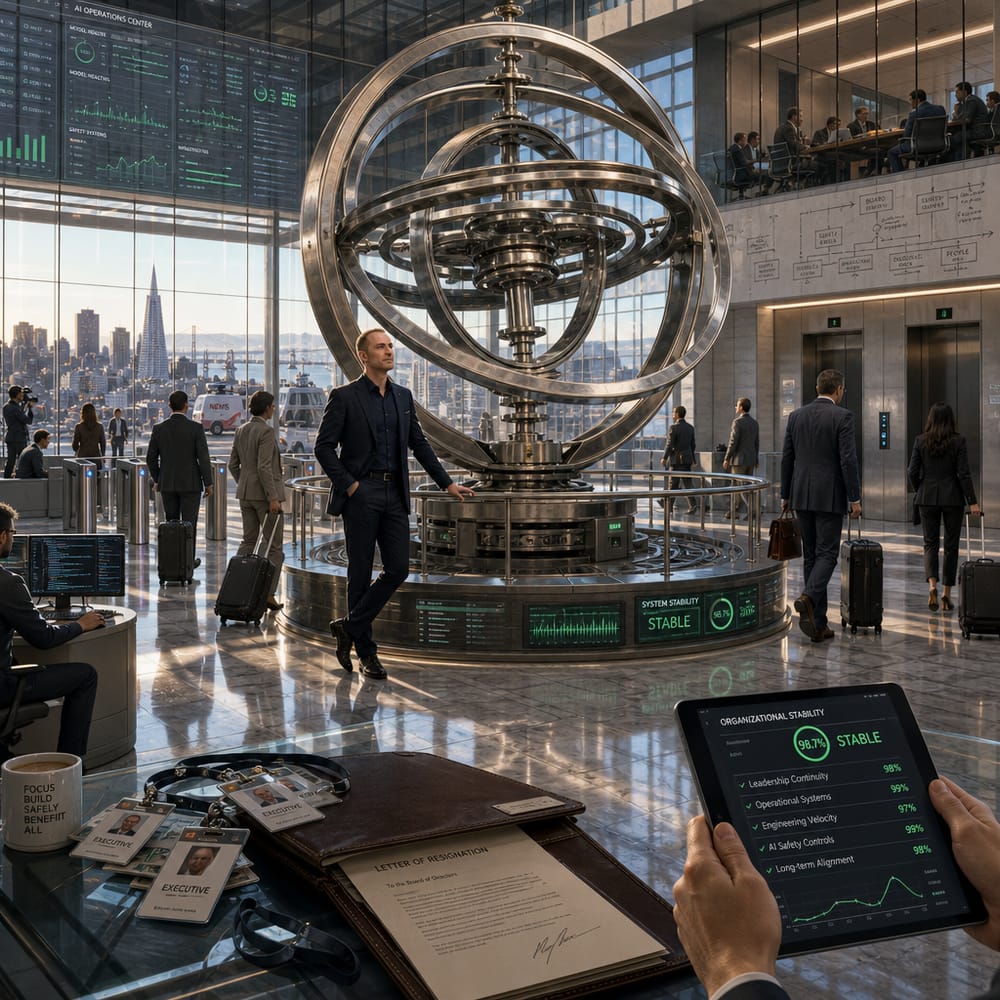
OPENAI EXECUTIVE EXITS: DOING THE ARTIFICIAL INTELLIGENCE TWO-STEP
Well, folks, it seems that OpenAI, the wizard of the AI world, is doing its best impression of a revolving door. With recent executive exits — including revenue chief Denise Dresser — some are wondering if the ship's taking on water or simply setting sail for sunnier shores. OpenAI's President Greg Brockman, however, wants everyone to take a deep breath and untwist those knickers. But should you?
First stop: Denise Dresser. The revenue honcho bid adieu just eight months into her gig. That's right, she barely had the chance to scuff up her office chair before she was out the door. Dresser was supposed to be the ace in the hole, tasked with beefing up OpenAI’s enterprise unit to go head-to-head with rivals like Anthropic. So when she stepped out, eyebrows naturally hit the hairline.
FLASHBACK TO LIGHTCAP
Let’s not forget that Denise wasn't the only one bolting for the exit. Brad Lightcap, a seasoned exec, also pulled a Houdini the same week. After eight years at the helm of the ChatGPT creator, Lightcap decided to start something new. And while he may have left his cape behind, the responsibilities he passed to Dresser are now once again up in the air.
THE PRESIDENT SPEAKS
Before you write OpenAI off as the Titanic, hear Brockman out. He's quick to downplay the drama. Turnover isn’t all that unusual in high-flying tech firms, he insists. Spotlight, meet OpenAI: a company so glitzy, even the smallest ripple looks like a tidal wave.
But let’s chew on what these departures really mean. Leadership turnover can be a canary in the coal mine, hinting at strategic shifts or under-the-hood chaos. For OpenAI, this means potential uncertainty in meeting its aggressive growth and competition goals.
Will investor confidence take a hit? Well, when your top performers start marching out, it's like watching a chef leave a restaurant mid-dinner rush — not exactly reassuring. Investors, the ever-skittish bunch, might start to wonder if OpenAI’s strategic direction is drawing straight lines or perplexing curves.
A NEW CHAPTER OR A NEW CHALLENGE?
But hang on. OpenAI isn't exactly in freefall. While the execs might be making a beeline for the door, OpenAI is scoring some big wins too. Nvidia, the tech darling with a Midas touch, is backing OpenAI's new data center in Ohio. With a hefty 20-year lease, OpenAI is gearing up for long-term growth. And with Nvidia supplying the tech muscle, OpenAI's AI factories are looking more like the tech equivalent of muscle-bound Olympians.
Now, does that mean we should brush off these leadership changes as mere footnotes? Not quite. While Brockman might be confident, it’s hard to ignore the signal that major exits send. The critical questions are: does OpenAI have the bench strength to fill these gaps, and does its remaining leadership have a coherent vision to keep this ship on course?
THE INVESTOR’S DILEMMA
For investors, the scene is set for a bit of a paradox. On one hand, OpenAI's collaboration with Nvidia promises robust infrastructure and a runway for future growth. On the other, the leadership shuffle stirs the pot of uncertainty, potentially shaking investor faith in the brand’s ability to outsmart and outmaneuver its competitors.
So, what’s the play here? If you’re the kind who thrives on a little adrenaline and believes OpenAI’s AI brainpower can see it through the turbulence, these waters could hold treasure. If you're more of a cautious captain, maybe you'll want to wait until the seas calm and you can see just how steady this ship is sailing.
The takeaway? Keep your eyes peeled and your wits about you. As OpenAI dances its executive two-step, the broader AI narrative continues to unfold, and it's anyone's guess where the next chapter will lead. Either way, the story promises to be anything but boring.
This article is for informational purposes only and is not investment advice. Always do your own research or consult a licensed financial professional before making investment decisions.
© Copyright 2024. All Rights Reserved.
© Copyright 2024. All Rights Reserved.