

Onsemi buys Synaptics: physical AI strategy or expensive distraction?
Friday, June 26, 2026
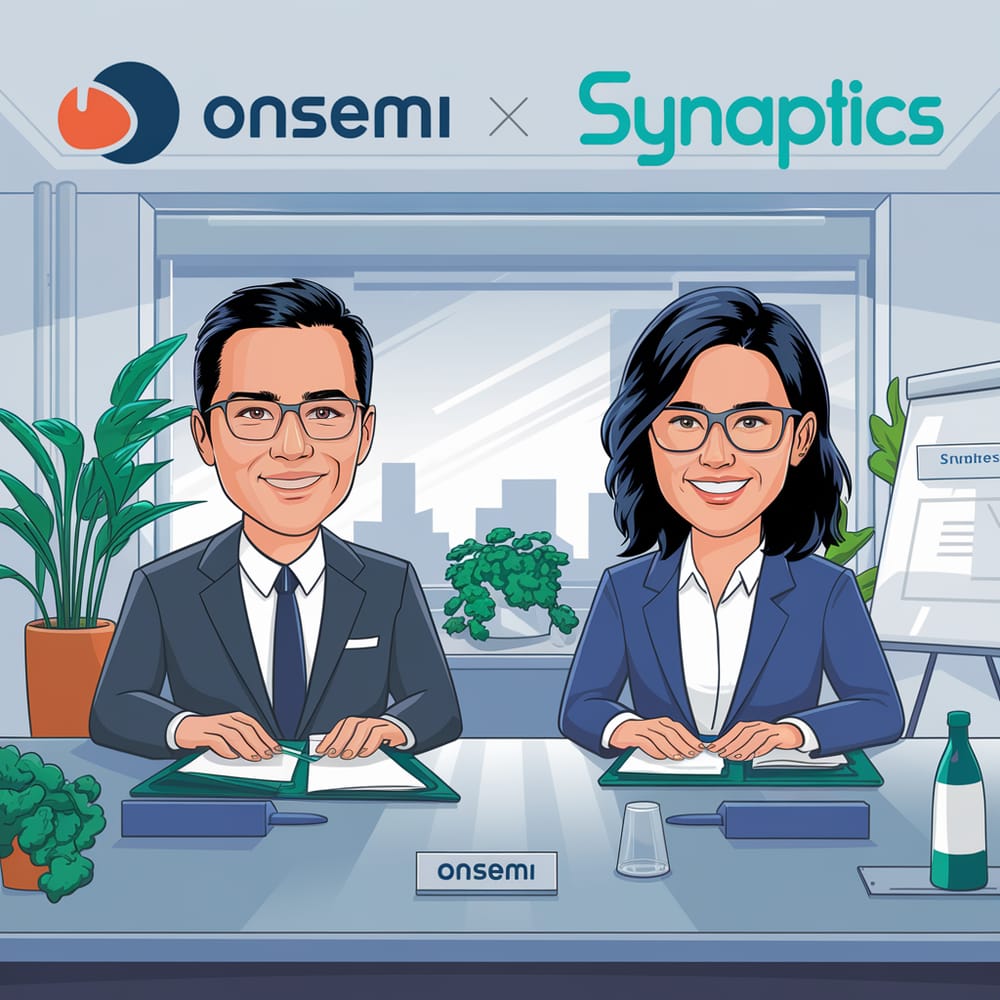
Onsemi, a semiconductor giant traditionally respected for its unsexy but highly profitable automotive sensors and power management chips, just pulled off its biggest strategic gamble to date. The company announced a definitive, all-stock takeover of Synaptics valued at roughly $7 billion.
But while executives are painting a grand vision of a unified artificial intelligence empire, Wall Street immediately threw cold water on the parade. Onsemi shares suffered a sharp selloff following the announcement as analysts and traders struggled to digest the sudden strategic pivot. The market's reaction begs a critical question: Is this the birth of an edge-computing powerhouse, or is Onsemi losing its focus?
What on Earth is "Physical AI"?
To understand the logic behind the acquisition, you have to look at where the semiconductor industry expects the next wave of AI growth to go. While the initial AI boom has taken place inside massive cloud data centers processing complex algorithms, the next frontier is shifting to the edge.
This is what the industry calls Physical AI—intelligence that runs locally within physical hardware rather than being offloaded to remote cloud servers. Think of an autonomous vehicle that needs to detect a pedestrian, a factory robot navigating a warehouse floor, or an industrial drone inspecting power lines. These devices cannot afford the latency of sending data to the cloud and waiting for a response; they must sense, decide, act, and adapt in real time.
The Logic Behind the Convergence
Onsemi’s management argues that winning the Physical AI race requires four interconnected pillars: Power, Sense, Connected Compute, and Control.
Before this deal, Onsemi was already a dominant force in the first two pillars. It is a global leader in silicon carbide power systems and advanced automotive image sensors. However, it lacked the brains to process the data those sensors collected.
Synaptics brings the missing puzzle pieces. Its specialized Astra platform features edge AI processors equipped with neural processing units (NPUs), human-machine interfaces, and a robust wireless connectivity portfolio spanning Wi-Fi, Bluetooth, and GPS. On paper, combining these portfolios allows Onsemi to offer a comprehensive, all-in-one chip ecosystem. Management estimates this cross-selling capability will expand its total addressable market by a massive $30 billion, reaching $243 billion by 2030.
Why Investors Flashed the Red Light
If the strategic vision sounds so compelling, why did Onsemi investors aggressively dump the stock? The skepticism boils down to financial baggage and execution complexity.
Catching a Falling Knife: Synaptics has had a rough couple of years, struggling with a painful cyclical downturn that caused its revenues to drop sharply from its 2022 peaks. Skeptics worry that Onsemi is overpaying for a cash-strapped target under the guise of an AI re-rating.
The Dilution Drag: This is a fixed-ratio, all-stock transaction (1.350 Onsemi shares for every Synaptics share). This heavily dilutes existing Onsemi shareholders and ties the value of the deal directly to Onsemi's shifting stock price.
Identity Crisis: Wall Street loves pure-play companies because they are easy to value. Onsemi was highly prized for its strict focus on high-margin power and analog chips. Branching out into edge processors, wireless connectivity, and complex software ecosystems adds immense corporate clutter.
The Core Integration Risks to Watch
For shareholders choosing to ride out the turbulence, there are several structural integration risks that require close monitoring over the next few quarters:
The Software Friction: Synaptics relies heavily on an open-source software stack to deploy its edge AI. Onsemi is historically a hardware-first manufacturing firm. Merging a hardware corporate culture with a complex software ecosystem is notoriously difficult and frequently leads to integration delays.
The Synergy Timeline: Management has promised $200 million in annual cost synergies and expects the deal to be accretive to non-GAAP earnings within 18 months of closing. If Synaptics' core business takes longer to recover from its current trough, those financial goals will quickly slip.
Regulatory Hurdles: Because the combined entity will command significant real estate in the automotive and industrial IoT supply chains, the transaction faces a lengthy regulatory review process, with closing not expected until mid-2027. A prolonged regulatory limbo can paralyze product roadmaps.
The Takeaway for Investors
Onsemi’s acquisition of Synaptics is a classic "high-risk, high-reward" corporate transformation. It marks a definitive shift from being a component supplier to becoming an intelligent, full-system architecture provider.
If management executes flawlessly, Onsemi could become the undisputed tollbooth for the autonomous machinery of the future. But if the integration stumbles, or if Synaptics' financial bleeding worsens, it will go down as an expensive, dilutive distraction that derailed one of the cleanest growth stories in the semiconductor sector. For now, the market is demanding proof of execution before it buys into the Physical AI dream.
This article is for informational purposes only and is not investment advice. Always do your own research or consult a licensed financial professional before making investment decisions.
© Copyright 2024. All Rights Reserved.
© Copyright 2024. All Rights Reserved.