

Okta's Analyst Momentum: A Divergence in Sentiment
Friday, September 25, 2026
OKTA'S ANALYST MOMENTUM: A DIVERGENCE IN SENTIMENT
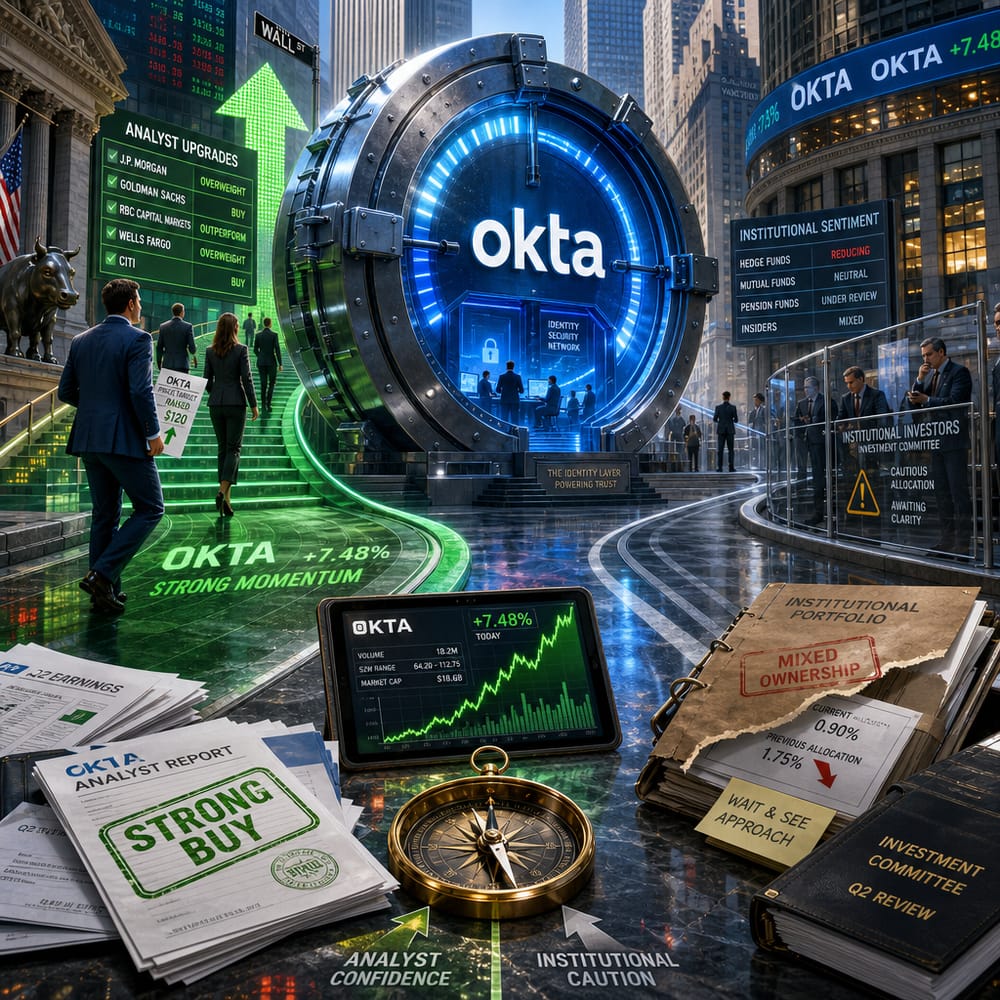
In the world of tech stocks, Okta is something of a rock star with a fan club divided down the middle. On one hand, you've got a crew of analysts singing its praises, waving 'Strong Buy' banners. On the other, a crowd of institutional bigwigs who are either hesitant or just plain indifferent, offering a mixed bag of sentiments. So, what gives? Why are the tastemakers of Wall Street so split on Okta's future?
First, let's unravel the enthusiasm from the 'Strong Buy' side. Okta, if you're unfamiliar, is a heavyweight in the identity and access management space—essentially the gatekeeper for businesses needing secure login systems. As digital infrastructures continue to weave into every facet of business operations, Okta's services are as essential as a good Wi-Fi connection. Analysts bullish on Okta are likely captivated by its growth potential in a world that increasingly runs on cloud-based services. When you couple this with Okta's consistent revenue growth and innovation in cybersecurity, it's easy to see why some analysts are practically scheduling "Buy Okta" reminders on their phones.
But hold on, it's not all rainbows and tech unicorns. Just across the analyst aisle, skepticism brews. This isn't just contrarianism for fun; it's rooted in legitimate concerns. First off, competition in the cybersecurity arena is fierce. Okta might be a veteran, but it's vying for supremacy against other formidable players like Microsoft and Google who have deep pockets and the ability to lure customers with integrated services. Then there's the macroeconomic landscape—interest rates are rising, economic growth forecasts are uncertain, and tech stocks are famously volatile. For institutional investors, who tend to play the long game, these are the kinds of factors that can turn a "Buy" into a "Maybe Later."
Now, let's zoom out a bit and consider how institutional stances compare with what the average retail investor is thinking. Retail investors, those of us scrolling through investment apps while waiting for our oat milk lattes, may not be as privy to the nuanced spreadsheets and interminable conference calls that institutional investors swim in. For them, the narrative could look more like a feel-good story of a tech company riding high on digital trends, making the 'Strong Buy' ratings more compelling.
The truth, however, is that retail investors might also be moved by the same winds of caution that give pause to institutional investors. Market jitters about tech companies overextending, rising interest rates making safe havens more attractive, and the relentless march of AI impacting the job market—all of these are factors that even a casual investor with a smartphone can grasp.
So, what does this analyst discord mean for Okta's future? It could be a classic "tale of two stocks"—where one stock leads in innovation and opportunity, while the other gets bogged down by competitive and economic challenges. For potential investors, it’s not so much a question of whether to invest, but when. Timing, as they say, is everything.
Investors should also keep their ears to the ground for any major shifts in Okta's strategy or market positioning. For instance, if Okta can successfully fend off competition or enter new markets, it could tip the scales in its favor. Conversely, any missteps or economic downturns may validate the concerns of the skeptics.
In the end, Okta's story is far from written. Whether you're in the 'Buy' camp or the cautious observer group, understanding this divergence in sentiment isn't just about placing a bet. It's about gaining insights into market dynamics, competitive pressures, and the ever-evolving landscape of tech. So, keep those alerts on and your investment apps handy—you'll want to be ready when the next chapter unfolds.
This article is for informational purposes only and is not investment advice. Always do your own research or consult a licensed financial professional before making investment decisions.
© Copyright 2024. All Rights Reserved.
© Copyright 2024. All Rights Reserved.