

Oil Slump Below $60 Overstates Demand Fears, Says Gunvor
Monday, April 14, 2025
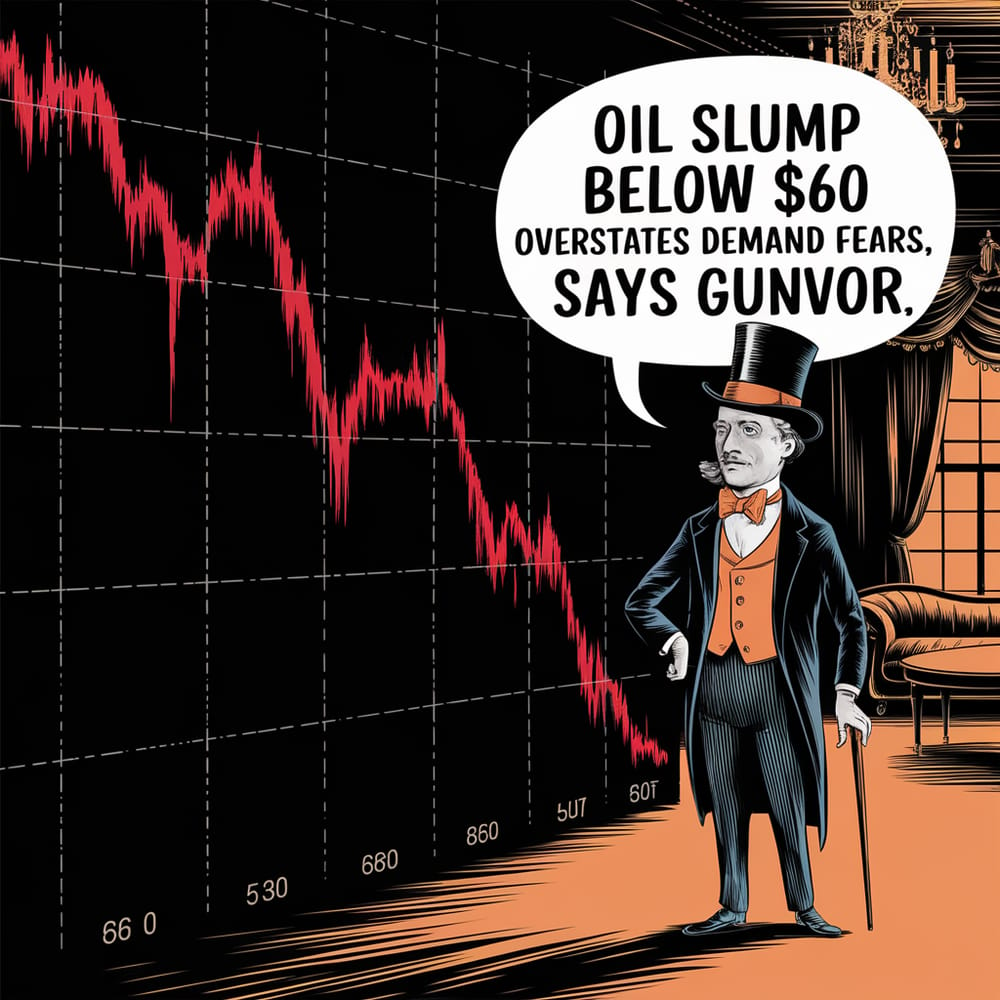
Last week’s drop in oil prices below $60 a barrel might have been a panic move—not a sign of economic doom—according to Gunvor Group, one of the world’s top commodity traders.
Brent crude slid to $58.40, nearly $25 off its 2025 high, as escalating U.S.-China trade tensions and an unexpected production boost from OPEC+ rocked global markets. But Gunvor’s head of research, Frederic Lasserre, says the market may have overreacted.
“People were pricing in a full-blown global recession. That was too aggressive—there’s a better path forward than zero growth,” Lasserre told Bloomberg.
He estimated that Trump’s initial tariff wave could cut demand by about 380,000 barrels per day, but warned that if oil stays near $60, U.S. shale growth may stall in 2026. Conventional U.S. oil fields might still expand, but shale—the engine of past supply growth—could flatline.
Interestingly, futures trading activity suggests not all investors are bracing for collapse. On Friday, the closest U.S. crude contract posted its biggest premium over the next month since early February, hinting that some see short-term tightness.
Lasserre noted that refining margins haven't collapsed, and nearby timespreads aren’t behaving like a market expecting no demand—further proof the downturn might be more about panic than fundamentals.
Bottom line: Oil at $60 may reflect a worst-case scenario that won’t materialize. While Trump’s tariffs have spooked markets, Gunvor sees more upside than downside from here.
© Copyright 2024. All Rights Reserved.
© Copyright 2024. All Rights Reserved.