

Oil Falls Below $60 as Saudis Shift to Market Share Over Price
Thursday, May 01, 2025
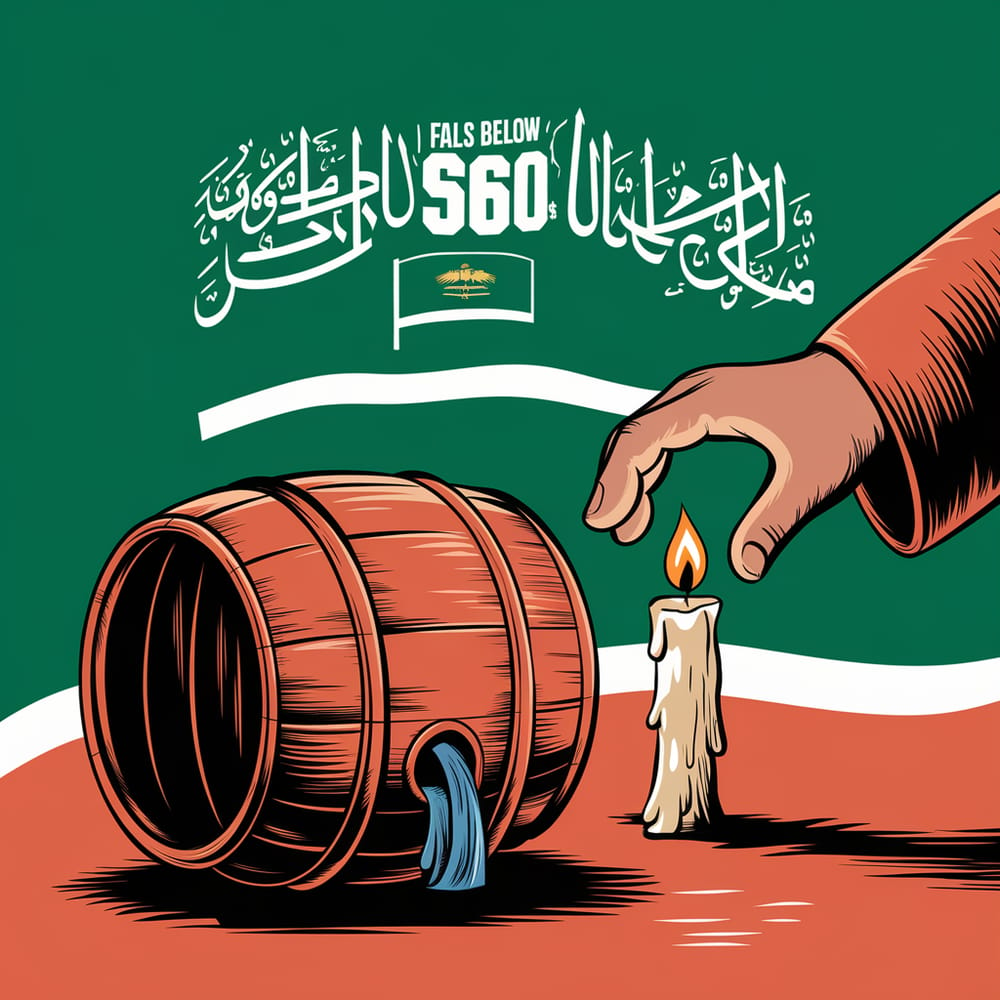
Oil prices are sliding again, and the market’s getting the message loud and clear: Saudi Arabia is done defending high prices.
Brent crude dropped below $60 a barrel for July delivery, while WTI fell to $57, as traders brace for another Saudi-led OPEC+ supply surge. The April collapse—a 16% plunge, the worst monthly drop since 2021—is now bleeding into May.
What’s changed? Saudi officials have signaled they can withstand a stretch of low prices, implying OPEC+ will keep pumping to defend market share, not price. That shift, combined with output increases from countries like Guyana, is weighing hard on the global balance.
“We continue to expect downward pressure on oil,” said Arne Lohmann Rasmussen of Global Risk Management. “Saudi strategy appears to be pivoting.”
Meanwhile, the trade war is starting to bite. U.S. economic data showed the first contraction since 2022, and China’s factory activity just hit its lowest point since December 2023. Even with a drop in U.S. crude and gasoline inventories, sentiment remains bearish.
Adding to the pressure: looming U.S. sanctions on Russia and its oil buyers, with a Senate bill gaining traction that could slam countries importing Russian barrels. That’s only increasing geopolitical risk and market anxiety.
Bottom line:
The oil market’s new reality is one of rising supply and slowing demand, fueled by a tariff-driven global slowdown and Saudi Arabia’s pivot to volume over price. And with Brent back in the $50s, traders should prepare for more turbulence ahead.
© Copyright 2024. All Rights Reserved.
© Copyright 2024. All Rights Reserved.