

Oil Surge Sends Long-Dated Treasury Yields Soaring to 19-Year Highs — How Investors Are Rethinking Bond-Equity Trade-offs
Monday, August 17, 2026
OIL SURGE SENDS LONG-DATED TREASURY YIELDS SOARING TO 19-YEAR HIGHS — HOW INVESTORS ARE RETHINKING BOND-EQUITY TRADE-OFFS
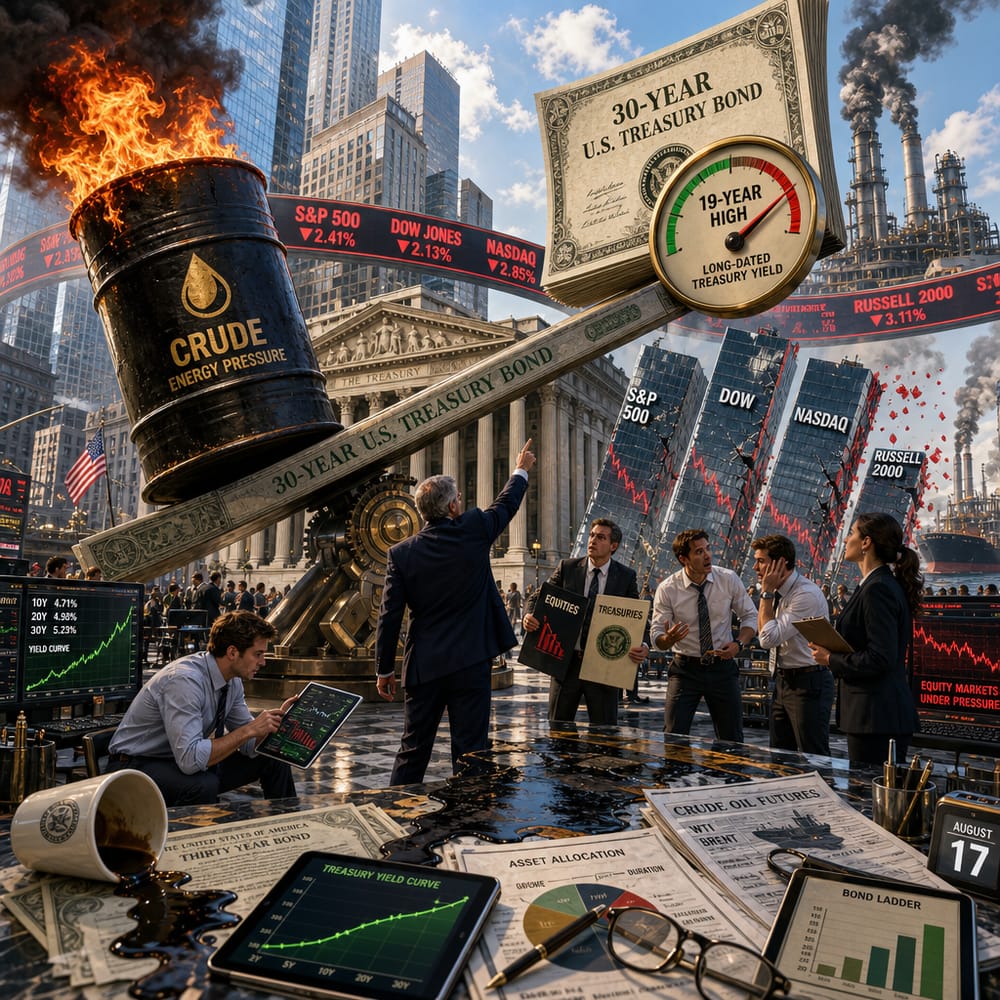
In the thrilling world of finance, sometimes the biggest drama comes from a few mere digits. Case in point: the 30-year Treasury yield just hit 5.311%, a peak unseen since Flip phones were all the rage back in June 2007. So why the leap? Two words: oil prices. They've decided to go on an upward sprint, leaving investors clutching their pearls, and portfolios.
Oil prices are higher than a kite in a windstorm, fueled by geopolitical tensions that could give Hollywood a run for its money. The looming U.S.-Iran peace deal deadline, with Tehran crossing its arms defiantly, has stirred the oil pot to a boiling point. And guess what? Investors aren't just sitting with popcorn; they are recalculating everything — from risk appetites to portfolio compositions.
What does this all mean for those cozy equity markets? Well, it’s like watching dominoes fall. The S&P 500, the Dow, and the Nasdaq were all caught in the downdraft of rising oil and bond yields — with the Russell 2000 cheering them on from the side. Just when we thought stocks were reaching record heights, inflation decides to join the scene, making everything a little more... complex.
So, how are investors realigning their chess pieces on this suddenly shifting board? Some are swapping their equities for the safer, albeit less glamorous bonds. Think of it like trading in your flashy sports car for a reliable, gas-efficient sedan. Not as fun, but definitely safer with gas prices threatening to skyrocket.
Sectors feeling the pressure the most? Let’s talk about tech and consumer discretionary stocks. These darlings of the equity world have been lagging, thanks in part to the yield spike. Investors, fearful of inflation munching away at their returns, are seeking refuge in sectors less tied to consumer whims and more resilient to economic storms.
But why does oil have this much clout, you might ask? Picture this: when oil prices rise, the cost of doing business for a lotta sectors also climbs. Airlines? They feel the burn in jet fuel expenses. Shipping companies? Watch operational costs soar. Not to mention, people tend to tighten their belts as gas pumps drain their wallets, impacting retail and travel industries alike.
With the bond market getting a sparkly new allure, the yield surge is reshaping the bond-equity trade-offs. Investors are now excitedly considering bonds as a viable alternative to stocks for the first time in ages. Remember, when bond yields go up, bond prices go down, making them a sweet deal for many looking for less volatile investments. It’s kind of like a clearance sale for cautious investors.
As yields shoot up like a firework, it’s time for the Federal Reserve to put on its thinking cap. The central bank’s dance between interest rate decisions and inflation statistics will be one to watch. If inflation continues to rear its ugly head, more aggressive rate hikes might not be far behind, pushing yields even higher. Who knew the world of fixed income could be so thrilling?
So what's the retail investor to do? It’s time to get strategic. Balancing portfolios with a blend of bonds and stocks might just be the savvy move, akin to mixing a smoothie with just the right amount of fruit — deliciously diversified. For those not afraid to embrace a little risk, equity sectors like energy could offer attractive opportunities. After all, with oil prices surging, energy companies are basking in lucrative sunshine.
In this constantly evolving financial drama, it's crucial to keep a close eye on economic indicators, geopolitical whispers, and inflation statistics. After all, in the world of investing, staying informed and agile is the name of the game. So, buckle up, keep your hands inside the portfolio at all times, and enjoy the ride!
This article is for informational purposes only and is not investment advice. Always do your own research or consult a licensed financial professional before making investment decisions.
© Copyright 2024. All Rights Reserved.
© Copyright 2024. All Rights Reserved.