

Oil Spike and Ceasefire Collapse Trigger Market Volatility
Tuesday, August 18, 2026
OIL SPIKE AND CEASEFIRE COLLAPSE TRIGGER MARKET VOLATILITY
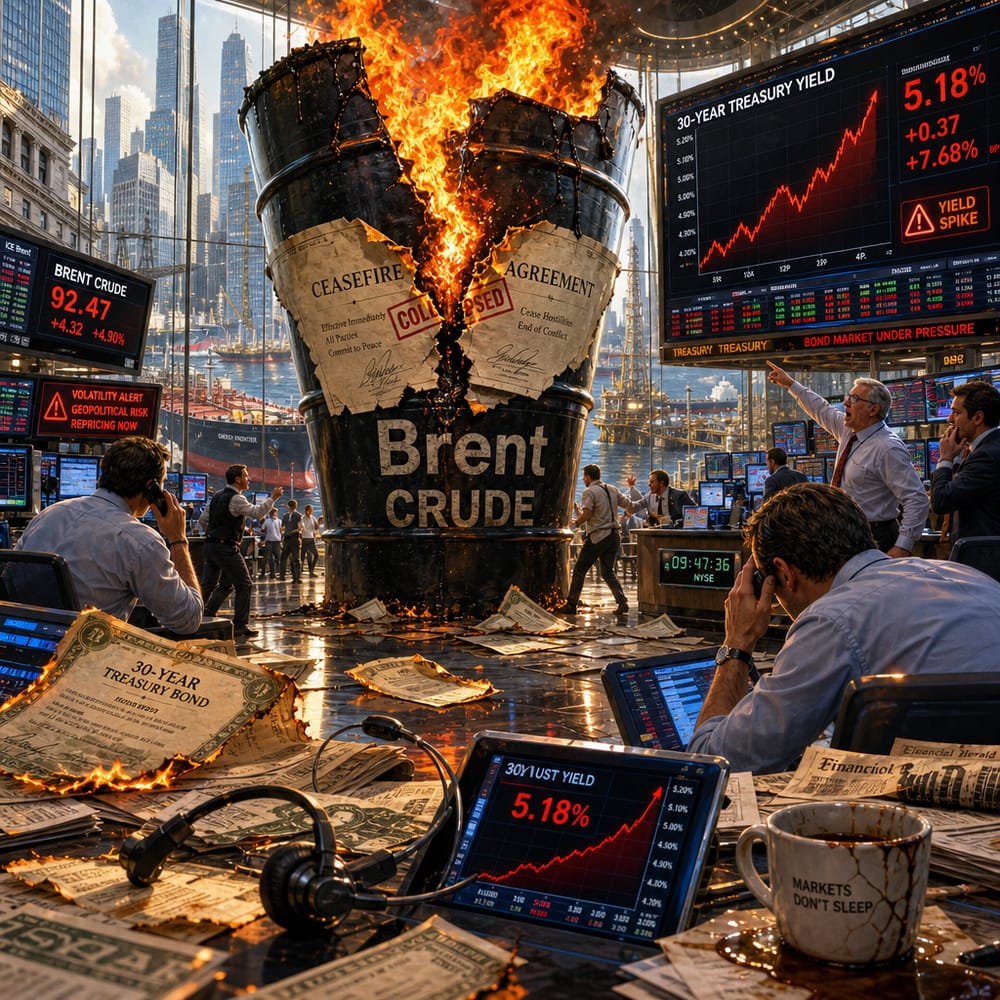
When geopolitical tensions start boiling over, they don't just make for dramatic headlines—they send ripples through markets faster than a viral TikTok. With the U.S.-Iran ceasefire going kaput, oil prices have skyrocketed, and this isn't just about higher prices at the pump. This is shaking up bond markets and stock portfolios across the board.
So, what happens when a fragile peace gives way to a stormy standoff? For starters, crude oil prices don't just climb—they catapult. Brent crude, the global oil benchmark, has been flirting with new highs, reminding everyone that the black gold is as much about geopolitics as geology. The expiration of the U.S.-Iran ceasefire means more than just diplomatic tête-à-têtes missing their morning coffee; it's about supply lines facing new threats right when the world's been trying to catch its breath.
An oil surge like this isn't just about fueling your car; it's about fueling fears of inflation. As oil prices rise, so too does the cost of pretty much everything else. That burger you love? Yup, it's going to cost more to transport, refrigerate, and ultimately flip onto your plate. Inflation has been the ghost haunting the economy, and with oil prices climbing, that specter is getting a fresh set of chains to rattle.
Switching gears, if you're wondering why your bond portfolio has been acting like it's had one too many espressos, look no further than the 30-year Treasury yield. It's hit levels not seen in 19 years, skyrocketing to more than 5.33%. For those new to the bond world, yields and prices move like kids on a seesaw—when one goes up, the other goes down. And why the high yields? Investors are not just bracing for a continued bout of inflation due to soaring oil prices but are also concerned about Uncle Sam’s ballooning fiscal deficit. The U.S.’s financial health is looking a bit like a kid after a Halloween candy binge—overindulged and hyperactive.
High yields mean higher borrowing costs, and that's a headache for consumers and businesses alike. Mortgages, auto loans, credit cards—everything on tick is going to be more expensive, acting like a brake on economic growth. And with higher costs and inflation on the horizon, the Federal Reserve might just have to play the role of the strict parent, potentially raising interest rates to keep the economy from overheating.
But what about the stock market? With oil prices and bond yields turning up the pressure cooker, equities may feel the heat. Generally, when inflation fears grow, investors become skittish about stocks—particularly those in sectors heavily reliant on consumer spending. Higher oil prices, coupled with pricier debt, can weigh on corporate profits, especially if consumers start pinching pennies.
However, it's not all gloom and doom. Some sectors could find themselves unexpectedly in the sun. Energy stocks, for instance, are enjoying a renaissance, riding the wave of higher oil prices. Companies involved in oil exploration, drilling, and refining are seeing improved margins and investor interest. Think of it like an unexpected invite to the cool table—if oil prices stay up, energy stocks might just keep getting popular.
So, here's the million-dollar question: What should you, the everyday investor, do with all this chaos? First, don’t panic-sell your portfolio into oblivion. Market volatility is like a bad reality TV show—it’s dramatic, but often short-lived. Diversify your holdings to spread out risk. Consider sectors that could benefit from the current conditions, like energy or materials. Keep an eye on how and when the bond yields might stabilize. And remember, cash is a position too—sometimes the best move is to sit tight and let the storm pass.
In the tangled web of geopolitics, oil, and markets, nothing is ever certain, except perhaps the unpredictability itself. So, stay informed, stay diversified, and get ready for what the markets might throw at you next. Because ready or not, the financial world is always a wild ride.
This article is for informational purposes only and is not investment advice. Always do your own research or consult a licensed financial professional before making investment decisions.
© Copyright 2024. All Rights Reserved.
© Copyright 2024. All Rights Reserved.