

Oil Slump Eases Market Volatility
Thursday, August 27, 2026
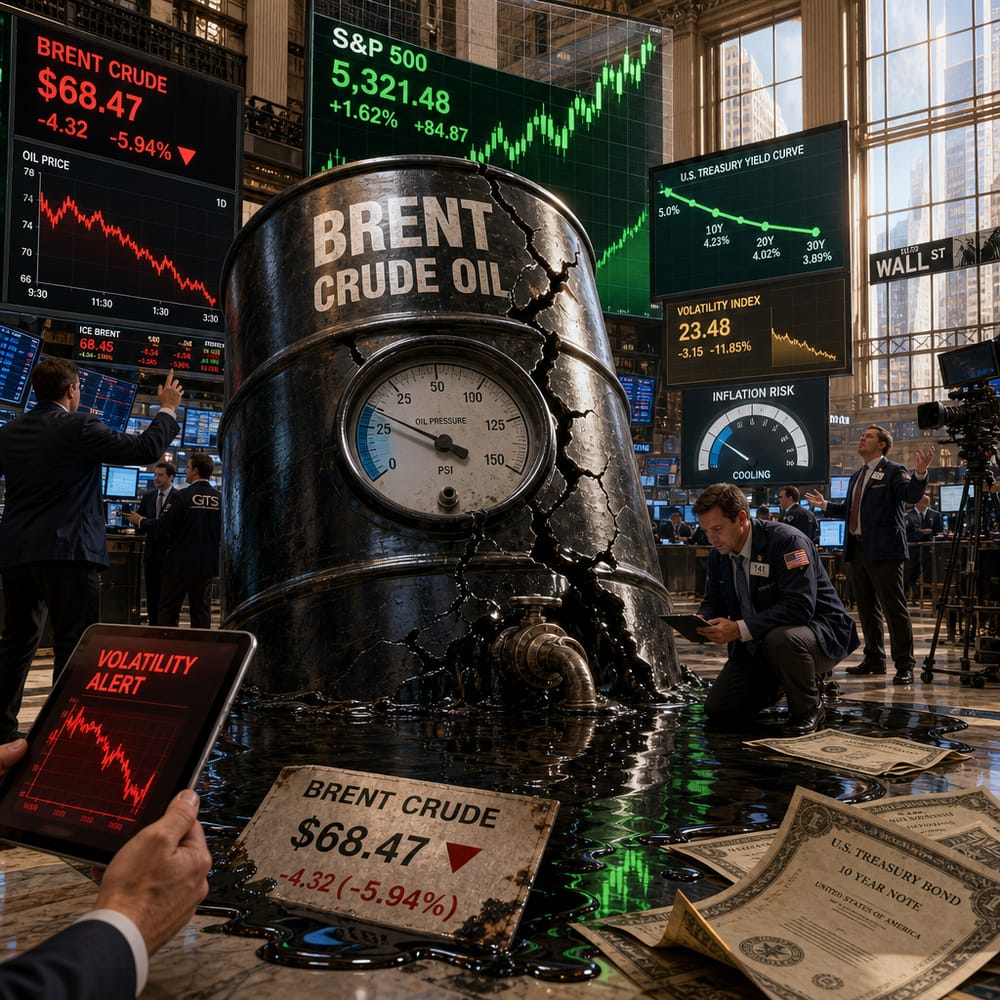
Oil prices have been on a slippery slope, and this time, it's actually smoothing things out for the financial world. Imagine oil prices doing a graceful pirouette downwards, helping to ease inflation like a soothing balm on a sunburned economy. As a result, the S&P 500 is waltzing upwards, and bond yields are doing their best limbo impression, sliding down to more manageable levels. It might sound a bit like financial fairy tales, but let's break it down into real-world impact.
Oil isn't just that sticky stuff that makes your car go vroom. It's a major player in the economic orchestra, and its price movements have a knack for sending ripples across the pond. When oil prices take a nosedive, it’s like someone popped a balloon full of inflationary pressure, letting a bit of hot air out of the economy.
Let's talk inflation, that pesky economic gremlin that nibbles away at your purchasing power. Inflation expectations often rise in tandem with oil prices because oil is a key input in everything from manufacturing to transportation. When oil prices spike, the cost to produce and move goods rises, and that cost usually ends up hitting consumers' wallets. But when oil prices fall, those cost pressures ease up and inflation expectations simmer down. With oil prices on a gentle glide path downwards recently, it seems like inflation's been put on a short leash, at least for now.
So, what does this mean for the markets? For starters, the S&P 500—which tracks the stock performance of 500 large companies in the U.S.—has been enjoying a nice boost. Investor sentiment is like a freshly brewed cup of optimism, thanks in part to these lower inflation expectations. When inflation isn't breathing down the necks of consumers and businesses, they're more likely to spend and invest, making stocks an attractive option.
Meanwhile, in the bond market, lower inflationary pressures are music to investors' ears. Bond yields—essentially the interest rate bonds pay out—often move in the opposite direction of bond prices. So, when inflation fears cool off, bond prices tend to climb, causing yields to decline. Lower yields can make borrowing cheaper, promoting economic growth, and more importantly, keeping central bankers from reaching for the interest rate panic button too soon.
Now, let’s pivot to the sectors that benefit most when oil prices take a dive. First in line are the transportation and airline sectors. Fuel costs make up a hefty slice of their expenses pie, so when oil prices drop, these companies feel a lot lighter on their feet. Lower fuel costs can mean more competitive pricing and potentially higher margins.
Next up are consumer goods companies. Lower oil prices can mean reduced costs for production and shipping, which can either bolster profit margins or lead to lower prices for consumers—either way, a win-win scenario.
Of course, it's not all sunshine and rainbows. Some sectors, like energy companies, feel the pinch when oil prices slip. Lower prices can cut into their revenues and profits, leading to budget tightening and, in some cases, job cuts.
But don’t start cracking open that champagne just yet. The financial markets are anything but predictable, and oil prices are about as stable as a cat on a hot tin roof. Geopolitical tensions, OPEC production decisions, and global demand shifts are just a few of the wildcards that could send oil prices—and consequently, inflation expectations and market sentiment—bouncing around.
As for the Federal Reserve, they're keeping a watchful eye on these developments. The recent chatter from Fed heads suggests they're ready to tap the brakes on the economy by raising interest rates if inflation doesn’t retreat sufficiently. But with the latest easing in oil prices, there's a bit more breathing room to make those calls cautiously.
In conclusion, while the current slip in oil prices is providing a degree of relief from inflationary pressures, there's no such thing as a free lunch in economics. Investors should stay vigilant, watching both the oil market and broader economic indicators for signs of change. But for now, lower oil prices have set a calmer tone in the financial markets, providing a much-needed stabilizing force for both stocks and bonds. So, keep your eyes peeled, your portfolios diversified, and enjoy the respite while it lasts.
This article is for informational purposes only and is not investment advice. Always do your own research or consult a licensed financial professional before making investment decisions.
© Copyright 2024. All Rights Reserved.
© Copyright 2024. All Rights Reserved.