

Oil Slide and Easing Geopolitical Risks Fuel Monday Rebound: Dow Surges 1,000+ Points While Nasdaq, S&P, Russell All Climb
Monday, November 09, 2026
OIL SLIDE AND EASING GEOPOLITICAL RISKS FUEL MONDAY REBOUND: DOW SURGES 1,000+ POINTS WHILE NASDAQ, S&P, RUSSELL ALL CLIMB
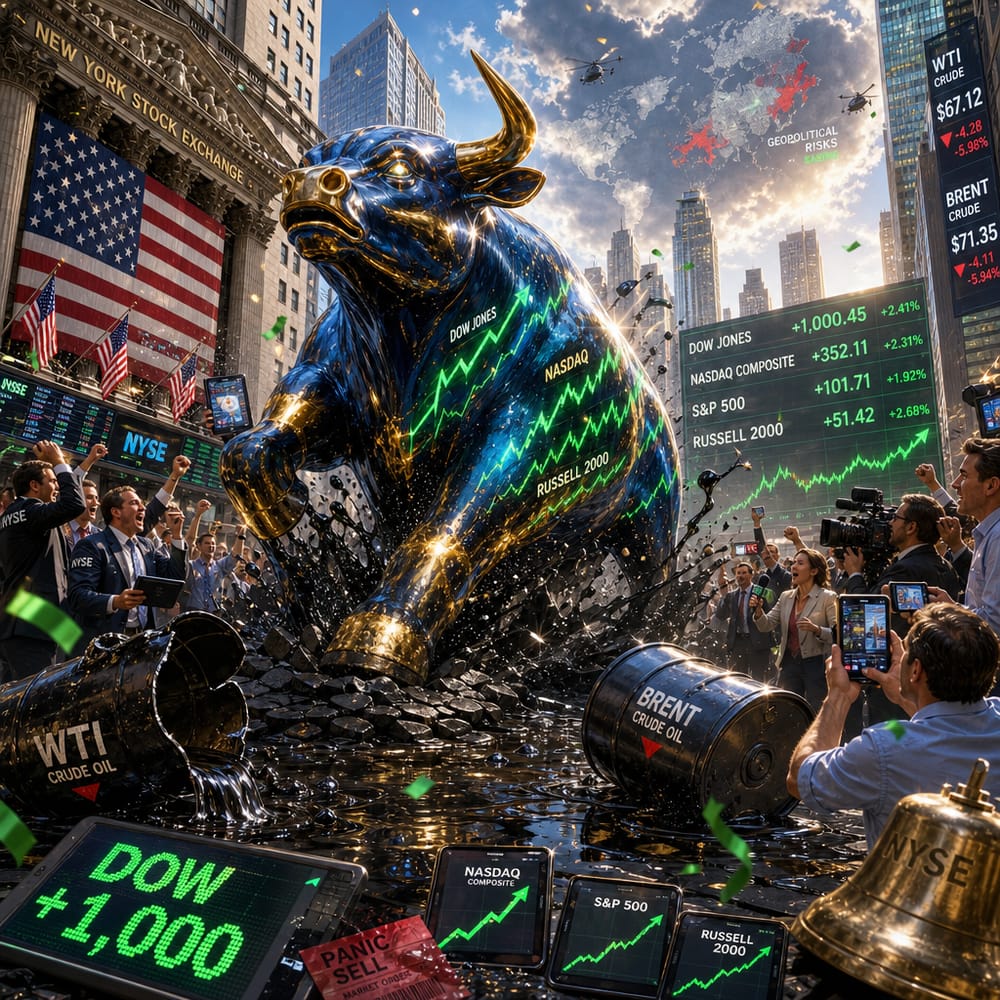
In the fast-paced world of finance, Monday was the day the markets decided to put on a fireworks display. Picture this: the Dow Jones Industrial Average leaped over 1,000 points in a single bound, with the Nasdaq and S&P 500 doing their best to keep up. What sparked this party on Wall Street? Two words: oil slide.
It seems the oil market took a slippery dive, sending shivers of excitement through investors. West Texas Intermediate (WTI), the bellwether for U.S. oil prices, dropped around 3% to hover near $87 per barrel. Meanwhile, Brent Crude, the international standard, slid down 4% to $94 per barrel. For anyone keeping score, that's a considerable drop—and a welcome relief for a market that’s had its share of heartburn over rising energy costs.
But why did oil decide to take this plunge? In the grand theater of global economics, geopolitics often steals the spotlight. Recent rumblings of détente in some key global flashpoints have taken the edge off investor nerves. This easing of tensions is like a warm blanket on a cold night for those worried about potential supply disruptions driving oil prices skyward.
So, who benefits when oil prices fall? Let's just say the tech sector is throwing a quiet celebration. Lower oil prices mean lower costs for companies that rely on energy-intensive operations—think data centers and cloud computing platforms. Hence, stocks in the tech-heavy Nasdaq saw a neat 2.5% bump, with chipmakers, in particular, shaking off last week's gloom and doom. Nvidia, however, didn't quite join the festivities; it's currently wrestling with its own drama that's juicier than a Netflix original.
Meanwhile, on Main Street, sectors like consumer goods and transportation are smiling. Cheaper oil typically translates to lower production and transportation costs, and that's good news for profit margins. It's no wonder the S&P 500 trotted alongside the Nasdaq with a 2.3% rise, reflecting a broad rally across various sectors.
Now, about those geopolitical tensions. It appears some of the world's big players are choosing diplomacy over discord, a move that generally calms the financial seas. With uncertainty around midterm election results also beginning to settle—despite some lingering drama—investors are finding their footing again. Even the murky waters of international relations are seeing some clarity, with less saber-rattling and more handshakes (or at least nods) across borders.
But let's not forget the shadow still lurking over the joyous rally: the tech sector's rocky relationship with AI. While some investors are diving back into the tech pool, others are hesitating on the diving board, concerned about tighter regulations and the sustainability of AI's towering growth. Goldman Sachs’ CEO David Solomon recently reassured markets that AI financing is chugging along just fine, but the jitters remain, especially as industry leaders like Nvidia navigate their own storms.
So, where does this leave the everyday investor? For one thing, Monday's market surge underscores just how sensitive stocks are to the winds of oil prices and geopolitical shifts. Keeping an eye on these elements is crucial. Whether you're a seasoned trader or just someone glancing at your 401(k) over morning coffee, understanding these dynamics can help you navigate the market's ebbs and flows.
In the end, while Monday's rebound paints a hopeful picture, remember that markets, much like the weather, are unpredictable beasts. The one constant? Change itself. So, stay informed, keep your wits about you, and perhaps most importantly, enjoy the ride. After all, in the world of stocks, roller coasters are part of the fun.
This article is for informational purposes only and is not investment advice. Always do your own research or consult a licensed financial professional before making investment decisions.
© Copyright 2024. All Rights Reserved.
© Copyright 2024. All Rights Reserved.