

Oil’s Rollercoaster: From Bond-Market Pressure to Equity Stimulus—Markets React to Energy Swings
Thursday, August 27, 2026
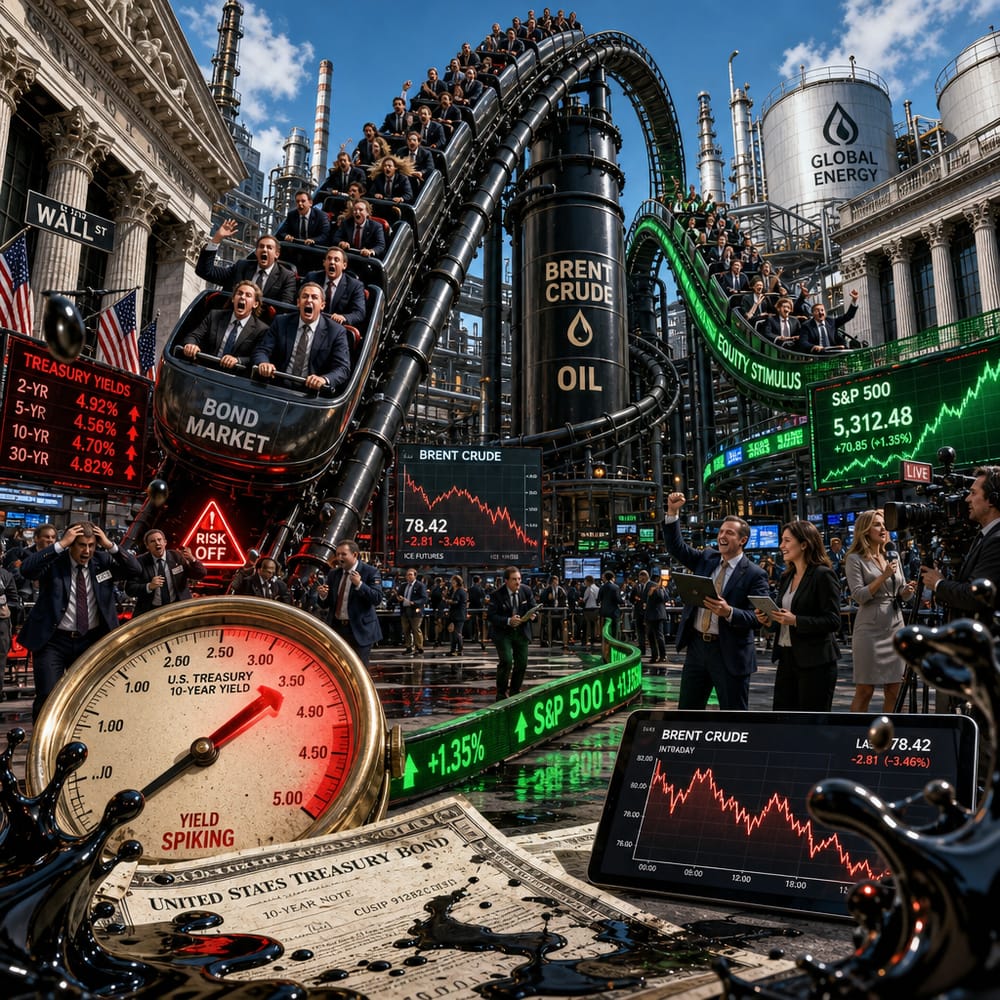
Oil prices are the financial world's version of a rollercoaster: thrilling, unpredictable, and slightly nauseating. One moment, Brent crude is up, inspiring energy companies to throw a party. The next, it drops, and the bond market starts to sweat. So, why should you care about this wild ride while sipping your morning coffee? Because the ups and downs of oil aren’t just numbers on a screen—they’re a heartbeat influencing everything from your 401(k) to what you’ll pay at the pump next month.
Oil takes center stage in the global economy, wielding its power over markets in ways that would make even the most seasoned Broadway diva blush. Recently, we’ve seen oil prices swing more wildly than a kid on a sugar rush. One day prices dive, and the next, they steady themselves just enough to keep everyone guessing. But while this might make for good drama, it's causing all sorts of headaches for market players, big and small.
So, what happens when oil prices drop faster than a hot potato? Bond yields—those boring but crucial interest rates that determine how much the government has to pay to borrow money—start to tense up. When oil prices fall, it’s a signal that maybe, just maybe, the economy is cooling down. Lower oil prices often mean lower inflation, which sounds great, but it also means investors start to question the strength of the economy. They pile into bonds, pushing yields down. Yields are like the canary in the coal mine for economic health; when they dip, it's a signal that the market is bracing for some turbulence.
And what about equities, those stocks we all love to watch, hoping they climb ever higher? Well, they tend to react like they're at a swing dance with bonds, moving in the opposite direction. If bonds are up, equities might shuffle down and vice versa. But it’s not always straightforward. Falling oil can mean lower costs for companies, which is a boon for some sectors like airlines and transport. Think of it as a sudden discount on jet fuel or diesel, where every cent saved can mean millions in profit.
Not all sectors, however, are invited to the party. Energy stocks, for instance, are the first to feel the pinch when oil prices tank. These companies thrive on high oil prices, and their stocks can take a nosedive when the market is awash in cheap oil. On the flip side, consumer sectors might get a boost. Lower fuel prices mean consumers have a bit more spare change, though with the caveat that lower oil prices can signal broader economic issues.
Now, if you’re wondering where all this leaves you and your portfolio, it’s time for a strategy check. Diversification is your secret weapon. If your investments heavily favor energy stocks, sudden oil price drops can hit hard. But by spreading your bets across different sectors—think tech, consumer goods, and healthcare—you can ride out the waves without getting seasick.
This isn't just a game for the big players; retail investors like you can make savvy moves too. Keep an eye on the Federal Reserve's actions, as they can be a major influencer in the bond-equity dance. Fed Chairman Kevin Warsh's mystery speeches have a way of pushing the market this way and that, depending on how investors interpret—or misinterpret—his cryptic cues.
So as you scroll through headlines and watch oil prices swing for the fences, remember: this isn't just market noise. It's the soundtrack to a complex ballet of economics, sector rotations, and strategic moves that could impact everything from your savings to your everyday expenses. Grab your popcorn, because the oil market drama is one to watch. And maybe, just maybe, with a little foresight and a well-diversified portfolio, you can turn this rollercoaster ride into a journey towards financial growth.
This article is for informational purposes only and is not investment advice. Always do your own research or consult a licensed financial professional before making investment decisions.
© Copyright 2024. All Rights Reserved.
© Copyright 2024. All Rights Reserved.