

Oil’s Return Pushes Yields Higher, Sparks Equity Decline: A Risk-Off Resurgence
Thursday, August 20, 2026
OIL’S RETURN PUSHES YIELDS HIGHER, SPARKS EQUITY DECLINE: A RISK-OFF RESURGENCE
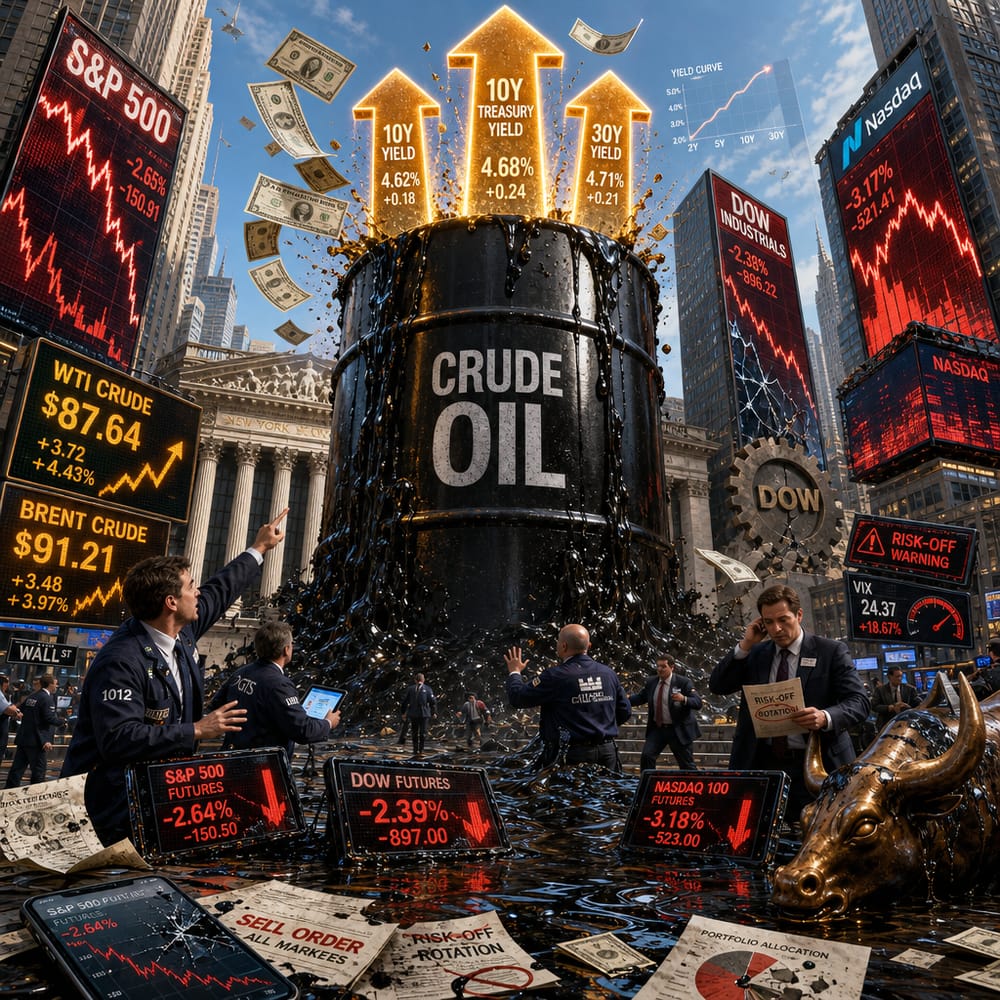
Oil, that slippery, combustible force of nature, did what it does best last Thursday: it shook the markets. The price of Brent crude surged 1.9%, while the U.S. benchmark, West Texas Intermediate, jumped 2.3%. This bump wasn’t just a blip on the radar; it sent ripples through the financial ecosystem, bumping up bond yields and squishing the life out of equities. It’s as if the Dow, S&P 500, and Nasdaq all decided they’d had enough for the week and plopped down to catch their breath.
So, what’s the deal with oil prices giving the stock market such a headache? Here's a crash course: when oil prices go up, it usually points to higher inflation. And higher inflation means central bankers might hit the brakes on the economy by hiking interest rates. Now, bond yields, which are the return investors get for holding government bonds, tend to rise with interest rates. When bond yields rise, equities often take a tumble since investors start eyeing bonds as the more attractive, lower-risk alternative. It's like choosing between a roller coaster ride and a comfy, stable deck chair.
Last Thursday, the yield on the 10-year U.S. Treasury leaped over 4.696%, while the 30-year yield hit a hefty 5.236%. These numbers look tiny, right? But in the bond world, even a small bump matters—a lot. Rising yields make borrowing costlier for companies, squeezing corporate profits and chilling investor enthusiasm. Just look at the Dow—down 337 points—and you’ll see the market's not amused.
Now, this oil-fueled bond yield drama isn’t happening in a vacuum. A bit of geopolitical spice was thrown in too. President Trump’s saber-rattling on Iran, promising the “most crushing economic operation ever,” added a dash of uncertainty to the mix. Traders hate uncertainty even more than they hate missing happy hour, so the market selloff wasn’t exactly a shocker.
For those invested in stocks, this could feel like watching your favorite team lose after leading all game. But fear not, dear reader. With every problem comes an opportunity. Here’s how you might navigate the choppy oil seas.
First, don’t panic-sell your equities just because oil prices are playing hardball. Diversification—spreading your investments across different sectors—could be your lifesaver. While tech stocks might be stumbling, energy stocks may be smiling all the way to the bank.
Another trick up your sleeve could be investing in inflation-protected bonds, known as TIPS. These little gems adjust their payouts based on inflation, providing a buffer against rising oil prices. It's like having a built-in insurance policy against price hikes, which might help you sleep better at night.
If you're the type who likes a little excitement, consider commodities themselves. Investing in energy ETFs (exchange-traded funds) allows you to ride the oil wave directly. But remember, with great power (and potential returns) comes great responsibility (and risk).
Lastly, keep an eye on the Federal Reserve. The Fed is the maestro orchestrating interest rates, and any hint of a rate hike could shift market dynamics quicker than you can say “yield curve.” Stay informed, stay flexible, and adjust your portfolio as needed. Like a wise surfer, you can ride the waves instead of being dunked by them.
This oil and bond yield tango underscores how intertwined global markets are. What happens in one corner of the world can echo through the financial halls like a rebellious teenager’s rock concert. The lesson here is simple but profound: stay vigilant, stay diversified, and don’t let a temporary market wobble knock you off your investment strategy.
As you navigate your investment journey, remember the financial markets are as unpredictable as ever. But with a sharp eye and a steady hand, you can steer through these stormy seas towards calmer waters and, hopefully, heftier returns.
This article is for informational purposes only and is not investment advice. Always do your own research or consult a licensed financial professional before making investment decisions.
© Copyright 2024. All Rights Reserved.
© Copyright 2024. All Rights Reserved.