

Oil Retreats and Inflation Eases, Boosting S&P 500
Thursday, August 13, 2026
OIL RETREATS AND INFLATION EASES, BOOSTING S&P 500
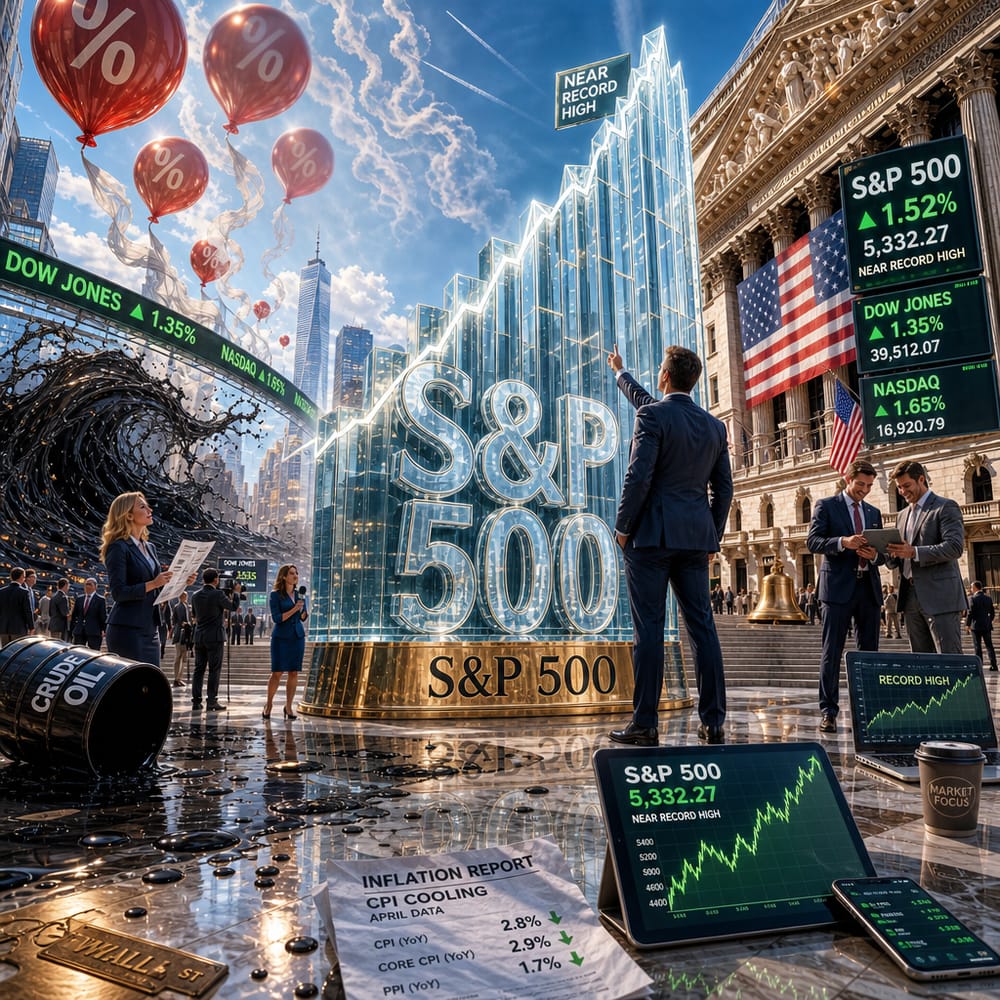
If there’s one thing that makes Wall Street traders giddy as a kid in a candy store, it’s a cocktail of cheaper oil and easing inflation. And that's exactly what’s spicing up the financial news this week. The S&P 500 is inching its way toward a high score, fueled by this one-two punch of economic news. Let's break down why a cut in oil prices and a softening inflation rate matter so much for your portfolio—and what could lie ahead.
As you sip your morning coffee and scroll through the latest headlines, know this: oil prices are sliding faster than a wet banana peel. U.S. West Texas Intermediate is down to around 82 bucks a barrel. Meanwhile, Brent crude, the global benchmark, is chilling out at about $87. Why the dip? Blame it on the International Energy Agency trimming its demand forecast amid some good ol’ geopolitical tension in the Middle East complicating supply routes. Less demand meets tricky supply, and presto, prices drop.
Now, you might be thinking, "Fine, oil is a little cheaper, but why should I care?" Well, my friend, cheaper oil means more than just saving a couple of bucks at the gas pump. It’s a domino effect that ripples through the entire economy. Lower oil prices can reduce transportation and production costs for companies, which in turn keeps a lid on consumer prices. And when inflation calms down, everyone from Wall Street to Main Street can breathe a little easier.
Here’s where it gets juicy: inflation. It's been a financial bogeyman for a while now, but recent reports show it's losing some of its bite. The latest figures show wholesale prices rising by 4.7% compared to last year, a noticeable drop from the 5.5% surge in June. Still high, but not quite "hair-on-fire" high. This easing inflation is music to the Federal Reserve's ears. A softer inflation rate may convince the Fed to hit pause on those dreaded interest rate hikes that everyone loves to hate.
So, with oil prices down and inflation less vicious, the S&P 500, along with its buddies the Dow and Nasdaq, are feeling frisky. The S&P is scratching at the door of its previous record high, the Dow is up (albeit just a smidge), and the tech-heavy Nasdaq is getting in on the action too. Investors see a rosier future if inflation continues to cool off and the Fed decides to let interest rates find a comfy seat rather than inching skyward.
But before we pop the champagne, here are some longer-term things to chew on. For starters, sustained lower oil prices can have a mixed bag of effects. Sure, it's great for now, but over time it might discourage investment in energy production, leading to supply crunches when demand eventually rebounds. And then there’s the whole geopolitical kettle of fish. Any flare-up in the Middle East could throw a wrench in the works overnight.
And what about the Fed? If inflation continues its downward trend, we could see a prolonged pause in rate hikes. But let's not kid ourselves—Fed policymakers aren't exactly known for their predictability. They could keep rates steady, back off, or double down depending on how the broader economic narrative unfolds.
In the meantime, keep an eye on those corporate earnings reports and global economic data. Companies like Cisco have been making waves despite good earnings because investors are laser-focused on guidance rather than past performance. And then there's Workday, which saw a stock price rollercoaster thanks to takeover chatter. Software and tech companies remain under the microscope as investors weigh the AI gold rush against potential market disruptions.
In the end, while the current climate of cheaper oil and easing inflation is giving the markets a shot of optimism, remember that financial markets love to zig when everyone expects a zag. So, keep your seatbelt fastened and your eyes peeled for the next big thing that could sway investor sentiment. After all, in the world of markets, if you blink, you might miss the next move.
This article is for informational purposes only and is not investment advice. Always do your own research or consult a licensed financial professional before making investment decisions.
© Copyright 2024. All Rights Reserved.
© Copyright 2024. All Rights Reserved.