

Oil Prices Dip as Strait of Hormuz Deal Progresses
Tuesday, August 04, 2026
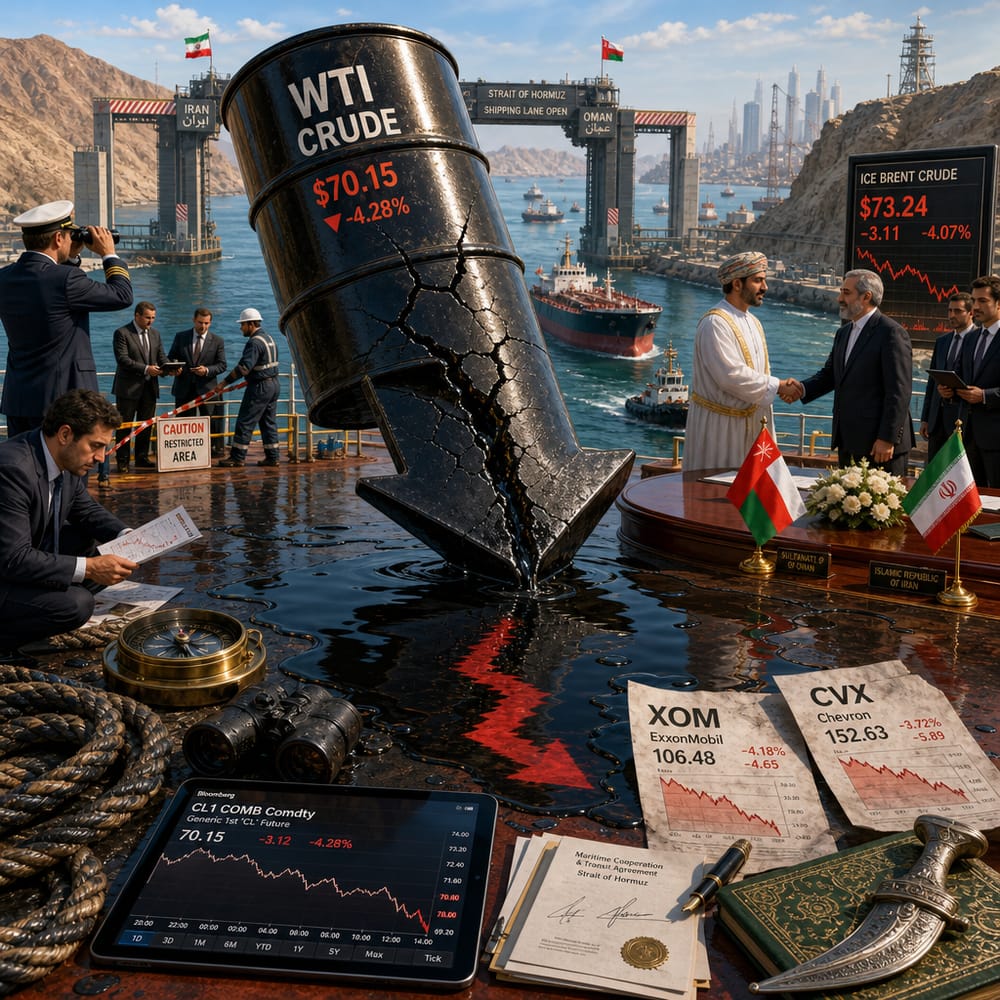
OIL PRICES DIP AS STRAIT OF HORMUZ DEAL PROGRESSES
If you thought the Strait of Hormuz was just another squiggle on the map, think again. It’s like the Panama Canal of the Middle East — a vital artery through which about a fifth of the world’s oil gurgles on its way to thirsty markets. And it's been causing quite the ruckus. Picture a high-stakes game of geopolitical poker where each player is clutching a hand filled with pipelines, tankers, and, of course, a splash of intrigue.
Lately, Iran and Oman seem to be saying, “Hey, why don't we slip into something a bit more comfortable — like a peace deal?” What’s on the table might just pry open this crucial maritime neck, and that means oil prices are shaking in their boots.
Recently, oil prices took a dive as talks between Iran and Oman progressed. The potential reopening of the Strait of Hormuz has investors ready to pop the champagne — or, more fittingly, unscrew a barrel of crude. But don’t book your Hawaiian vacation just yet. The ink isn’t dry on any deal, and it’s wise to stay skeptical until the hugs and handshakes are caught on camera.
With whispers of these negotiations reaching a fever pitch, the market's collective eyebrow has been doing the Macarena. Just the rumor of smoother sailing through this bottleneck has sent oil prices southward. Major energy stocks danced along with the tune, with big names like ExxonMobil and Chevron feeling the pinch. These heavyweights saw their stock prices take a step back, reminding us all that the mere hint of geopolitical relief can make markets spin like a top.
As for the nuts and bolts of the deal, it seems like Iran and Oman are working on dividing the passage duties. Ships would glide into the Persian Gulf via Iran’s domain and exit through Oman’s, all while paying service fees for the pleasure. It’s diplomacy with a toll booth twist. And while this sounds like a Disney fairy tale, any agreement is likely tethered to the U.S. lifting its blockade on Iran’s ports, a move that would definitely make for an interesting plot twist.
Now, here’s the million-dollar question: What if talks progress or hit a snag? If Iran and Oman break out the ink and sign a deal, oil prices might just keep sliding. On the contrary, if discussions stall or fall apart, expect prices to jump faster than a cat on a hot tin roof. Markets thrive on certainty, and the current murmurings are a cocktail of hope and suspense.
Investors are currently engaged in a tug-of-war between geopolitical risk and relief. The scales are wobbling on whispers, and it’s anyone’s guess which way they’ll tilt. There’s no magic eight-ball here, just the eternal see-saw of investor sentiment and geopolitical drama.
So, what should you, the ever-curious retail investor, keep an eye on? Well, buckle up and watch the evolution of these talks. See if Iran and Oman can play nice and reach an agreement. If they do, it’s likely oil prices will stay on the downtrend, potentially easing the cost at the pump and giving a nudge to economic growth. But remember, the geopolitics dance is rarely a waltz. It's more of a tango with a bit of breakdancing thrown in.
In the end, the Strait of Hormuz saga boils down to a blend of strategy, negotiation, and a touch of theater. As retail investors, it’s wise to keep your gaze fixed on how these developments unfold because, in the world of oil, a ripple here creates waves over there. Oil prices have dipped, talks are in progress, and the world waits with bated breath. What happens next could very well chart the course for energy markets in the weeks and months to come. Stay tuned and keep those binoculars handy.
This article is for informational purposes only and is not investment advice. Always do your own research or consult a licensed financial professional before making investment decisions.
© Copyright 2024. All Rights Reserved.
© Copyright 2024. All Rights Reserved.