

Oil Prices and the USD Impact
Sunday, August 23, 2026
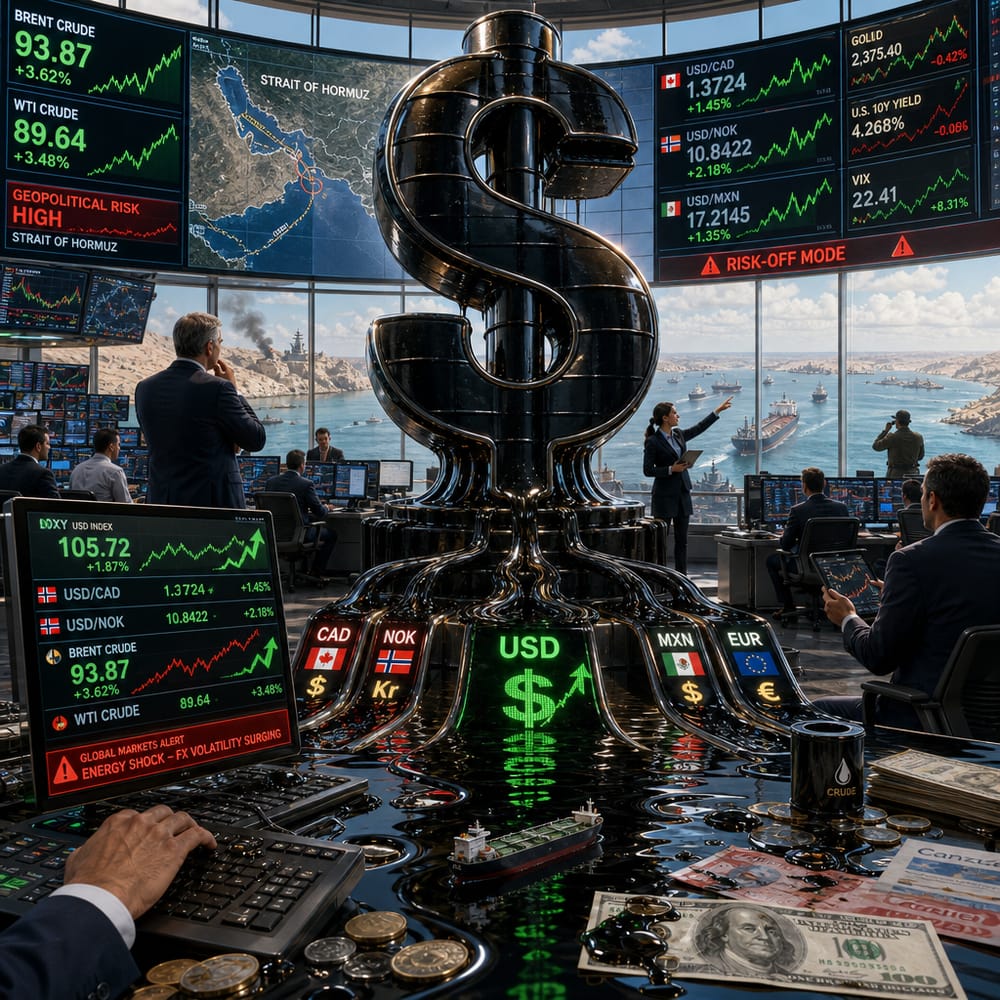
THE OIL PRICE ROLLER COASTER: HOW GEOPOLITICS IS SHAKING UP CURRENCIES
If you’ve been dozing off to the gentle hum of oil prices, time to wake up; the Strait of Hormuz is turning the oil market into a white-knuckle thrill ride, with your wallet riding shotgun. This thin strip of water carries about 20% of the world's oil, so any hiccup here can send shockwaves across global markets faster than you can say "fill 'er up." The latest geopolitical tension doesn't just threaten to jack up oil prices but is also kicking the currencies tied to oil into a wild dance.
Here's the gist: rising oil prices are a double-edged sword, slicing through the economies of both oil exporters and importers. And right now, that sword is pointing at the U.S. dollar (USD) and Canadian dollar (CAD) with a particularly sharp edge.
RISING OIL PRICES AND THE USD
In the world of currencies, the USD is usually the cool kid in the back of the classroom, leaning nonchalantly as it influences global trade. But skyrocketing oil prices have jolted it out of its comfort zone. Traditionally, when oil prices surge, the USD tends to weaken. Why? Because oil is priced in dollars. A higher oil price means oil-importing countries need more dollars to buy the same amount of oil, which can lead to a dip in USD demand as they scramble for alternatives.
Then there's the inflation boogeyman. With oil prices climbing, the cost of goods and services in the U.S. also tends to rise. This inflation can make the USD less appealing to investors, who might then seek refuge in other currencies or assets. So, if you're planning a trip abroad soon or pondering foreign investment, keep a close eye on how oil fluctuations impact the greenback's value.
WHAT ABOUT THE CAD?
Crossing the northern border, the Canadian dollar is feeling a different sort of heat. Canada, as an oil-exporting nation, usually basks in the glory of rising oil prices. When oil prices jump, Canadian oil companies make more money, which can boost the Canadian economy and, by extension, the CAD.
But don't pop the champagne just yet. While the short-term picture might look rosy, rising oil prices could drive inflationary pressures in Canada as well, potentially forcing the Bank of Canada to reconsider its interest rate strategies. The balancing act is almost like trying to walk a tightrope made of maple syrup (which, let's face it, is really sticky and tricky).
LONG-TERM IMPACTS ON OIL-LINKED CURRENCIES
It's not just North America that's in the spotlight. Other oil-linked currencies, like the Russian Ruble or the Norwegian Krone, are also swaying under the influence of oil's ups and downs. Over the long haul, a sustained spike in oil prices could lead to significant shifts in the global economic landscape.
For instance, oil-exporting countries might enjoy a brief windfall, but emerging market importers could struggle with higher energy costs, potentially leading to slower economic growth. In turn, this could affect global trade and investment flows, creating ripples that extend far beyond the home of maple leaves and bald eagles.
WHAT'S NEXT?
So, how might this drama unfold in the coming weeks? Much depends on the resolution (or escalation) of tensions in the Strait of Hormuz. If hostilities simmer down, oil prices might stabilize, easing some of the immediate currency pressures. But if things get frostier, we could see further turbulence in the oil market and more volatility in currencies tied to it.
For retail investors like you, this means keeping your eyes peeled on two fronts: the headlines coming out of the Middle East and the impact those headlines have on your investments, whether in currencies, oil stocks, or broader market sectors.
In this unpredictable landscape, your best bet is to stay informed and agile. After all, in the game of oil and currencies, the only certainty is that nothing stays the same for long. Remember, it's a roller coaster, not a merry-go-round—so strap in and hold on tight.
This article is for informational purposes only and is not investment advice. Always do your own research or consult a licensed financial professional before making investment decisions.
© Copyright 2024. All Rights Reserved.
© Copyright 2024. All Rights Reserved.