

Oil Prices and Bond Volatility Weigh on U.S. Equities
Thursday, October 08, 2026
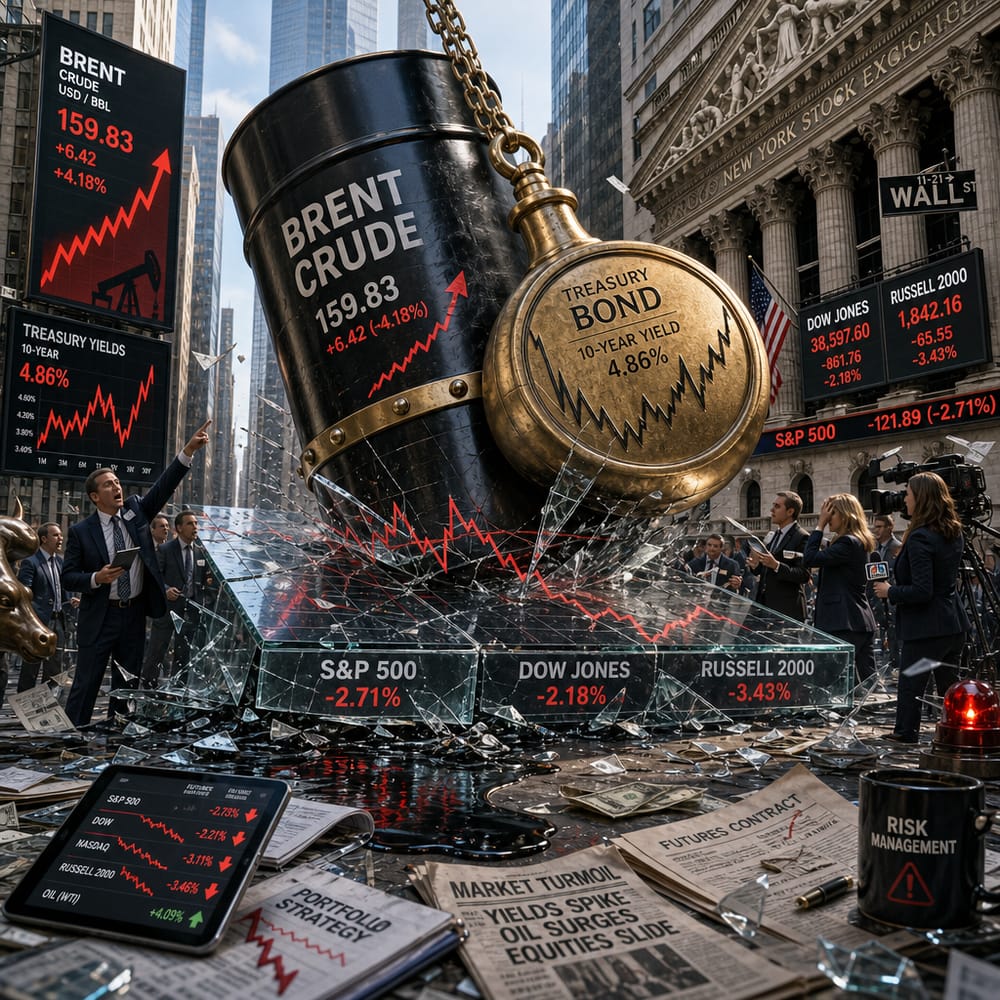
OIL PRICES AND BOND VOLATILITY WEIGH ON U.S. EQUITIES
You know things are getting serious when oil prices start acting like a teenager with a new car – revving up unpredictably and smashing records. Just when we thought the wild ride through inflation and tech tumbles was starting to smooth out, oil prices decided to take the wheel, and bond yields threw in the backseat chaos for good measure.
Let’s break it down: with Brent crude prices shooting up over 4% to surpass $104 a barrel, thanks to geopolitical drama that sounds like a reboot of an old thriller, investors are understandably jittery. President Trump’s mixed signals on Iran have added more fuel to the fire than a reality TV show reunion, sparking fears of a Middle Eastern flare-up that could do more than just singe your gas budget.
So, what’s the big deal about oil prices climbing Everest-style? For starters, it makes everything pricier, from your morning commute to the cost of getting that coffee to your favorite café. Rising oil prices have a domino effect on consumer inflation expectations because let’s face it, when fuel costs go up, it doesn’t just mean a $100 fill-up for your SUV. It means the cost of goods that need transporting – which is almost everything – goes up, setting off investor alarms that inflation might stick around longer than your last hangover.
But wait, there’s more. As if that weren’t enough to sweat over, bond yields are pulling a Houdini act. The 10-year Treasury yield recently hit highs we haven’t seen since the early 2000s, making equity markets as wobbly as a Jenga tower on game night. When bond yields spike, that's usually a red flag for equities, as higher yields mean more attractive returns on something perceived as safer than stocks.
And higher bond yields are like that annoying friend who always shows up when you least need them, hinting at higher borrowing costs for companies. Expensive loans mean businesses might have to tighten their belts, potentially slowing growth just when they were getting their momentum back. This has particularly spooked sectors that rely heavily on borrowing – tech and small caps – which have seen their share of struggles recently, with key indexes like the S&P 500 and Nasdaq Composite taking a hit.
Which sectors are really feeling the heat? Energy stocks are basking in their moment of sunshine, given that higher oil prices usually translate to higher revenues. But tech, still reeling from declining earnings forecasts and the usual regulatory headaches, is feeling the pinch. Meanwhile, consumer goods and services are wriggling under the pressure of expected cost increases as a result of more expensive energy.
And let's not forget the shadow cast by tariffs. The New York Fed recently reminded us that those pesky trade policies have made a not-so-small dent in our wallets, and as the cost of everyday items skews upwards, investor sentiment is shakier than a recovering caffeine addict.
So, what’s an investor to do in these uncharted waters? Well, it might be time to buckle in and hold tight. Diversification is your parachute in this stormy weather. Keep a cautious eye on sectors that historically weather the bond-yield storm well, such as utilities and consumer staples. And remember, while no sector is entirely immune, energy seems to be the lifeboat keeping afloat amidst these turbulent tides.
In essence, the market’s current turbulence is a reminder that while chasing record highs can be thrilling, the path is often littered with unforeseen potholes. Rising energy costs and bond market swings are more than just a financial nuisance; they're a wake-up call echoing throughout Wall Street.
Keep a close watch on those yield curves and geopolitical tea leaves because, as always, in the world of investing, forewarned is forearmed. The road ahead might be bumpy, but with savvy strategy and a dollop of patience, retail investors can navigate these choppy seas without losing their shirts – or their sanity.
This article is for informational purposes only and is not investment advice. Always do your own research or consult a licensed financial professional before making investment decisions.
© Copyright 2024. All Rights Reserved.
© Copyright 2024. All Rights Reserved.