

Oil Price Swings and Geopolitical Tensions Affect Market Stability
Thursday, August 13, 2026
OIL PRICE SWINGS AND GEOPOLITICAL TENSIONS AFFECT MARKET STABILITY
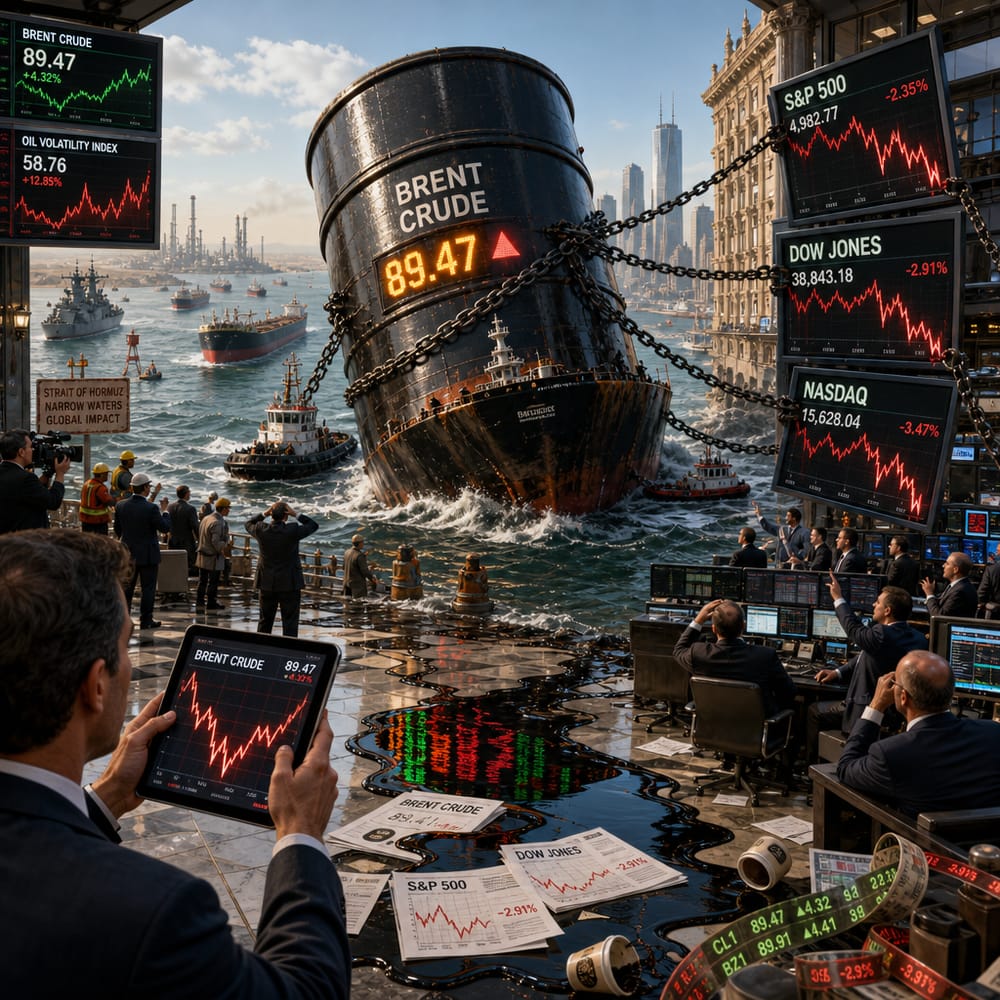
Oil prices are on a rollercoaster ride, and they’ve brought the rest of the market along for the wild ride. One minute you're sipping your morning coffee, the next, crude oil prices sway like they’re auditioning for a part in a soap opera. But behind the drama, the Strait of Hormuz is the main character, and it's got some serious influence over your wallet and the broader market.
Let’s break it down. The Strait of Hormuz might sound like something from an Indiana Jones movie, but it's actually a narrow passage of water that sees about 20% of the world’s oil supply pass through its lanes. It’s an essential chokepoint, and when tensions flare in the Middle East, oil prices tend to follow suit, dancing up and down like they’re auditioning for a reality show.
WHY DO WE CARE ABOUT OIL PRICE SWINGS?
First, let’s talk inflation. You might think inflation is just something economists complain about, but it’s more like the annoying neighbor who invites itself over for dinner. When oil prices spike, the cost of everything from shipping to manufacturing can rise. That means consumer prices could increase too, and suddenly your favorite brand of ice cream is just a little bit more expensive. And who wants that?
Now, for the market geeks, the major U.S. indices, such as the S&P 500, Dow Jones, and Nasdaq, are watching oil prices like a hawk. When there’s even a whisper of tension near the Strait of Hormuz, it sends ripples through the market. Think of it like a giant game of Jenga; one wrong move can shake the entire tower. Fluctuations in oil prices create uncertainty, and uncertainty is the market's least favorite word.
GEOPOLITICS: THE MARKET'S UNWELCOME GUEST
What's causing this whole hullabaloo? Well, geopolitical tensions have a starring role. Imagine you're at a party, and the U.S. and Iran are the couple everyone is trying to keep apart. They've had their fair share of spats, and even a hint of disagreement can send oil prices soaring or plummeting.
Recently, oil prices dropped after the U.S. Energy Secretary revealed that crude exports through the Strait of Hormuz were higher than analysts estimated. However, the overall picture remains tense because diplomatic deals to stabilize the region have been about as successful as a cat herding competition.
WHAT ABOUT THE LONG TERM?
Now, let's talk future. If geopolitical tensions persist, we could see prolonged instability in oil prices and market indices. This isn’t just a weekly drama; it’s the kind of saga that could stretch on like a movie series that refuses to end.
Should these tensions continue, inflation might become a permanent resident rather than a temporary guest. That’s bad news for everyone's budget, right down to your morning coffee.
Meanwhile, investors are left with the task of navigating this storm. Investor sentiment is like a skittish cat—any loud noise, and it bolts. High volatility can erode confidence, leading to more cautious investment strategies. The real question is, can you blame them? With oil prices this unpredictable, it’s like walking on a tightrope without a safety net.
WHERE DO WE GO FROM HERE?
Amid these twists and turns, Brent crude remains a critical bellwether for traders. As oil supply gets tangled in geopolitical chess games, everyone from traders to everyday consumers is left watching the screen, wondering what’s next.
So, what’s the play? For investors, staying informed and flexible is key. While the Dow, S&P 500, and Nasdaq may seem like they’re on a see-saw, seasoned investors know that navigating uncertainty is part and parcel of the game.
In the end, while the Strait of Hormuz continues to act as a geopolitical pressure point, it's essential for both investors and the average consumer to be aware of the ongoing saga. After all, it’s not just about oil; it’s about the ripple effect it has on everything from inflation to market stability. So keep your eyes on the horizon—and maybe hold onto that coffee a little tighter.
This article is for informational purposes only and is not investment advice. Always do your own research or consult a licensed financial professional before making investment decisions.
© Copyright 2024. All Rights Reserved.
© Copyright 2024. All Rights Reserved.