

Oil Price Surge Sparks Market Volatility Ahead of CPI Data
Wednesday, August 12, 2026
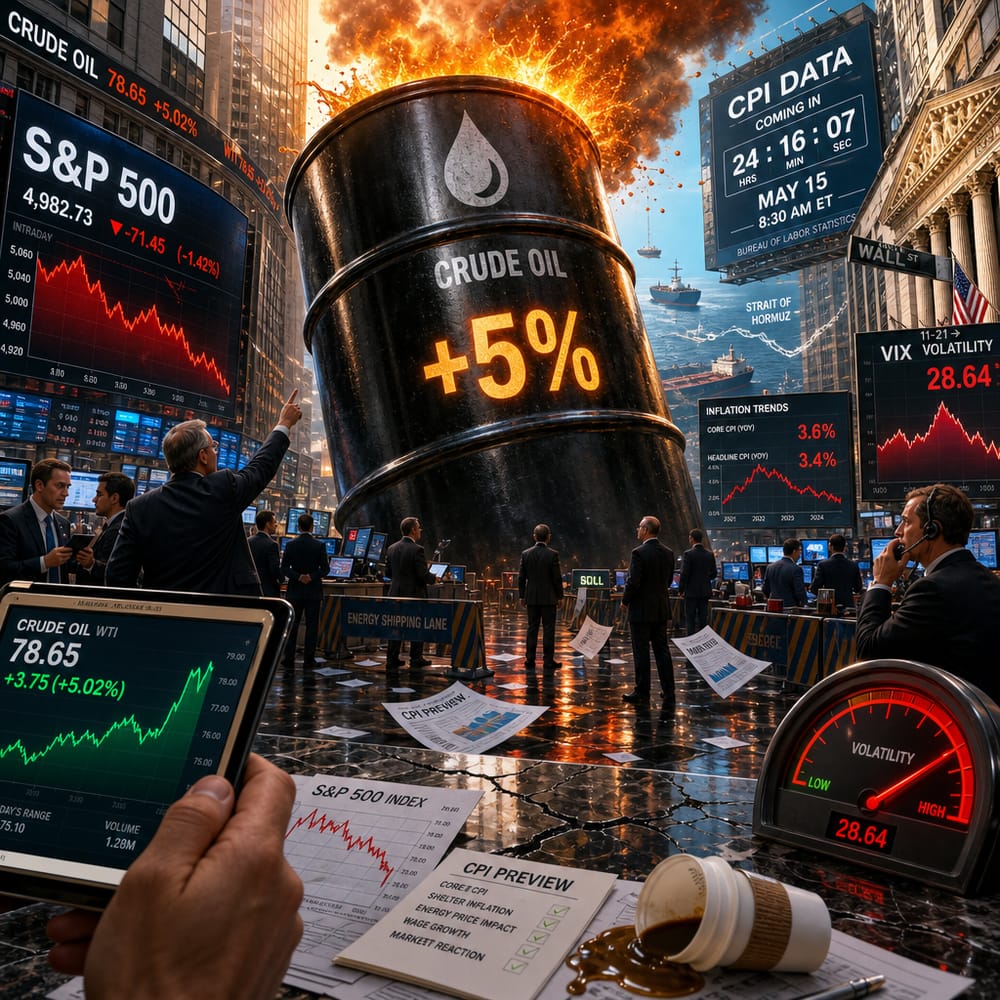
When a barrel of oil starts swinging like it's on a Wall Street rollercoaster, it's time to pay attention. The latest twist comes courtesy of rising tensions in the Strait of Hormuz, the narrow passage that sees more oil traffic than your local Starbucks sees caffeine addicts. This geopolitical hotspot has sent oil prices rocketing up by 5%, leaving the markets to do a nervous shuffle akin to a middle school dance.
Let's unpack this. The Strait of Hormuz is the go-to route for about a fifth of the world’s oil supply. When tensions flare up there, it’s like taking a match to a keg of dynamite. Investors get jumpy, prices surge, and suddenly your morning commute feels expensive enough to make you consider cycling to work.
WHAT'S HAPPENING IN THE MARKETS?
The oil price surge has equity markets in a bit of a chokehold. The S&P 500 has been teetering as investors clutch their pearls, waiting for the latest consumer price index (CPI) data to drop. Think of this index like a report card on inflation: it tells us if prices are going up, down, or just lounging around. And right now, everyone wants to know if inflation has been swayed by the oil drama.
While the S&P 500 managed to eke out a 0.3% rise recently, the overall mood is flatter than a pancake on a Sunday breakfast table. Why? Because oil prices have this annoying habit of drip-feeding into the cost of pretty much everything else. If you’re in the business of equities, rising oil prices can feel like someone’s just spiked your drink at the party.
THE INFLATION QUESTION
The big question now is whether these oil price antics are going to fuel inflation further. Inflation has been on a bit of a diet lately, slimming down to 3.4% in July. But with energy costs still flirting with the stratosphere, there’s concern that inflation could bulk up again. Higher gas prices mean higher transportation costs, which means… well, let’s just say your avocado toast might start costing more than your rent.
And here's where the Federal Reserve comes into play. If inflation starts heating up again because of rising oil prices, the Fed might feel compelled to hit the brakes on the economy by raising interest rates. This could make borrowing more expensive and potentially throw cold water on the economic party. It’s the central bank’s version of a parental curfew.
GEOPOLITICS AND YOUR PORTFOLIO
Geopolitical tensions aren't just headlines to scroll past—they have real impacts on your investments. When oil prices spike due to geopolitical events, it’s not just about more expensive trips to the gas station. It can mean volatility in stock markets, as sectors like airlines and manufacturing get walloped by increased fuel costs.
On the flip side, energy stocks might see a bit of a boost. Companies that are knee-deep in oil can sometimes post gains when prices rise, providing a silver lining to this cloudy scenario. However, if you’re heavily invested in sectors outside of energy, it might be worth reviewing your portfolio’s exposure.
WHAT’S NEXT?
With oil prices on a bumpy ride and the CPI data on the way, investors are holding their breath. This new data will be crucial in determining whether the Fed will adjust its current stance on interest rates. If inflation remains tame, the Fed might stay the course. But if oil’s tantrum tips inflation scales, brace yourself for some economic belt-tightening.
For the everyday investor, the name of the game is adaptability. Keep an eye on these developments and be prepared to adjust your investment strategy as the geopolitical and economic landscape evolves. After all, in the world of investing, the only constant is change—and maybe the ever-rising price of your favorite organic coffee.
This article is for informational purposes only and is not investment advice. Always do your own research or consult a licensed financial professional before making investment decisions.
© Copyright 2024. All Rights Reserved.
© Copyright 2024. All Rights Reserved.