

Oil Price Surge Fuels Inflation Concerns, Pressures US Markets
Monday, August 17, 2026
OIL PRICE SURGE FUELS INFLATION CONCERNS, PRESSURES US MARKETS
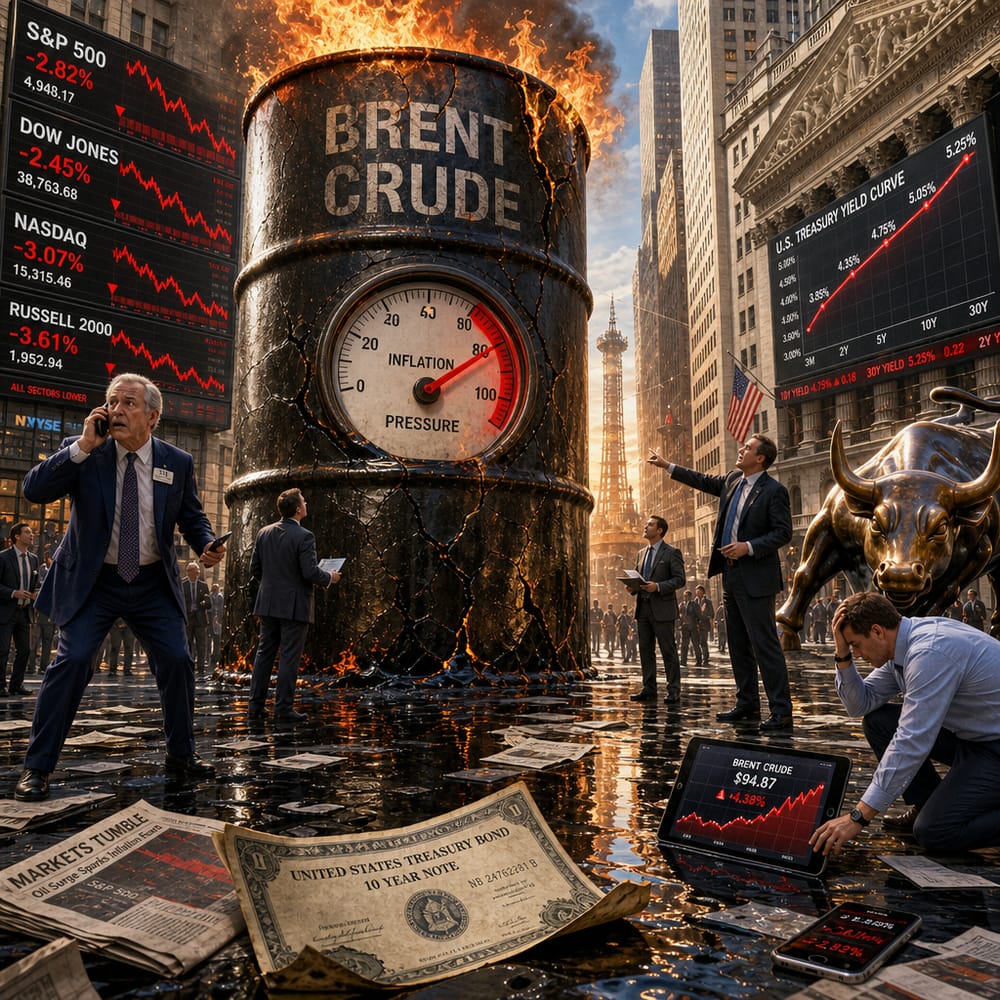
The price of oil is on the rise again, and it's not just a problem for your gas tank. It's a red flag waving frantically on Wall Street, with inflation whispers growing into full-blown shouts. Just when you thought your portfolio was safe, in comes Brent crude, riding a wave of geopolitical tension, threatening to upset the entire apple cart of the U.S. economy.
For those of you wondering why a barrel of oil is suddenly the villain of this financial drama, let’s break it down. When the price of oil shoots up, it’s like a financial domino effect. The cost of transporting goods, manufacturing, and even the sneakers on your feet starts to bubble upward, like a pot of inflation soup. And let me tell you, this soup is not the comfort food you’re hankering for — it’s more of a slap in the face to the economy.
INFLATION EXPECTATIONS ON THE RISE
With rising oil prices, inflation expectations are getting a hearty boost. Think of inflation expectations as the collective hunch that tomorrow’s dollar won’t stretch as far as today’s. When people expect prices to keep climbing, they rush to buy now, pushing actual prices up. It’s like FOMO, but for shopping — and it risks becoming a self-fulfilling prophecy.
Here’s the kicker: once inflation starts to spiral, the Federal Reserve might swoop in with its monetary broom to sweep up the mess. Higher interest rates could become the name of the game, which means borrowing money for that dream house or shiny new car might just get a tad more expensive. And who doesn’t love watching their mortgage payments climb?
FEDERAL RESERVE UNDER PRESSURE
The Fed, our country’s financial referee, is caught in a classic rock-and-a-hard-place scenario. With climbing oil prices fanning inflation fears, the pressure's on for them to potentially hike interest rates to cool things down. But here’s the rub: higher rates can also slow economic growth, throwing a wet blanket over consumer spending and business investments. It’s like trying to balance a teeter-totter that really doesn’t want to stay put.
MARKETS FEEL THE SQUEEZE
Now, let’s cast our gaze toward the stock markets, where things have been getting more volatile than a reality TV showdown. The S&P 500, Dow Jones, and Nasdaq are starting to feel the heat. Rising oil prices are shaking up sectors from tech to transport — even agriculture isn’t getting a free pass.
Tech stocks, for instance, aren’t exactly thrilled about the prospect of higher interest rates. Those rates can put a damper on growth projections for companies where future earnings are the main attraction (looking at you, tech sector). Meanwhile, transport companies are navigating choppy waters as higher fuel costs eat into profit margins faster than a teenager's allowance at a video game store.
But it isn’t all doom and gloom. Energy stocks, on the other hand, are having a bit of a moment. Companies in the oil and gas sector are seeing those stocks light up as they revel in the price surge. It's kind of like how your one friend who loves winter keeps making snow angels while everyone else shivers.
WHERE’S IT ALL HEADING?
So what's next? If we had a crystal ball, we’d be pouring over it like a Harry Potter character. Unfortunately, the future of oil prices, and by extension inflation and stock markets, is as murky as ever. It heavily depends on geopolitical developments — think U.S.-Iran tensions and OPEC decisions — and how the Fed decides to play its cards.
As a retail investor, keeping an eye on these oil prices is as critical as ever. Whether they stabilize, surge, or simmer back down will influence everything from interest rates to consumer confidence, and ultimately, your portfolio.
For now, stay nimble and informed. Watch those market moves closely, and remember, even in a whirlwind of financial chaos, there are opportunities for those bold enough to seize them. And if all else fails, at least the energy sector might be a bright spot in the gloom. Stay savvy, folks.
This article is for informational purposes only and is not investment advice. Always do your own research or consult a licensed financial professional before making investment decisions.
© Copyright 2024. All Rights Reserved.
© Copyright 2024. All Rights Reserved.