

Oil Price Surge and Bond Yield Spike Pressure Markets
Wednesday, August 19, 2026
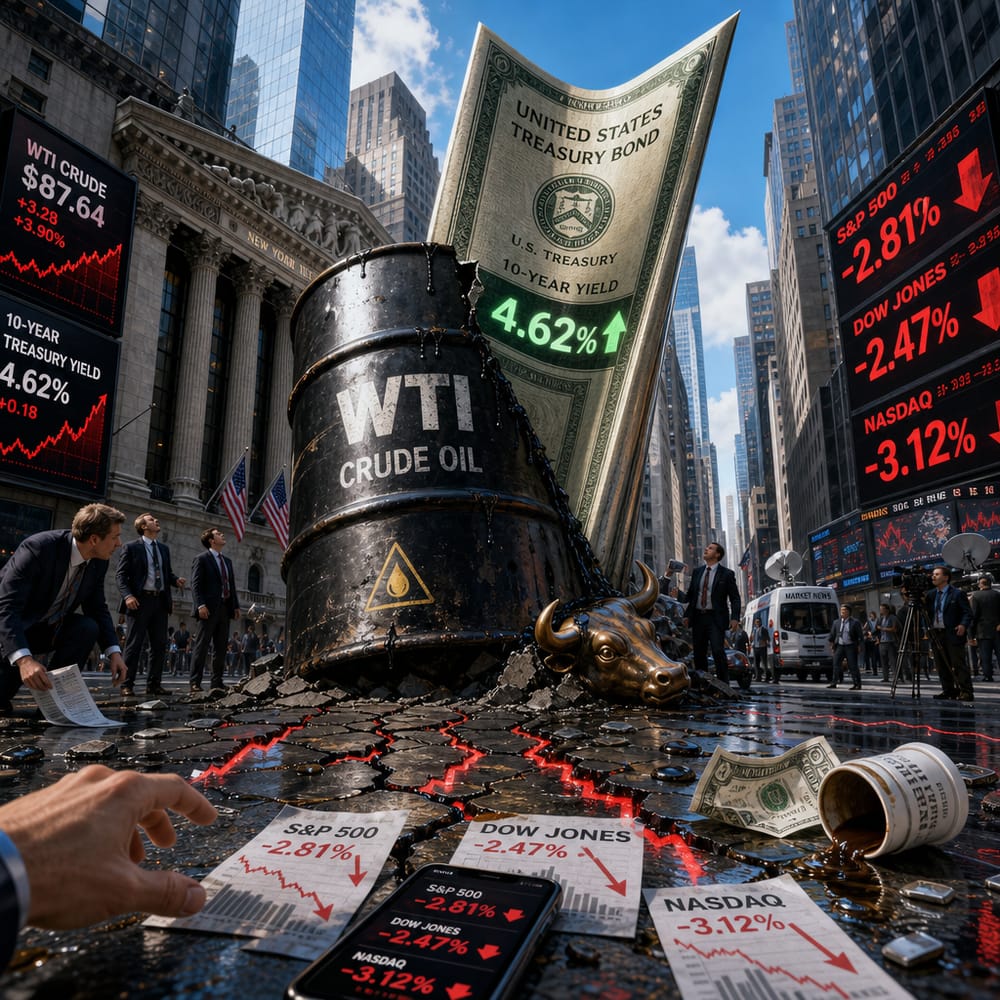
Why are U.S. stock markets suddenly looking like they’ve had a bit too much caffeine and not enough sugar? Let's dive into the latest cocktail of oil prices and bond yields that's making traders clutch their wallets with slightly sweaty palms.
Picture this: Oil prices are climbing faster than your local gas station can change its sign, and bond yields are hitting peaks not seen since your dad was still rocking a flip phone. It's a financial one-two punch that's got the major U.S. indices—think S&P 500, Dow Jones, and Nasdaq—stumbling from their high pedestals. But what's really going on, and why should you care?
Let’s start with oil, that black gold that seems to have a more dramatic range than a soap opera villain. When oil prices go up, it's like adding an extra layer of inflation to everything from what you pay at the pump to the cost of your morning cereal. Higher oil prices mean higher production costs, which ripple through the economy, making everything just a bit pricier. That's the kind of news that makes investors jittery as they start worrying about inflation creeping back into their lives like an uninvited guest.
Now, what about those bond yields? Imagine a seesaw where oil prices are on one end and bond yields are on the other. As oil prices rise, inflation fears spike, leading to higher bond yields. Bond yields, in simple terms, are the returns investors get for lending money to the government. When yields climb, it means those bonds are less attractive because they suggest higher interest rates are on the horizon.
Why does this matter for stock markets? Well, when bond yields rise, the relative attractiveness of stocks diminishes. Investors start thinking, “Why risk it on stocks when I can get a decent return from bonds with less drama?” So, they pull out of stocks, driving those market indices down. It's not the apocalypse, but it’s enough to trigger a few sweaty brows on Wall Street.
For the tech sector, which loves low interest rates like a cat loves a sunny window, rising bond yields are particularly unwelcome. Tech stocks often rely on cheap borrowing to fuel their growth, and higher yields—hinting at higher rates—can crimp profit margins. This could explain why the Nasdaq seems to be taking a harder hit than its peers.
Looking down the road, the interplay between these factors could shape the market landscape significantly. If oil prices stay high, it’s likely we'll see persistent inflationary pressures. And if bond yields continue their ascent, borrowing costs for both corporations and consumers could rise, potentially slowing economic growth. This isn't just a Wall Street problem; it's a Main Street concern too. Everything from mortgages to car loans could get more expensive, affecting your bottom line in more ways than you'd like.
So, what's a savvy investor to do in this topsy-turvy market? Diversification remains the golden rule. While stock markets may wobble, keeping a balanced portfolio—one that might include some of those higher-yield bonds—could cushion the fall. Staying informed and nimble is key. It's a tricky dance, but one that's navigable with the right moves.
In the end, while the headlines may scream doom and gloom, remember: markets are as much about psychology as they are about numbers. Today's slides and spikes are just part of the market’s natural ebb and flow. So, keep a cool head, stay informed, and maybe think of these fluctuations as the market’s way of keeping us all just a little humble.
As the dust settles, investors will be keeping a keen eye on oil supply talks and any sign of central bank adjustments. Until then, keep your seat belts fastened and your investment options open. This rollercoaster isn’t over yet, but isn’t that half the thrill?
This article is for informational purposes only and is not investment advice. Always do your own research or consult a licensed financial professional before making investment decisions.
© Copyright 2024. All Rights Reserved.
© Copyright 2024. All Rights Reserved.