

Oil Price Surge Amid Middle East Tensions Adds Volatility to Fed Outlook
Saturday, August 15, 2026
OIL PRICE SURGE AMID MIDDLE EAST TENSIONS ADDS VOLATILITY TO FED OUTLOOK
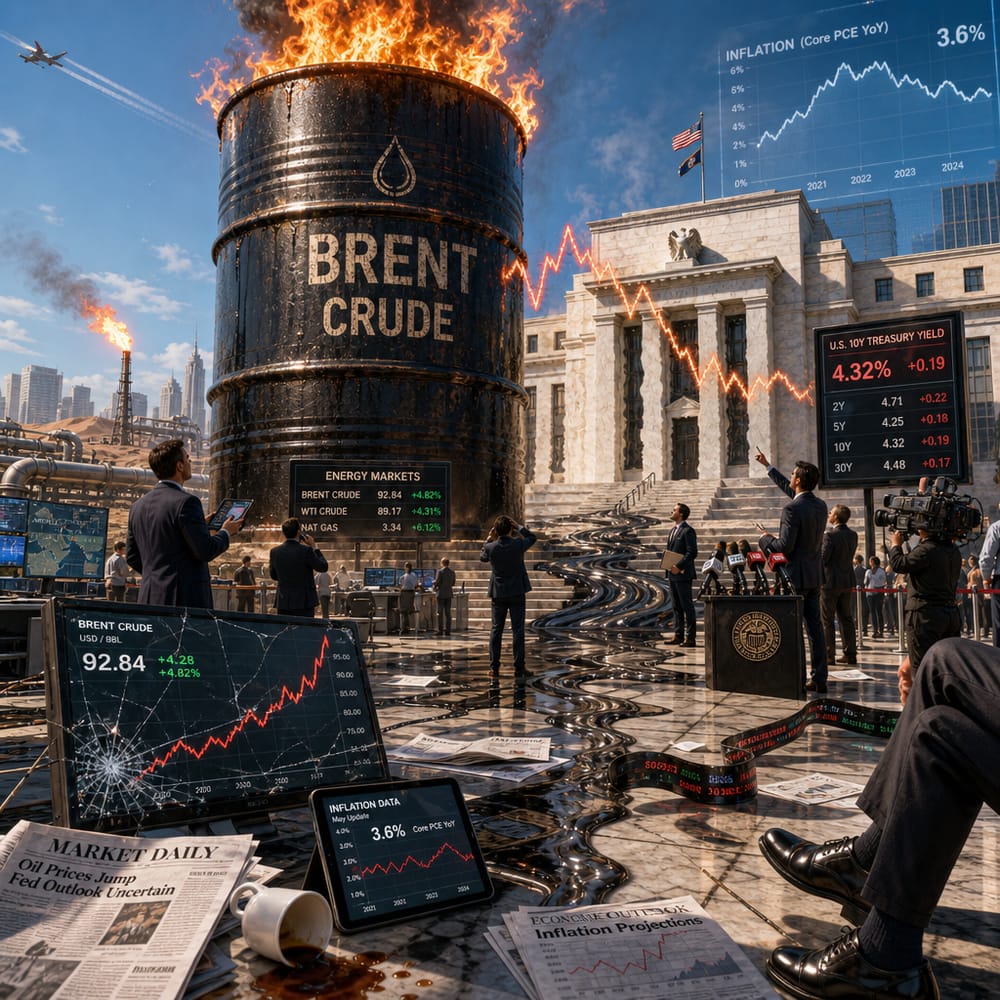
When tensions in the Middle East start simmering, you better believe your gas station’s about to get a whole lot more interesting. Just recently, Brent crude oil prices jumped a spicy 1.7% faster than you can say "OPEC," as diplomatic drama unfolded in the region. This isn't just about a few extra bucks at the pump. It could be the pebble that tips the Federal Reserve's carefully balanced seesaw of monetary policy.
Let’s break it down. Rising oil prices are like the ghost peppers of the economic world – a little can add some excitement, but too much can leave everyone in tears. Oil is the lifeblood of countless industries, so when prices soar, the cost of everything from shipping your Amazon order to flying that red-eye to New York climbs with it. And guess what? Those costs often trickle down to you and me, leading to inflation that can make a wallet scream for mercy.
Inflation is already a hot topic in Washington, and the Federal Reserve – the folks responsible for keeping our economy balanced – are watching these developments like a hawk watching a mouse. Their job is to keep inflation in check while also fostering economic growth, a task that’s easier said than done. Right now, they're already walking a tightrope, trying to decide if they need to hike interest rates to cool things off or let things ride a bit longer.
So, what’s the Fed’s play here? Imagine you’re juggling a dozen eggs. One hand represents interest rates, the other inflation. The trick is to not drop either. If rising oil prices start pushing inflation up faster than a SpaceX rocket, the Fed might decide to boost interest rates more aggressively. Higher interest rates can cool inflation by making borrowing more expensive, which in turn slows down spending and investing. But here's the catch: higher rates also risk slowing the economy too much, potentially leading to fewer jobs and an unhappy stock market.
In essence, if oil prices keep climbing, the Fed’s balancing act gets more delicate. They might have to trade in their walking shoes for something with a bit more grip to navigate this slippery slope. And for investors, it means watching the Fed's moves is just as important as keeping an eye on those tech stock tickers.
But why are oil prices jumping now? The Middle East, home to some of the world’s largest oil reserves, has once again become a hotbed of geopolitical tension. Any disruption in that region can send oil traders into a tizzy faster than you can say "supply chain disruption." When there's trouble in paradise – or rather, in the desert – markets react with all the subtlety of a bull in a china shop.
The Strait of Hormuz, a critical waterway for global oil shipments, is often at the center of these tensions. Think of it as the world's most important oil artery; any blockade or military action in or around this narrow passage can choke off oil supply, sending prices spiraling upwards.
So, what does this all mean for the everyday investor? For starters, volatility. The markets hate uncertainty, and nothing stirs up uncertainty like potential conflict in a region that plays such a pivotal role in global oil supply. For those with investments in sectors like travel, shipping, or even agriculture, rising oil prices can mean increased costs and tighter margins.
In this environment, diversification is your best friend. Having a balanced portfolio that can weather the storm of fluctuating oil prices and potential Fed rate hikes is crucial. Keep an eye on energy stocks, as they might benefit from higher prices, but don't put all your eggs – or oil barrels – in one basket.
As the geopolitical chess game plays out, remember: the only constant is change. The Fed might adjust their strategies, oil prices could stabilize, or the Middle East might calm down. Until then, buckle up, because it’s going to be a bumpy ride.
This article is for informational purposes only and is not investment advice. Always do your own research or consult a licensed financial professional before making investment decisions.
© Copyright 2024. All Rights Reserved.
© Copyright 2024. All Rights Reserved.