

Oil Price Slide Spurs Broad Market Rebound, but AI Stocks Continue to Lag
Wednesday, November 11, 2026
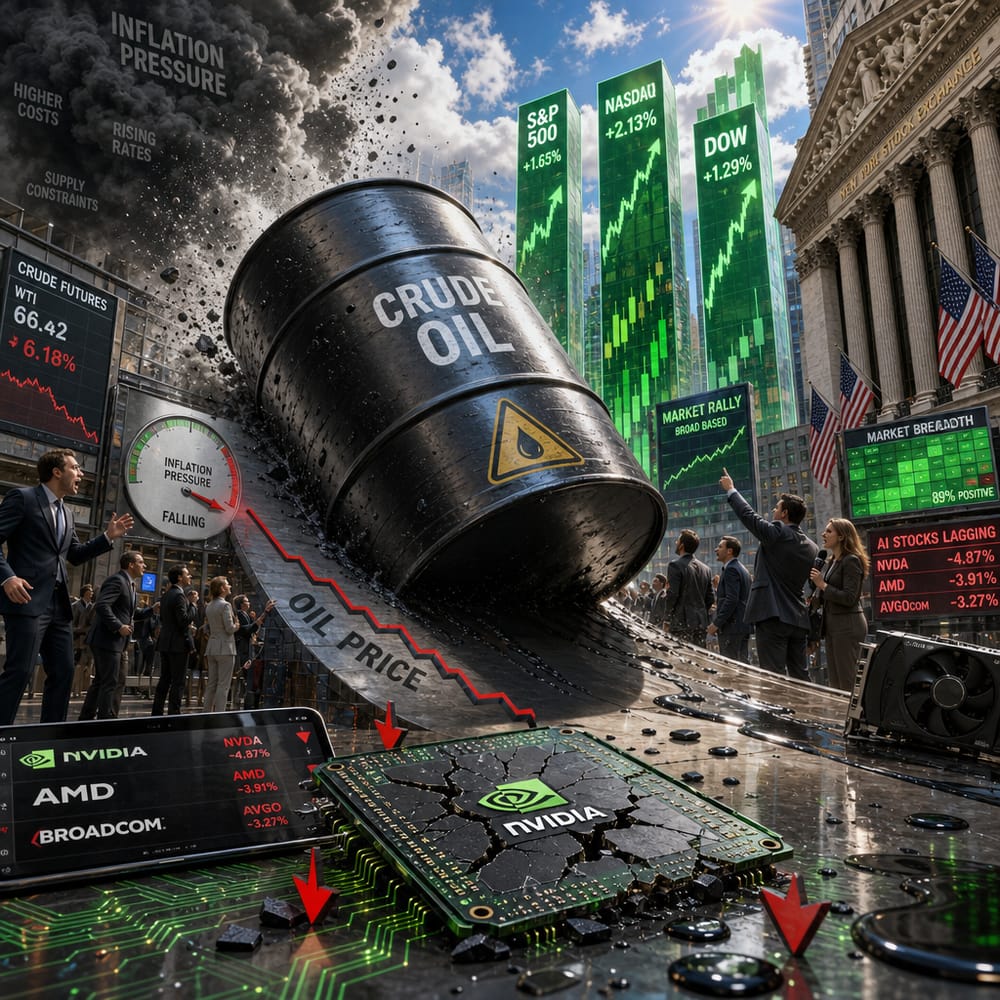
THE BIG MARKET RALLY: OIL SAYS "CHILL," AI SAYS "NOT SO FAST"
Well, folks, the stock market just threw a party and everyone (well, almost everyone) was invited. The mood? Bullish. The reason? A big ol' dip in oil prices that's got inflation worries packing their bags and heading for the hills. If this sounds like a recipe for a financial fiesta, that's because it is. But not all the guests are having a blast—AI stocks are off sulking in the corner, thanks to some Nvidia drama that reads like a Hollywood spy thriller.
So, what’s going on? Let's break it down, sip by sip.
THE OIL SLIDE: A RELIEF FOR YOUR WALLET AND THE MARKET
Oil prices recently took a nosedive, and that’s kind of a big deal. Why? Because when oil prices drop, inflation expectations usually follow suit. Lower oil prices mean cheaper gas, which means more money left in your pocket after a trip to the pump. And when consumers feel less pinched by gas prices, they tend to spend more elsewhere, giving the broader economy a little pep in its step.
This was music to the ears of the S&P 500, Nasdaq, and Dow, each of which posted significant gains. Investors are feeling like they've just found a twenty-dollar bill in their old jeans. Inflation has been a dark cloud hanging over the market, but this oil price dip is letting some sunshine through.
NVIDIA’S DRAMA: NOT ALL AI IS HAVING A GOOD TIME
Now, let's wade through the shadows where Nvidia is standing, looking a bit like a moody teenager at a family reunion. The world's AI darling, Nvidia, has been hit with a scandal involving its CEO, Jensen Huang. Imagine the plot of a spy movie: alleged affairs, potential leaks, and an investigation by a top-notch law firm. Investors are understandably nervous about what skeletons might tumble out of the closet next.
Nvidia's stock took a hit after news of this debacle broke, showing that even tech giants aren't immune to the messiness of human drama. Investors are now left biting their nails, wondering if Nvidia’s leadership can keep the ship steady.
AI STOCK CHECK: NOT ALL BAD NEWS
Despite Nvidia's woes, the AI sector isn't exactly crashing and burning. Other companies like CoreWeave have actually been riding a wave of optimism. Their recent results seem to have soothed some jitters about AI spending, showing that there is still plenty of enthusiasm—and money—to be made in the AI space.
However, this situation with Nvidia does highlight a particular vulnerability: reputational risk. When confidence in leadership is shaken, it can put a lid on stock gains even in sectors as promising as AI.
THE BIGGER PICTURE: A TALE OF TWO SECTORS
This divergence between the broader market's jubilation and AI's selective woes speaks volumes about our current economic landscape. On one hand, oil-driven macro relief is fueling optimism across multiple sectors, boosting consumer confidence and spending. On the other, specific tech issues remind us that not all is rosy in the land of innovation.
For investors, this means playing a careful game of chess. While it might be tempting to dive headfirst into the rally, it's just as important to keep an eye on sector-specific risks that could trip up the tech-heavy portfolios.
SO, WHAT'S YOUR MOVE?
Here's the deal: The market is on an upswing, but like any good party, it comes with its share of chaos. The oil price decline is a reason to smile, easing inflation fears and pushing the economy forward. But keep an eye on the tech sector, where the AI stars are navigating stormy weather.
For retail investors, diversifying remains key. Embrace the broad market gains, but when it comes to tech, pick your stocks like you're choosing a date for a wedding—carefully, considering both reputation and potential.
As the market keeps dancing to this dynamic tune, smart, informed decisions will keep you in step. Happy investing, and may your portfolio be as balanced as a tightrope walker on a breezy day!
This article is for informational purposes only and is not investment advice. Always do your own research or consult a licensed financial professional before making investment decisions.
© Copyright 2024. All Rights Reserved.
© Copyright 2024. All Rights Reserved.