

Oil Price Slide, Middle East De-escalation, and Treasury Yield Relief
Tuesday, August 25, 2026
OIL PRICE SLIDE, MIDDLE EAST DE-ESCALATION, AND TREASURY YIELD RELIEF
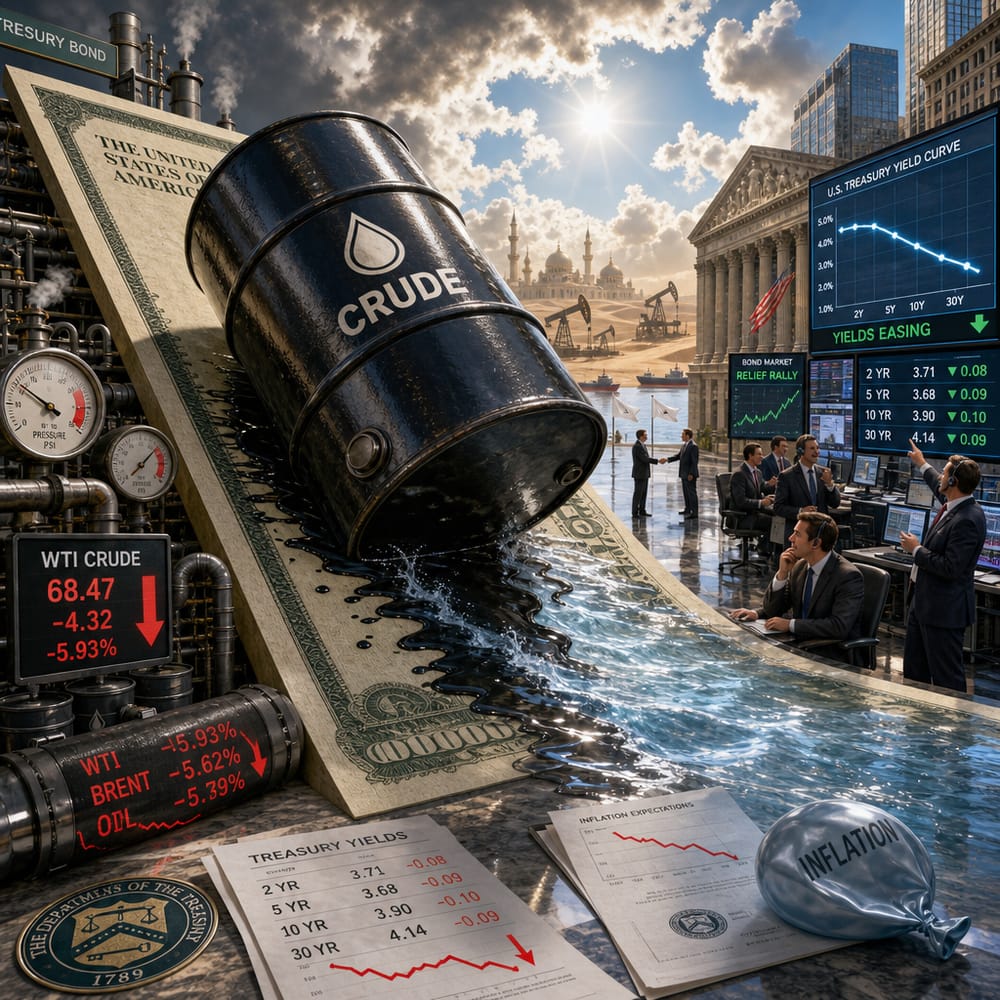
Picture this: you're sipping your morning coffee, half-hoping for a day that's less "market madness" and more "calm seas." Then, bam! Oil prices plunge over 3% because, lo and behold, Iran and Oman have decided to play nice. While this might send geopolitical analysts into a tizzy, for us everyday investors, it's a high-octane headline with a bucket of implications. Let's dive in and unpack why this matters.
First things first, why should you care about oil prices falling? Simply put, oil is the proverbial straw that stirs the drink when it comes to global markets. When the price of crude drops, it frequently signals that geopolitical tensions are simmering down. In this case, Middle Eastern heavyweights are attempting to strike a deal to keep the Strait of Hormuz—a critical chokepoint for global oil shipments—open and peaceful. Fear of potential conflict in this area tends to inflate oil prices like a balloon at a kid's birthday party. So, less tension means less geopolitical markup on the oil you fill your tank with.
Now, you might be thinking, "Great, cheaper gas. But how does that affect the rest of my portfolio?" Well, the answer lies in an unlikely hero: Treasury yields. When geopolitical clouds part, and oil prices take a tumble, inflation fears also tend to recede. You see, expensive oil often translates to higher transport and production costs for almost everything, nudging inflation up. With oil on a downswing, inflation expectations ease, and this can cause Treasury yields—think of them as the government's IOU interest rates—to take a slight breather.
Why do you care about Treasury yields? Treasury bonds are like the comfort food of investment: stable and reliable. When yields fall, it usually makes for a more attractive borrowing environment, encouraging businesses to expand and consumers to spend. It's sort of like getting a low-interest rate on a car loan—it makes the deal that much sweeter and gets the gears of the economy turning a bit faster.
But wait, there’s more! Falling Treasury yields can also mean a boost for stocks. Lower yields often lead to higher stock prices as investors seeking better returns ditch bonds for riskier assets. That’s why you might notice your index funds gaining a little pep when Treasury yields head south.
Of course, no good news comes without a hint of uncertainty. The bond market, like that fickle friend who can't decide where to eat, could reverse course at any moment. Future geopolitical tremors—be it another Middle Eastern hiccup or a trade spat with a nation like Canada (who’s recently flexed its tariff muscles)—could send oil prices and inflation expectations skywards faster than you can say "portfolio rebalancing."
So, what are the broader economic implications of this oil yo-yo? Beyond your gas bill and portfolio, oil price swings can impact sectors from airlines to agriculture. Lower oil prices reduce transportation costs for companies, which can trickle down to more competitive pricing for consumers. That means more spending power in your pocket—not a bad bonus, right?
But here's the rub: the market loves to throw curveballs. Just as quickly as tensions ease, they can ramp up again. It’s the financial equivalent of a soap opera, with plot twists that have direct consequences for yields, inflation, and ultimately, your hard-earned investments.
As always, the key is to keep a watchful eye on these dynamics. Geopolitical developments are like market weather: they directly influence the economic climate, affecting how crops (or in this case, assets) grow. So whether you’re a self-directed investor, gleefully watching your stock app, or simply trying to keep your 401(k) afloat, it’s worth keeping tabs on oil prices and the bond market—they're the silent narrators of the financial story unfolding every day.
In the end, as much as we try to predict what’s around the corner, the best strategy often lies in being prepared for anything. So, buckle up, stay informed, and remember: in the world of investing, change is the only constant.
This article is for informational purposes only and is not investment advice. Always do your own research or consult a licensed financial professional before making investment decisions.
© Copyright 2024. All Rights Reserved.
© Copyright 2024. All Rights Reserved.