

Oil Price Drop Fuels Market Rebound
Tuesday, November 10, 2026
OIL PRICE DROP FUELS MARKET REBOUND
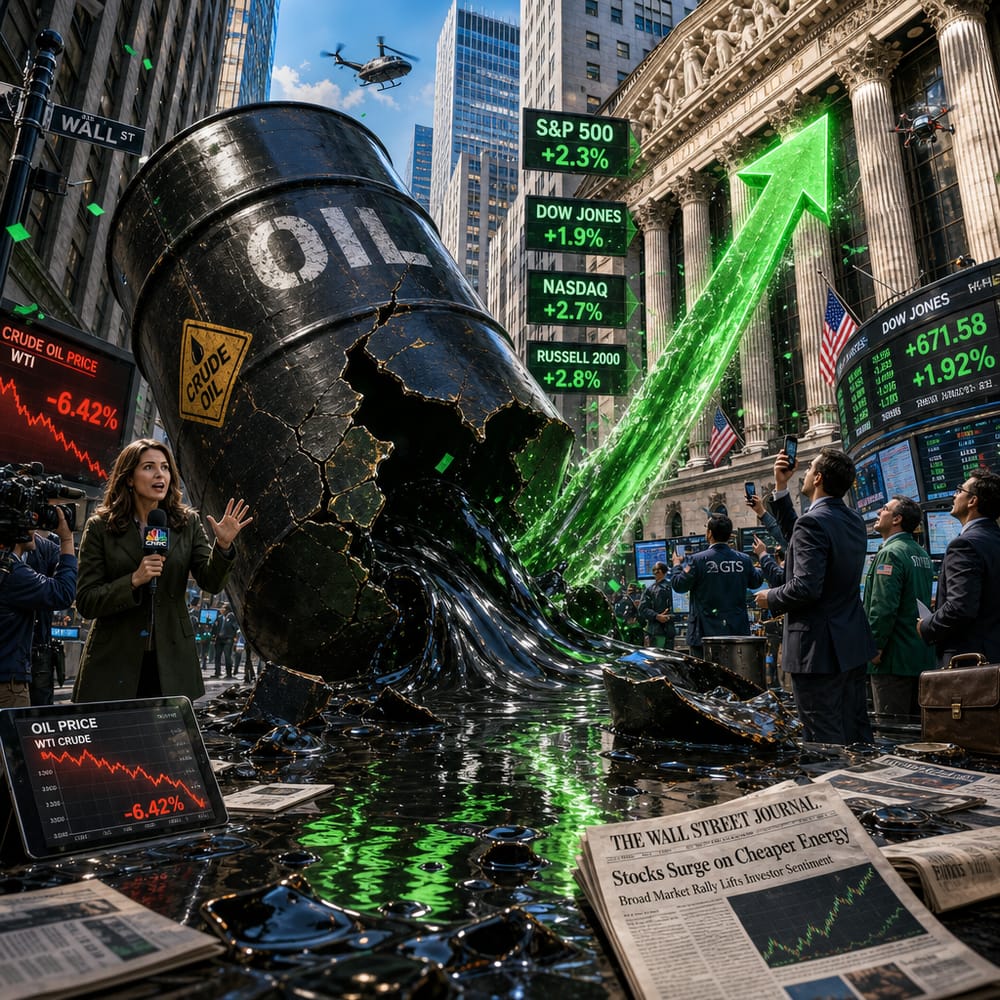
When the price of oil takes a nosedive, you might expect a collective gasp from the petroleum tycoons and a flurry of "sell" orders from the suits. But last Monday, U.S. equity markets threw a curveball, pulling off a gravity-defying act that left Wall Street with its best one-day gains since April. The S&P 500 jumped 2.3%, the Dow Jones Industrial Average climbed 2.2%, and the Nasdaq shot up by 2.7%. It was the financial world's version of a phoenix rising from the ashes. But what really sparked this unexpected rally?
The sudden dip in oil prices, you see, was a key player. The drop came as a result of easing tensions in the Middle East, with whispers of diplomatic resolution in the air. Crude's decline seemed to lift a burden off investors' minds, signaling to the markets that maybe, just maybe, there wouldn’t be a fresh surge in global inflation. This was music to the ears of traders weary from a relentless AI-driven rollercoaster.
But, let's pump the brakes on the euphoria for a moment and ask ourselves: is this market rally built on a sturdy foundation, or is it just a house of cards?
THE OIL FACTOR
Oil prices have been on a wild ride. Recently, concerns around the Middle East had sent prices soaring, only to see them tumble as diplomatic chatter calmed nerves. In Wall Street terms, it was akin to finding an unexpected $20 bill in your coat pocket — a pleasant surprise that suddenly makes the world look a tad brighter.
This slump in oil prices gave investors a breather from inflation concerns. Lower oil means cheaper transportation and production costs, potentially easing the inflation that’s been gnawing away at wallets and Fed forecasts alike. The knock-on effect? Investors felt brave enough to dip their toes back into the market pool, particularly in sectors hit hard recently like tech and industrials.
SUSTAINABILITY OR SUGAR RUSH?
So, is this rebound an indicator of a sustainable uptrend, or just a momentary sugar rush for traders? It’s the million-dollar question — or perhaps billion-dollar, if we’re keeping tabs on market capitalizations.
The tech-heavy Nasdaq’s hearty bounce might suggest renewed faith in the sector after a volatile sell-off driven by AI-related stocks, especially with Nvidia’s drama playing out like a season finale of your favorite spy thriller. Yet, with Nvidia sliding 4% in the same session thanks to their CEO's personal saga unravelling in the public eye, it's clear that the volatility isn’t over.
Moreover, while lower oil prices have helped, investors are still on edge about inflation reports — and the Fed's next steps. There’s a crucial consumer inflation report dropping soon, and its numbers could sway sentiment dramatically. Think of it like checking the weather forecast before deciding if it’s safe to leave your umbrella at home.
IMPACT ON INVESTOR SENTIMENT
Right now, the mood on Wall Street is like a teenager who just got their first car. Excited and ready to hit the road, but with an underlying tension about what might go wrong around the next corner. This recent market rally might have pumped some optimism back into the veins of investors who were starting to feel like they were stuck on a downhill slope without brakes.
Yet, this optimism remains fragile. The S&P 500 and other indices are still navigating choppy waters, with investor sentiment swinging like a pendulum between hope and fear. The broader market landscape is littered with uncertainty — from geopolitical tensions to good old-fashioned economic data that can change direction at the drop of a hat.
THE BOTTOM LINE
This oil-inspired rally has certainly sparked a renewed sense of “can-do” spirit on Wall Street, but anyone who's seen a few episodes of "The Markets" knows better than to get too comfy. The fundamentals underpinning this rebound are still subject to the whims of global events and economic indicators, which can flip the script in an instant.
So, for those everyday investors scrolling through their feeds, the lesson remains clear: keep an eye on the broader economic signals, be ready for the unexpected, and maybe keep that umbrella handy just in case.
This article is for informational purposes only and is not investment advice. Always do your own research or consult a licensed financial professional before making investment decisions.
© Copyright 2024. All Rights Reserved.
© Copyright 2024. All Rights Reserved.