

Oil Price Decline Eases Pressure on Equities and Bonds
Thursday, August 27, 2026
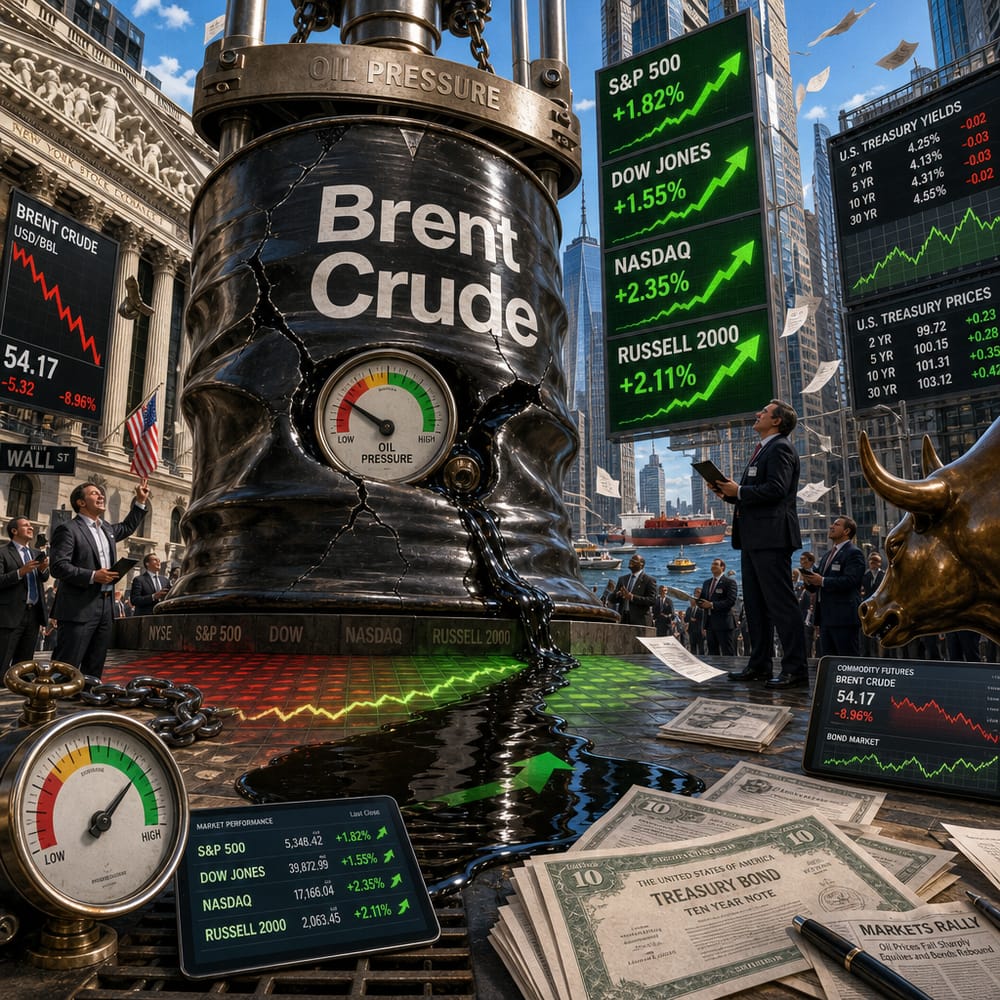
OIL PRICE DECLINE EASES PRESSURE ON EQUITIES AND BONDS
In the world of markets, sometimes it's the little surprises that pack the biggest punch. If you blinked recently, you might have missed the latest plot twist that could shake your portfolio's storyline: Brent crude oil prices have taken a nosedive. For those of us who aren't exactly oil barons, why should we care? Well, it turns out that this slippery slide in oil prices can unshackle both the equity and bond markets, offering a glimmer of hope for investors craving stability in an erratic market.
Let's break it down. Think of oil prices as the puppet master pulling the strings of inflation, investor sentiment, and, by extension, the markets. When energy costs rise, it's like adding jalapeños to your inflation taco—prices heat up, and central banks feel compelled to raise interest rates to cool things down. This isn't exactly music to the ears of bondholders, who see the value of their fixed returns erode, nor to equity investors, who face higher borrowing costs for companies.
But with Brent crude prices dipping, the pressure on both equities and bonds is easing. Take a bow, major indices. The S&P 500, Dow, and Nasdaq have all shown some pep in their step lately. The Russell 2000, the underdog index that represents smaller companies, also managed to bring its A-game.
So, how do these oil price changes ripple through the markets? For starters, when energy prices are low, production costs drop. This boost can fatten up the bottom line for companies, allowing them to invest, expand, or simply pass savings onto consumers without hiking prices—inflation be damned. For investors, this means healthier corporate profits can translate into stock price gains. It's like finding extra fries at the bottom of your bag—a pleasant surprise for shareholders.
And let's not overlook the bond market. Lower oil prices can temper inflation expectations, which is the financial equivalent of swapping that frothy latte for a calming herbal tea. Bonds, which traditionally get clobbered by rising rates and inflation, find a friendlier environment as policymakers might hold off on tightening monetary policy. With yields less pressured and the Fed potentially hitting the pause button, bonds get to shine a little brighter.
Now, you might wonder, how long will this rosy oil price picture last? If Brent crude continues its journey south, we could see sustained benefits across the board. Think of it as a long-term gym membership for the market's waistline. Yet, investors should tread carefully. The energy market operates like a high-stakes chess game, with geopolitical tensions and OPEC decisions as unpredictable moves that could flip the board.
The big question is, what are the potential long-term effects of sustained low energy prices? On the one hand, consistent low oil prices can act as a catalyst for economic growth, giving companies more room to maneuver and consumers more cash to splash. On the other hand, there's a flip side—energy companies and regions dependent on oil might struggle, potentially leading to fewer investments in energy infrastructure and innovation. It's a double-edged sword, and only time will tell which way it slices.
In this financial soap opera, oil prices hold a starring role. Their decline offers a reprieve for both equities and bonds, hinting at a smoother ride ahead. However, savvy investors know to keep one eye on the oil market's twists and turns. After all, today's dip could be tomorrow's spike. As they say, the only thing predictable about oil prices is their unpredictability.
This article is for informational purposes only and is not investment advice. Always do your own research or consult a licensed financial professional before making investment decisions.
© Copyright 2024. All Rights Reserved.
© Copyright 2024. All Rights Reserved.