

Oil-Linked Pressure on Retail Earnings: Fed Rate Cuts in Question
Monday, August 17, 2026
OIL-LINKED PRESSURE ON RETAIL EARNINGS: FED RATE CUTS IN QUESTION
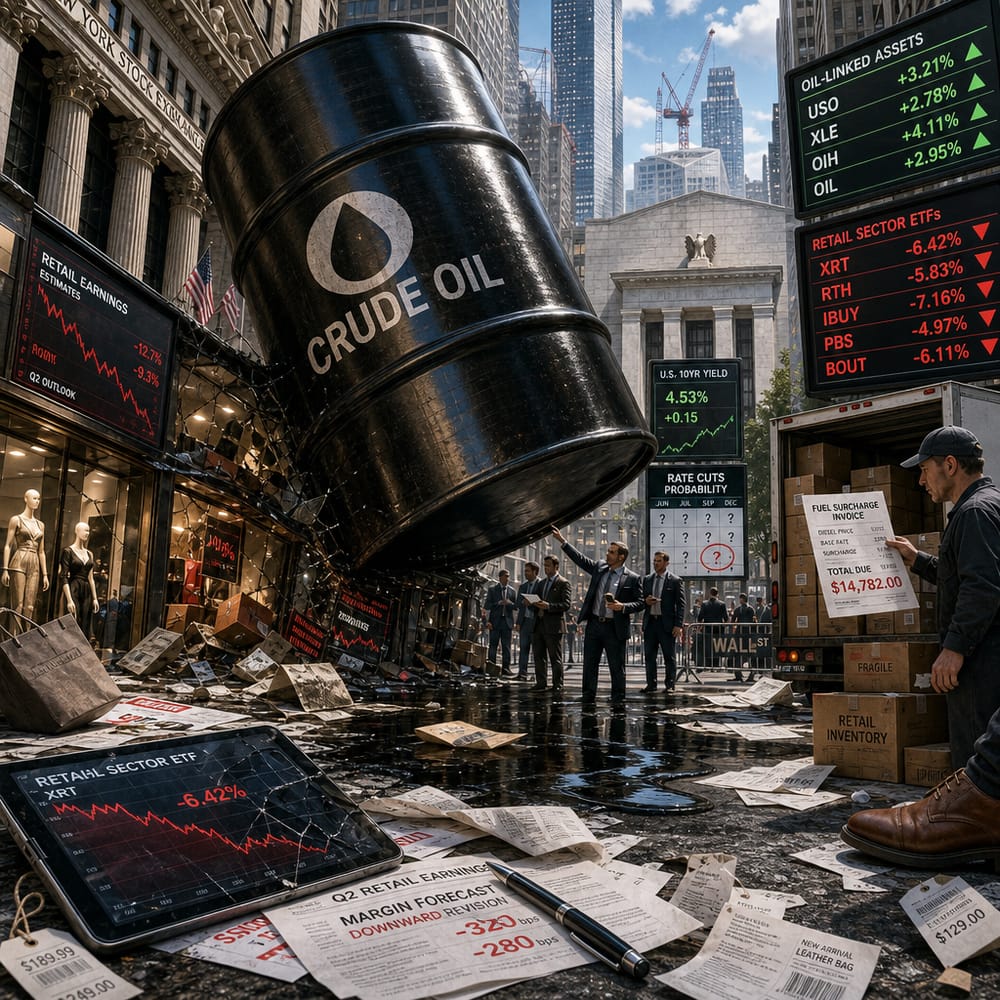
Ah, oil prices—the greasy drama queen of global markets. Just when you thought it was safe to fill up your tank without wincing, oil prices are back on the rise, and they’re causing quite the stir on Wall Street. But beyond the pump, there's a ripple effect that's about to hit your favorite retail stocks like a cannonball into a kiddie pool. Brace yourself, retail earnings are on deck.
First, let's talk about how oil prices are playing puppet master here. Rising oil prices can be a financial migraine for retailers. Why? Because oil isn’t just about gasoline. It seeps into the cost of everything from transporting goods to the energy keeping those big-box stores lit up like Christmas trees. It’s like a hidden tax that gnaws away at profits, and with earnings reports looming, retail companies are feeling the heat.
Here’s the dilemma: when retailers face higher costs, they have two options. They can either swallow the extra expense, which means smaller profits to flaunt in their earnings reports, or they can pass the cost onto consumers—cue your wallet groaning. This latter option risks a good old-fashioned consumer rebellion, leaving shoppers to either fork out more or cut back on spending.
Now, what does this mean for the Federal Reserve and those much-anticipated rate cuts everyone’s whispering about? Well, the Fed’s job is a bit like walking a tightrope in a hurricane. They’re trying to keep inflation in check while not squashing economic growth. Rising oil prices can throw a wrench into these plans by pushing inflation higher—making it trickier for the Fed to justify rate cuts.
Imagine you’re the Fed, sitting down at your big mahogany table, sipping on a coffee that you just realized cost way more than last month, thanks to rising prices. If inflation is creeping up because oil is surging, you might hesitate to trim interest rates too hastily. After all, cheaper borrowing could stir up even more spending and exacerbate inflation. It’s a delicate balance, and oil is the wild card that could keep those scissors in the drawer.
But wait, there’s another twist to this plot: consumer spending patterns. Rising oil prices don’t just pinch retailers; they mess with consumer habits, too. Remember that dream vacation you were planning? Rising fuel costs could send those airline tickets into the stratosphere. Family road trips might become a series of short jaunts to the local park instead of the cross-country adventure you envisioned.
When households spend more on gas, they often spend less elsewhere. It's Economics 101—people have budgets, and rising fuel costs mean less cash for dining out, shopping sprees, or those spontaneous Amazon buys that seem like a good idea at 2 a.m. This all feeds back into the retail sector’s earnings, as less discretionary spending can mean lower sales.
So, what should the everyday investor do in this twisty-turny saga? Keep an eye on retail sector ETFs, which group together stocks from companies like Walmart, Target, and Amazon. Rising oil prices could hit these giants differently—those with efficient supply chains or alternative energy initiatives might weather the storm better. And if you’re bold, perhaps glance at oil-linked assets as a hedge, but move cautiously and consider consulting with a financial advisor.
Still, the million-dollar question remains: will the Fed cut rates? The jury’s still out, folks. Rising oil prices add complexity to the decision, and while the Fed isn’t about to let oil drive the economic bus, it certainly can’t ignore the impact on inflation and consumer spending. So, while we wait for retail earnings and inflation reports to roll in, maybe skip that third latte and tuck the cash away. The road ahead might be a bit bumpy, and it’s always nice to have a cushion.
Markets are fickle, oil prices even more so, and while we can't dictate the future, we can watch, learn, and maybe—just maybe—keep a little sanity in our wallets.
This article is for informational purposes only and is not investment advice. Always do your own research or consult a licensed financial professional before making investment decisions.
© Copyright 2024. All Rights Reserved.
© Copyright 2024. All Rights Reserved.