

Oil, Inflation & Yields Trigger Thursday Sell-off
Friday, August 21, 2026
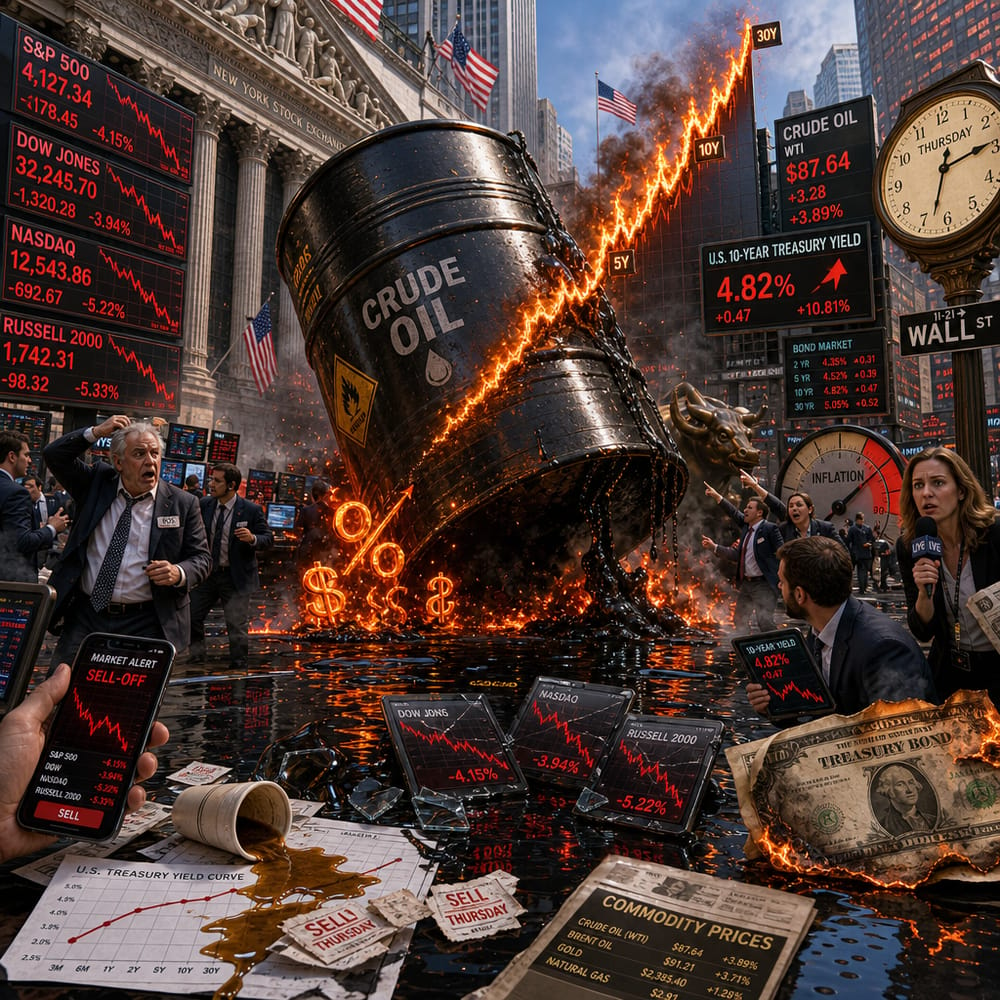
OIL, INFLATION & YIELDS TRIGGER THURSDAY SELL-OFF
Grab your popcorn, folks, because the stock market just treated us to a rollercoaster that makes any amusement park look like a kiddie ride. On Thursday, August 20, 2026, the U.S. equity markets took a nosedive, as if someone set off a fire drill on Wall Street. The culprits behind this market mayhem? A lethal cocktail of skyrocketing oil prices, inflation fears, and Treasury yields baring their teeth.
Let's start with the oil situation. The sticky black stuff may fuel our cars, but it's also igniting inflation concerns. When oil prices climb, it doesn't just burn a hole in your pocket at the pump; it permeates the economy like a versatile villain. Transportation costs go up, manufacturing gets pricier, and those costs eventually trickle down to, well, just about everything. Picture oil prices as the rock thrown into a lake, creating ripples that spread outwards, touching every corner of the consumer landscape.
And when inflation enters the chat, it doesn't just stop at being a party guest. No, inflation likes to crank up the music and dance on the tables, causing a ruckus across the financial landscape. This inevitably brings us to the Treasury yields, those numbers that make bond investors sweat bullets. Rising yields signal that investors expect higher interest rates, which means borrowing costs are on the up. For companies, this can be a nasty surprise, cutting into profits and making future plans more expensive.
Now, why should we civilians care about these seemingly abstract numbers and percentages? Well, Treasury yields are like the backbone of the entire financial market. When they rise, they exert gravitational force on equities, pulling them downwards, especially the high-flyers that rely on cheap borrowing to fuel growth. So, when yields start flexing their muscles, the stock market gets weak in the knees.
On Thursday, the S&P 500 tumbled along with the Dow and Nasdaq, as if they were caught in a synchronized dive. Even the Russell 2000, which tracks smaller companies, couldn't escape the gravitational pull of rising yields. It’s like when the cool kids decide something isn’t trendy anymore, everyone else follows suit.
Certain sectors felt the heat more than others. Technology stocks, typically the darlings of low-interest-rate environments, suddenly looked more like the awkward cousin at the family reunion. Financials, on the other hand, might get a boost in a world of higher rates – you know, like the one friend who actually enjoys a complex board game no one else understands. But when sudden shifts occur, even they can stumble, caught off-guard by the rapid pace of change.
Investors found themselves in a bind, trying to make sense of this chaos. Should they hold steady or jump ship? Some turned to the age-old safe havens like gold, while others spiced things up with a sprinkle of cryptocurrency for flavor. The latter soared this week, with Bitcoin posting a jaw-dropping gain, as if to say, "I'm not just a passing fad!"
But let's not forget Ray Dalio's dire warnings. The billionaire investor sees a storm on the horizon, with the government's debt-buyback plan as a tell-tale sign of trouble brewing. He recommends diversifying into gold and Bitcoin—calling it the "oh-no-we're-in-trouble" starter pack.
This sell-off serves as a stern reminder: the stock market is not a one-way street. It's a complex arena where macroeconomic factors like oil prices, inflation, and Treasury yields play pivotal roles, dictating market mood swings faster than you can say "diversification." Investors must always be ready to adapt, like financial ninjas, dodging and weaving through economic turmoil.
In the end, Thursday's market drama was a wake-up call for those lulled into complacency by previous gains. It underscores the importance of staying informed and nimble. So next time you check your portfolio, remember: behind those lines and numbers are stories of global events, economic policies, and market psychology. It's a big, tangled web of cause and effect—and you're right in the thick of it.
This article is for informational purposes only and is not investment advice. Always do your own research or consult a licensed financial professional before making investment decisions.
© Copyright 2024. All Rights Reserved.
© Copyright 2024. All Rights Reserved.