

Oil-Importing EM Sovereigns Face Challenges Despite Local Currency Bond Gains
Tuesday, August 25, 2026
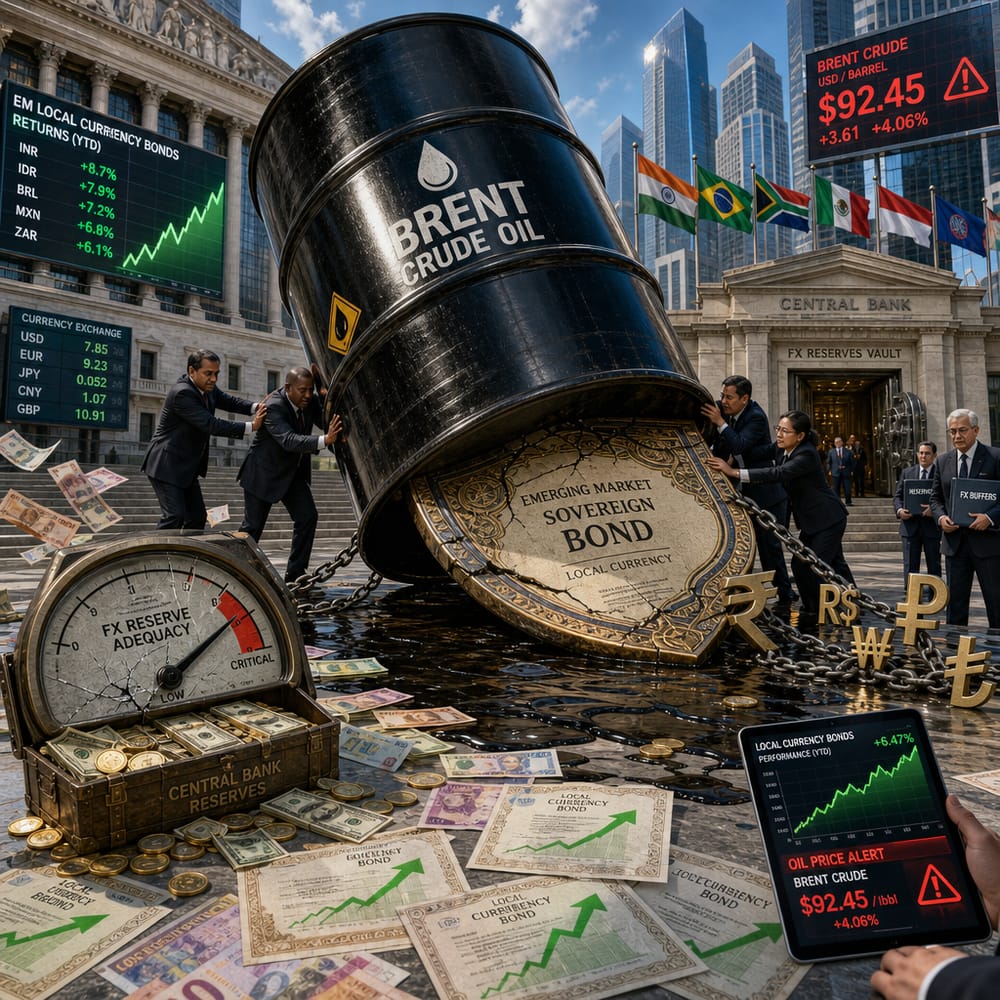
OIL-IMPORTING EMERGING MARKETS: CAUGHT BETWEEN A ROCK AND A HARD PLACE
If you thought navigating the stock market was like white-water rafting in a hurricane, try investing in oil-importing emerging markets right now. Spoiler alert: it’s not for the faint-hearted.
Emerging market local-currency bonds are having a moment. They're flexing their muscles in the secondary markets, leaving investors with starry eyes and visions of hefty returns. In a world where the word "recession" whispers its way through economic circles, emerging markets have been a safe haven for bond investors. But don't crack open that bottle of champagne just yet. There's a twist — and it's got everything to do with the sticky black stuff we call oil.
Oil-importing emerging markets find themselves in a delicate dance. On the surface, these economies are reveling in the success of their local-currency bonds, which are holding their own against global headwinds. Yet, lurking beneath the shiny veneer lies a vulnerability: sky-high oil prices. If you're importing oil, paying through the nose for crude is the sort of nightmare you can't just wake up from.
Now, let's break this down. When oil prices soar, it hurts countries that don’t have their own oil reserves. It's like someone jacked up the price of milk, but you own a cereal factory. You need to keep buying, and those costs pile up. For countries relying on oil imports, the bill for importing energy blows up their balance sheets. And this can send their currencies into a nosedive against the dollar, leaving a nasty dent in their foreign exchange reserves — the financial cushion that keeps their economies from having a total meltdown.
So, what does this mean for investors eyeing these markets? Well, the allure of local-currency bonds comes with a snarling guard dog: currency risk. If the local currency weakens significantly against the dollar, your bond returns might shrink faster than an ice cube in the Sahara. That's the first red flag waving in your face.
And then there’s the economic ripple effect. High oil prices don’t just hit currency reserves; they crank up inflation like a thermostat in a snowstorm. With everything from transportation to manufacturing costs skyrocketing, central banks might be forced to jack up interest rates to keep inflation from devouring the economy. Higher interest rates can slow economic growth — not the kind of news that makes investors sleep easy at night.
But don't throw away your investment spreadsheet just yet. There are ways to navigate these choppy waters without ending up shipwrecked. First, diversification is your trusty life jacket. Instead of dropping all your dollars into a single economy, hedge your bets across a range of emerging markets. Spread the love, and minimize the risk.
Second, keep an eagle eye on foreign exchange buffers — that safety net of cash reserves. Countries with a well-padded FX cushion can better weather the storm of high oil prices. They're the ones more likely to keep their currencies stable, which translates to less risk for your investments.
Lastly, consider the trajectory of global oil prices. Remember, what goes up must come down — eventually. Keep your ear to the ground for any geopolitical tremors or advancements in renewable energy, both of which can influence oil prices. If you can predict even a fraction of this, you're one step ahead of the game.
Investors must get comfortable with uncertainty, recognizing that opportunities come with caveats. Oil-importing emerging markets may be in a tough spot, but with careful navigation, there’s potential for reward.
As oil plays its high-stakes game of tug-of-war with emerging markets, investors must decide whether to hold their ground or pivot to safer shores. Just remember: in the world of finance, fortune favors the bold — as long as they're smart enough to read the wind.
This article is for informational purposes only and is not investment advice. Always do your own research or consult a licensed financial professional before making investment decisions.
© Copyright 2024. All Rights Reserved.
© Copyright 2024. All Rights Reserved.