

Oil & Geopolitics Shake Markets Early Week
Friday, August 21, 2026
OIL & GEOPOLITICS SHAKE MARKETS EARLY WEEK
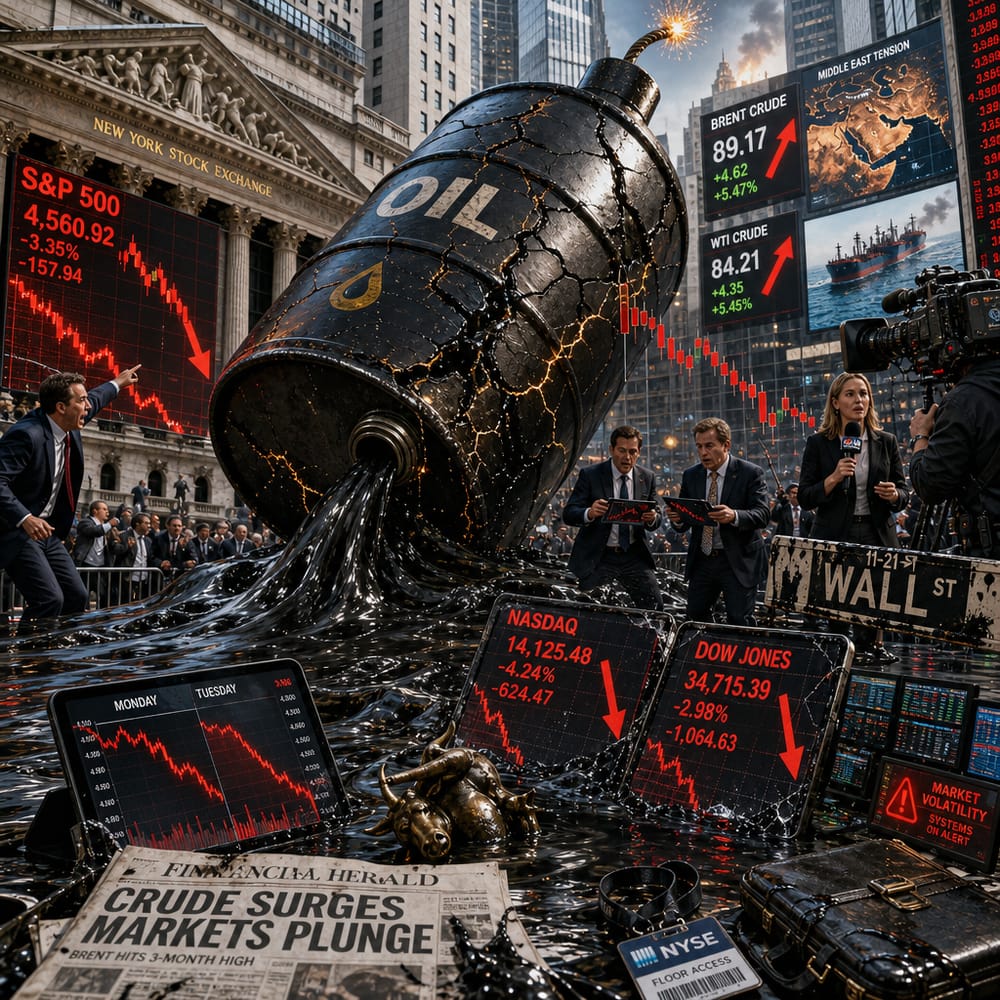
When oil prices rise, they don't tiptoe in quietly — they swagger in, waving their arms and demanding attention. This week, their entrance couldn't have been more dramatic. With oil prices surging and geopolitical tensions heating up in the Middle East like a barbecue grill, the results were sizzling — and not in a good way. The market took a nosedive, leaving investors clutching their portfolios with sweaty palms.
It's no secret that oil prices can send ripples across the financial markets, but when they're coupled with geopolitical drama, those ripples turn into tidal waves. Monday and Tuesday felt like a stock market rollercoaster, with the S&P 500, Nasdaq, and the Dow taking significant hits. But beyond the surface-level chaos, what does this mean for the sectors hit hardest by these shocks?
LET'S TALK SECTOR SHOCKS
When oil prices spike, the knee-jerk reaction is to think about energy stocks. And sure, oil companies are likely dancing in the rain of rising revenues. But the real story stretches beyond the energy sector. The biggest hit is on companies that rely heavily on oil — think transportation and airlines. When the cost of fuel goes up, so do the operational costs for these businesses, and that usually means a dent in profits. Add the retail sector to that list, as higher oil prices often lead to increased shipping costs, which can eat away at margins like a hungry caterpillar.
On the flip side, sectors like utilities tend to fare better in these scenarios. When everyone else is panicking, utilities — with their stable demand regardless of economic swings — start to look like the proverbial rock in a stormy sea.
GEOPOLITICS: THE WILD CARD
Then we have the geopolitical tensions that are as predictable as a catnip-fueled kitten. When things get shaky on the global stage, investor sentiment takes a hit faster than you can say "volatility." The Middle East, a hotbed for oil production, acts as the arena for many of these geopolitical dramas. Any potential disruption in oil supply sends shivers down investors' spines, triggering a flight to safety.
Investors start to play defense, pivoting from riskier stocks to more stable assets like government bonds or those warm, fuzzy utility stocks. This rotation can often result in significant short-term market declines as portfolios are reshuffled and positions are hedged.
THE BIG PICTURE
So, what does this mean for you, the everyday retail investor? It's a reminder that markets aren't isolated from the big, bad world out there. Energy price shocks and global political unrest underscore the vulnerabilities in market structures, acting as a reality check for investor sentiment.
This isn't to suggest you should start stuffing your mattress with cash. Instead, consider how volatility might impact your portfolio. It might be time to reassess your positions, ensuring they align with your risk tolerance and long-term goals.
While the short-term may feel like a turbulent ride, remember — markets have weathered these storms before. Keeping a level head and a diversified portfolio can be your best allies.
THE ROAD AHEAD
As we move forward, keep an eye on how these elements shake out. Oil prices and geopolitical tensions are variables in the complex equation that is global finance. Investors worldwide will be watching closely, and you should too. It's the savvy investor who is aware of these dynamics and adjusts their strategies accordingly.
In the meantime, keep your eyes peeled and your wits about you. The market is a dynamic beast, and understanding the interplay of its many components is key. Just remember, when the oil price rollercoaster dips and dives, you don't have to scream your lungs out — you just need to hold on tight and enjoy the ride.
This article is for informational purposes only and is not investment advice. Always do your own research or consult a licensed financial professional before making investment decisions.
© Copyright 2024. All Rights Reserved.
© Copyright 2024. All Rights Reserved.