

Oil-Driven Inflation Pressures and Strait of Hormuz Risk Factor
Sunday, August 16, 2026
OIL-DRIVEN INFLATION AND THE STRAIT OF HORMUZ: WHAT YOU NEED TO KNOW
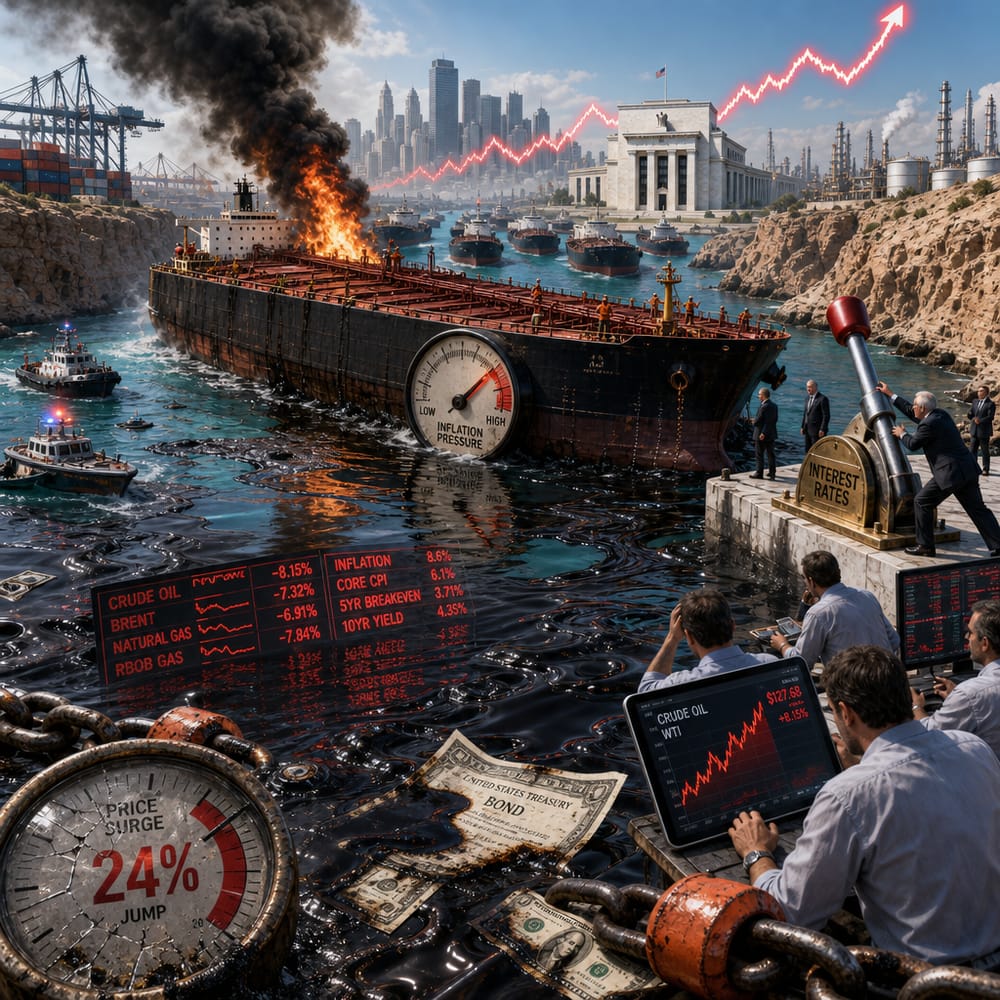
Imagine waking up to find your morning coffee priced like liquid gold. That's the kind of reality persistent energy inflation could bring. As energy prices soar 24% year-over-year, mostly because of disruptions in the Strait of Hormuz, it's time to pay attention to what might feel like a distant geopolitical squabble. Spoiler alert: it’s not.
Energy inflation has been making more noise than a heavy metal concert, catching everyone’s attention, especially the Federal Reserve's. While other inflation indicators are cooling off, energy prices just won't quit. And why should they? The Strait of Hormuz is like the world’s narrowest bottleneck, with 20% of global oil and natural gas passing through it. But lately, it's been more like a clogged drain.
So, why should you care? Because these price hikes have a trickle-down effect, hitting your wallet somewhere between “ouch” and “what just happened?”. If energy inflation stays hot, it may mess with the Fed's plans like an uninvited guest crashing a party. It’s kind of like this: The Fed's trying to tame inflation, but if energy prices misbehave, they could be forced into interest rate hikes or other aggressive tactics. Either way, your savings and mortgage rate might not thank you.
WHAT'S THE DEAL WITH THE STRAIT OF HORMUZ?
Now, let’s zoom into the Strait of Hormuz. This place isn’t just any ordinary piece of water; it’s the heavyweight champion of the oil world. When the region’s political scene resembles a soap opera plot — full of twists, turns, and drama — shipping lanes begin to suffer. Recently, this vital passage saw a sharp decline in traffic owing to skirmishes between the US, Iran, and several other players who have made chess out of real-world geopolitics.
Any disruptions in this area don’t just tick off Middle Eastern countries but send ripples through global markets. Add to this the fact that sorting out these geopolitical disputes can make untangling holiday lights look easy. This monthslong kerfuffle means less oil exiting the region, driving prices skyward like a SpaceX launch.
FEDERAL RESERVE: WHAT'S THE NEXT MOVE?
So, what’s on the Fed's mind? Picture them as a tightrope walker trying to balance inflation control and economic growth. Persistent energy inflation is like a sudden gust of wind threatening to throw them off-kilter. As energy prices rise, the cost of everything from transportation to manufacturing climbs too. That makes it harder for the Fed to maintain its balance.
Here's the kicker: the Fed's traditional tools, like adjusting interest rates, might not be enough unless energy prices come back down to Earth. If energy costs don’t ease, the Fed might have to pull rabbits out of hats we didn’t even know existed. They're already under pressure to ensure that inflation doesn’t spiral out of control, placing them in a tricky spot.
THE REALITY CHECK FOR RETAIL INVESTORS
What does all this mean for you, the everyday retail investor? It’s time to keep an eye on energy stocks and commodities. If you're already invested, that’s one thing, but for those considering dipping their toes, remember: market timing is tricky. With the energy sector being so volatile, making a move based on gut feeling is riskier than going all-in on a poker game with no aces.
A potential hedge against the current situation is diversifying your portfolio to include assets less sensitive to energy price spikes. As prices fluctuate, those less reliant on energy costs might offer some stability. It’s about playing the long game and not getting too rattled by short-term market noise.
BOTTOM LINE
Geopolitical risks like those in the Strait of Hormuz can feel worlds away, but they have a way of bringing consequences right to our doorstep. With the Fed in a tough spot, energy inflation is more than just a number; it’s a real and present factor that could affect everything from interest rates to the cost of living.
As the world's gaze remains on these energy price fluctuations, so should yours. Whether it’s the gas station down the street or the markets, the next chapters in this story are bound to influence what’s in your wallet. So, the question remains: are you ready to navigate the tide?
This article is for informational purposes only and is not investment advice. Always do your own research or consult a licensed financial professional before making investment decisions.
© Copyright 2024. All Rights Reserved.
© Copyright 2024. All Rights Reserved.