

Oil-Driven Inflation Fears Weigh on Equities and Yields
Wednesday, August 19, 2026
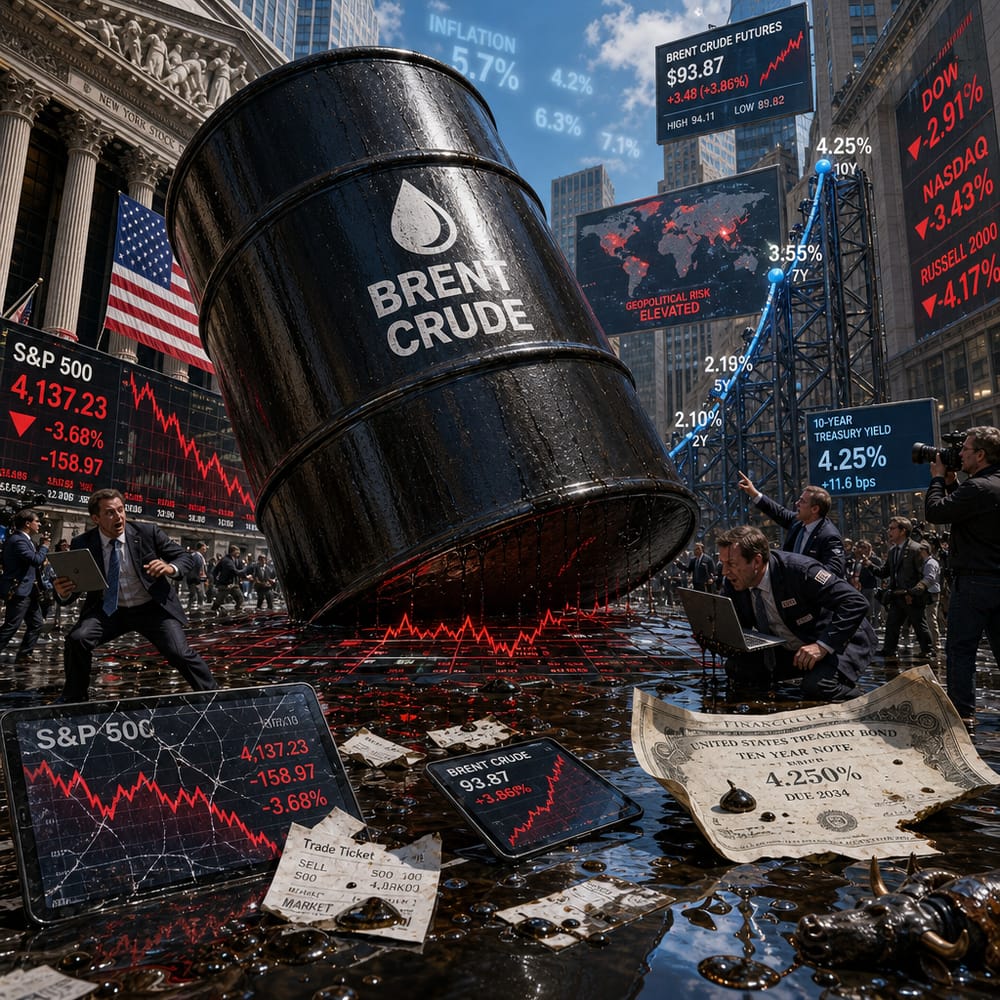
OIL-DRIVEN INFLATION FEARS WEIGH ON EQUITIES AND YIELDS
The price of oil is like a mischievous trickster, always up to its old antics of playing havoc with your 401(k). Just when you thought inflation was cooling, Brent crude decided to shoot up faster than a SpaceX rocket launch, thanks to geopolitical tensions that could make even the most seasoned diplomats break into a sweat. With transit restrictions through the Strait of Hormuz, the lifeline for a significant chunk of the world's oil, traders are jittery, and so are investors watching their portfolios nervously.
When oil prices start to climb, it doesn't just impact your gas bill. It's like tossing a boulder into a pond—the ripples spread far and wide. First up, inflation expectations: they get a serious jolt. Rising oil prices can drive up transportation and production costs, which in turn make everything from your morning coffee to your new smartphone pricier. And when prices rise, everybody starts looking at the Federal Reserve with the same intensity as a cat watching a goldfish bowl. Will the Fed raise rates? Lower them? Do a little dance?
Ah, the Fed. It’s the maestro conducting the economic orchestra, and right now, it’s facing the tricky task of keeping inflation under control without sending the economy into a tailspin. With oil prices threatening to push inflation back up, the Fed might have to reconsider its plans. Normally, higher oil prices could prompt the Fed to be more hawkish—in plain English, that means raising interest rates to cool down spending. But if consumers are already feeling pinched, the Fed has to tread carefully, or it risks slowing the economy too much.
Here's how this drama plays out on the stock market stage. Treasury yields, which move in the opposite direction of bond prices, have been climbing like a determined mountaineer. Elevated oil prices and inflation fears tend to drive yields up as bonds become less attractive, which is what we're seeing now. But fear not, the Treasury Department is stepping in to stabilize the bond market by doubling its debt buybacks. It's like trying to calm a skittish horse — it might work in the short term, but long-term effects? That’s anyone’s guess.
Now, imagine you’re an equity market investor. With yields on the rise, stocks start to look a bit less shiny. Higher yields can make fixed-income investments, like bonds, more appealing compared to riskier assets like stocks. As a result, equity markets could feel the squeeze, especially high-growth sectors that thrive on cheaper borrowing costs. The S&P 500 and other benchmarks could wobble as investors weigh their options. It’s the age-old seesaw: when one side goes up, the other comes down.
So, what about the future? If oil prices continue their upward trajectory, it could keep inflation expectations high, which would likely lead the Fed to either maintain or raise rates, despite the risk of slowing down economic growth. Equity markets might have to brace themselves for more volatility, with sectors closely linked to consumer spending and transportation feeling the heat. Think airlines, logistics, and any business that relies heavily on fuel.
In this interconnected web of economics, markets, and geopolitics, every action has a reaction. The price of oil is just one part of a complex puzzle that includes everything from central bank policies to global trade dynamics. As retail investors, staying informed and being flexible with your investment strategy is key. Keep an eye on the headlines and be ready to adjust your portfolio as the stories unfold—because in this wild ride of a market, flexibility is your best friend.
Oil prices may be unpredictable, but the savvy investor knows that with every market dip and spike comes an opportunity. So buckle up and stay sharp, because navigating this financial landscape is all about finding balance amid the chaos.
This article is for informational purposes only and is not investment advice. Always do your own research or consult a licensed financial professional before making investment decisions.
© Copyright 2024. All Rights Reserved.
© Copyright 2024. All Rights Reserved.