

Oil & Bond-Driven Market Pullback
Friday, August 21, 2026
OIL, BONDS, AND THE CASE OF THE WOBBLY STOCK MARKET
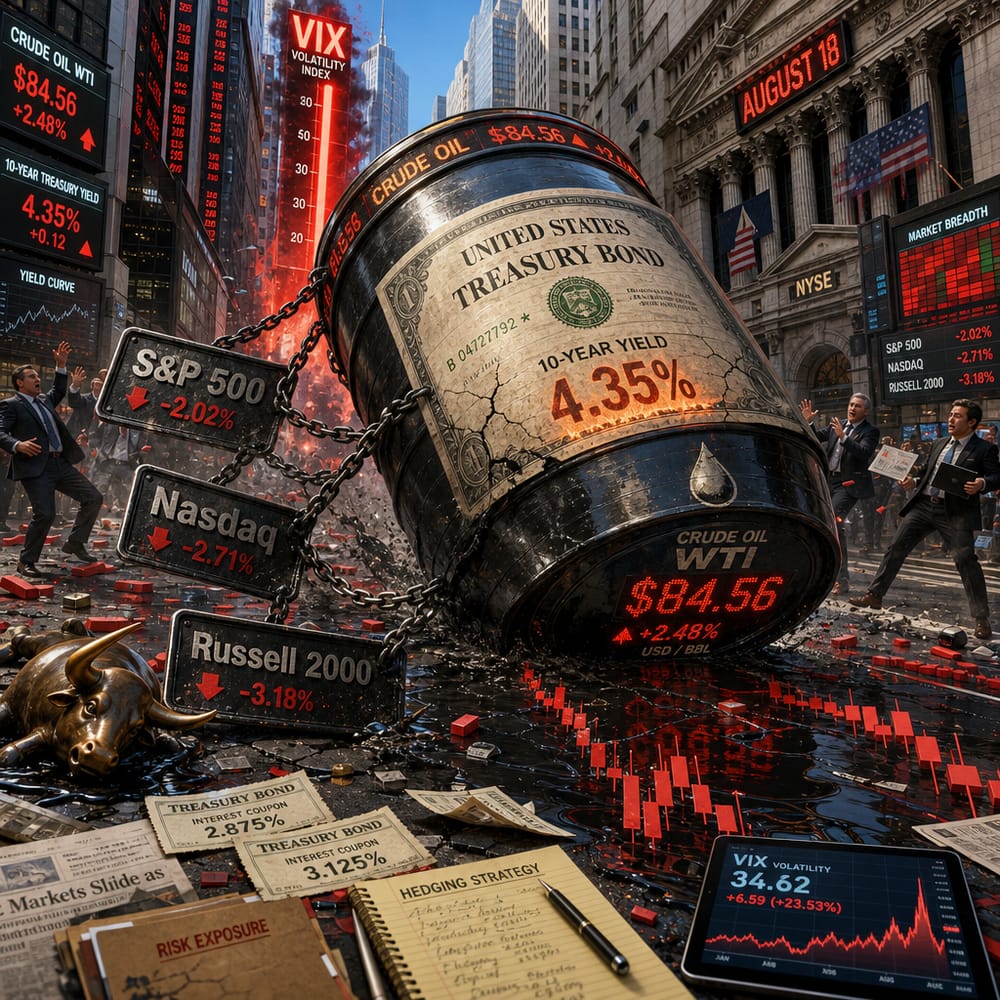
Hold onto your hats, folks! If you thought the only drama this summer was in your favorite TV series, let me introduce you to the rollercoaster world of stocks, where oil prices and bond yields have been stirring up a scene worthy of primetime viewing. On August 18, the stock market took a nosedive, leaving investors clutching their smartphones anxiously. The S&P 500, Nasdaq, and the Russell 2000 all experienced declines, and for once, it wasn't just about the latest tech IPO or a celebrity CEO tweet.
BACKGROUND: OIL, THE SLIPPERY CULPRIT
First up, oil prices have been climbing like a stubborn cat fixated on a high shelf, thanks in part to increased geopolitical tensions and U.S. military aid in transporting barrels through strategic choke points like the Strait of Hormuz. With global demand not exactly taking a nap, higher oil prices translate into increased costs for companies across the board—think of it as a sneaky tax on everything from manufacturing to shipping.
Sectors like airlines and transportation, which guzzle oil like they're perpetually on a summer road trip, are hit the hardest. The pinch from higher fuel costs can cramp their profit margins, leading to investor jitters. Meanwhile, energy companies might be grinning from ear to ear, basking in the light of higher revenues. But don’t be too quick to envy—there’s more than enough drama to go around.
BOND YIELDS: THE SILENT SCREAM
Then there's the bond market. Rising bond yields, especially on long-term government securities, are akin to the silent scream in a horror movie. They signal higher borrowing costs. For tech stocks, which rely on cheap capital to fuel their innovation binge, this is a particularly bitter pill. Investors tend to abandon ship, favoring bonds over the riskier pasture of equities, causing prices to sink.
The tech-heavy Nasdaq felt the squeeze as higher yields prompted investors to reassess their risk appetite. The sector that gave us streaming, social media, and smarter phones is now nervously eyeing its balance sheets, knowing that higher borrowing costs could stifle its growth ambitions.
ENTER THE VIX: YOUR MARKET THERMOMETER
If you're into measuring the collective mood of investors, the VIX, aka the "Fear Index," is your go-to gadget. On our notable August day, the VIX shot up to its highest level in two weeks, revealing investor anxiety more clearly than a cat meme on the internet. When the VIX rises, it’s a stark reminder that uncertainty is the name of the game.
The interplay between oil prices and bond yields is a classic example of how macroeconomic forces can send ripples through the stock market, leaving us all to wonder if our financial decisions are as solid as we hope. Whether we’re cheering for a recovery or bracing for more volatility, the market’s recent moves underscore one thing: economic factors are more intertwined than headphones in your pocket.
KEEPING IT REAL
So, what’s next? Should you pack up your investment portfolio and head for the hills? Not quite. While the short-term picture might be fuzzier than a late-night infomercial, the long-term fundamentals haven’t necessarily changed. The key is to stay diversified, keep an eye on macroeconomic indicators, and perhaps ask yourself whether that hot stock tip is worth the stress of a sleepless night.
In the ever-evolving saga of Wall Street, oil and bonds are just the latest characters to steal the stage. Investors need to buckle up and keep watching, because if history teaches us anything, it’s that the next plot twist is just around the corner. From crude oil to treasury yields and beyond, the market narrative will evolve — and with it, opportunities and challenges that demand our attention. So, stay curious and keep your investment strategies as dynamic as the market itself.
This article is for informational purposes only and is not investment advice. Always do your own research or consult a licensed financial professional before making investment decisions.
© Copyright 2024. All Rights Reserved.
© Copyright 2024. All Rights Reserved.