

OFAC Sanctions Targeting Iranian Crypto Platforms: Shelbit and Aban Tether Hit
Thursday, August 20, 2026
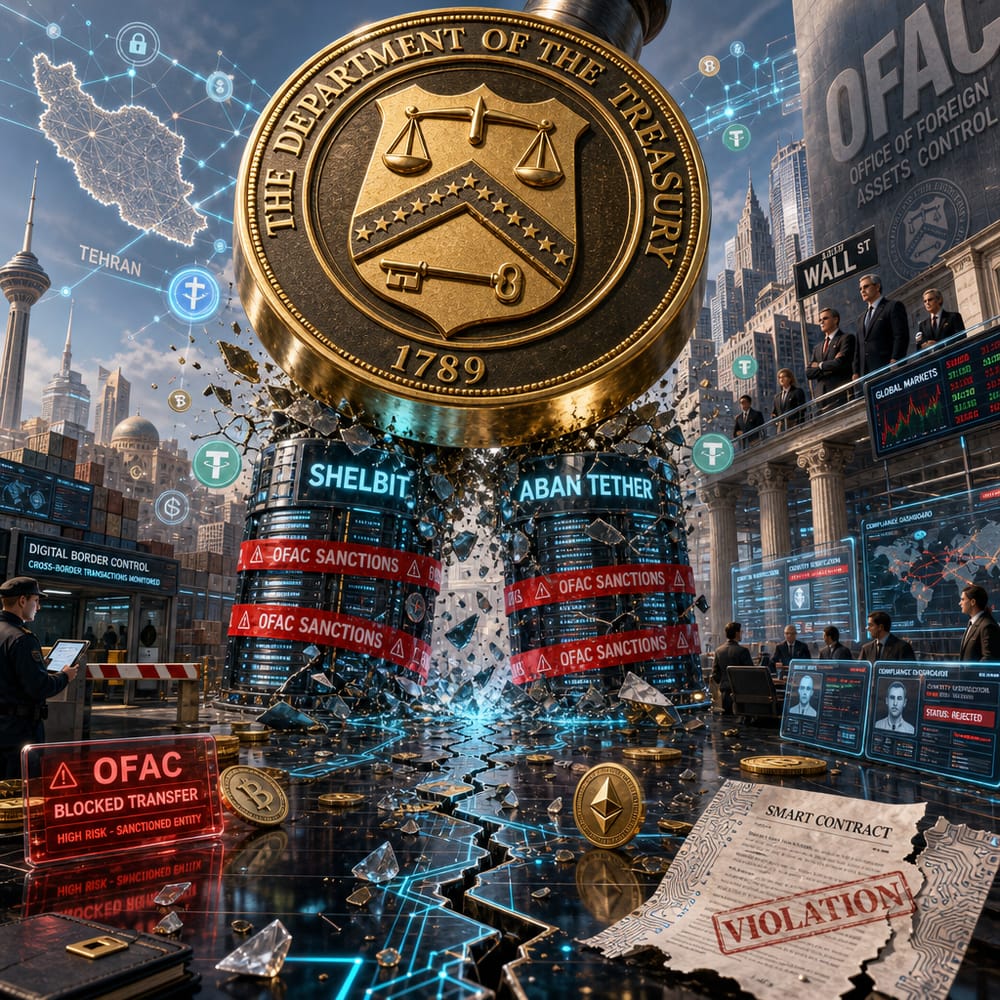
OFAC SANCTIONS TARGETING IRANIAN CRYPTO PLATFORMS: SHELBIT AND ABAN TETHER HIT
Prepare your crypto wallets, folks, because the U.S. Treasury's Office of Foreign Assets Control (OFAC) is shaking up the digital currency world — and it's not pulling any punches. In its latest round of geopolitical chess moves, the Treasury slapped sanctions on two Iranian crypto platforms, Shelbit and Aban Tether, sending ripples across the financial landscape.
Now, if you're wondering why Uncle Sam has a bone to pick with a couple of crypto exchanges halfway around the world, here's the scoop. These sanctions are part of a broader campaign dubbed "Economic Fury," a not-so-subtle attempt to choke off what the U.S. sees as cash flow for Iran's less-than-savory activities. Think of it as America's way of saying, "Hey, we see you, and we're not fans."
But why should you care about sanctions that seem to be part of a foreign policy thriller? Because the aftershocks of this move could hit closer to home than you think, especially if you're dabbling in the crypto market.
For starters, these sanctions underscore the geopolitical messiness that's part and parcel of the booming crypto sector. What happens on the international stage doesn't stay there; it trickles into global markets, impacting the assets parked in your digital wallets. Cryptos thrive on freedom and anonymity, but when countries start flexing their regulatory muscles, the ripple effects can be unpredictable and, for some investors, unsettling.
The immediate impact? Well, it's like a pressure valve just got tightened. Investors are now nervously eyeing how these sanctions will influence Iran’s ability to circumvent traditional financial systems. The crypto platforms targeted are vital cogs in the machinery Iran uses to keep its international trade up and running amidst sanctions. With that under threat, there's a real risk that the global flow of digital currencies might experience some turbulence.
But there's more at play here. This is not just about Iran or crypto platforms facing the heat. It's about the broader narrative of how nations wield control over digital currencies. The U.S. has long expressed its skepticism over the crypto free-for-all, and these sanctions are another chapter in a saga that's far from over.
This leads us to the big, looming question: What does this mean for the global crypto market? If history is any guide, sanctions can create volatility. They can push countries and entities to find new ways to operate, sometimes leading to innovation but also opening the doors to more gray-market dealings. For investors, this means keeping an eagle eye on both crypto regulations and geopolitical developments becomes even more crucial.
So how does this fit into the grand tapestry of global financial regulation? It's part of a larger wave of regulatory scrutiny that's been gathering momentum across the globe. Governments and financial watchdogs are increasingly wary of the unchecked power and reach of digital currencies. The stakes are high, as regulators grapple with the fine line between fostering innovation and protecting financial stability.
The sanctions against Shelbit and Aban Tether are a reminder that the world of crypto isn’t the Wild West it once was. It’s now a terrain where law and order are slowly but surely being imposed, whether the crypto purists like it or not. As this story unfolds, investors might do well to buckle up and follow the developments closely, ready to adjust their sails to the changing winds of regulatory policies and geopolitical tensions.
In the end, the clash between the promise of crypto and the power of regulatory oversight is a dance that's only beginning. Keep your eyes peeled and your portfolios diversified, because in this high-stakes arena, fortunes could be won or lost at the drop of a sanction.
This article is for informational purposes only and is not investment advice. Always do your own research or consult a licensed financial professional before making investment decisions.
© Copyright 2024. All Rights Reserved.
© Copyright 2024. All Rights Reserved.