

October PCE Shows Inflation Still Too Hot; November Nowcasts Point Up
Friday, November 27, 2026
OCTOBER PCE SHOWS INFLATION STILL TOO HOT; NOVEMBER NOWCASTS POINT UP
Think inflation is a ghost of the past? Think again. The October PCE price index is here to remind us that inflation is sticking around like that guest who won't leave the party. And November's whispers say it's not cooling off anytime soon. What does this mean for us mere mortals and the Federal Reserve, the wizards behind the curtain of our financial lives?
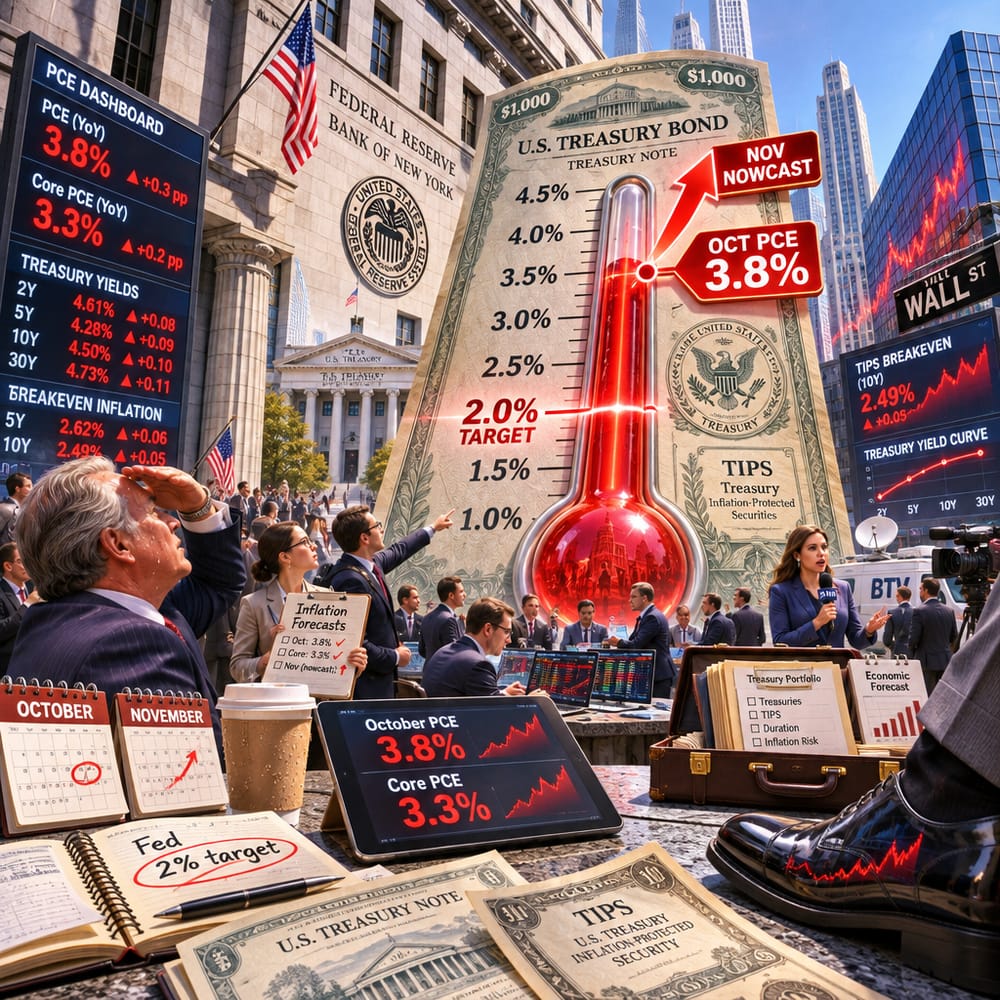
In case you missed it while bemoaning the cost of your Thanksgiving turkey, October's Personal Consumption Expenditures (PCE) price index showed a 3.8% year-over-year increase. The core PCE, which ignores the volatile duo—food and energy—loitered at 3.3%. All of this is well above the Federal Reserve's sweet spot of 2% inflation. And if you're betting on November to bring better news, the nowcasts, those financial crystal balls, suggest the heat is still on.
SO, WHAT'S THE FED'S NEXT MOVE?
The Federal Reserve has been playing a high-stakes game of "Whack-a-Mole" with inflation for a while now. Their tool of choice? Interest rates. Now, with inflation refusing to take a holiday, the Fed might feel compelled to keep those rates elevated for a longer period, or even give them another uptick. The reasoning is straightforward: higher interest rates tend to curb spending and borrowing, cooling down the economy and, in theory, inflation.
But here's the kicker: raising rates too aggressively could throw the economy into a stall, leading to a recession. It's a delicate balancing act. The Fed is essentially trying to land a jumbo jet on a balance beam. Is interest rate pain in the cards for 2026? It's possible. Stay tuned as the Fed continues its tightrope walk.
THE MARKET RIPPLE: BONDS AND BEYOND
Persistent inflation isn't just a headache for the Fed. It's also got bond markets on edge. You see, bond prices and yields are like that couple who can never agree on dinner plans—when one goes up, the other goes down. Higher inflation expectations tend to drive yields up because investors demand more return to offset higher inflation. As yields rise, bond prices fall, sending bond investors reaching for the Advil.
What does this mean for you, the savvy retail investor? Well, if you're holding long-term U.S. Treasury bonds, you might be feeling the squeeze. On the flip side, inflation-linked securities, which adjust for inflation, could become the belle of the ball. They offer a way to hedge against this persistent inflation chatter without missing out on the bond market entirely.
A GLANCE AT THE STOCK MARKET
While bonds play their game, the stock market's been throwing its own party, with the Dow and Nasdaq flexing some serious muscle. The tech sector, led by names like Nvidia and Meta, has been on a tear, seemingly unfazed by the inflation fireworks. But don't get too comfy. The market can be volatile as a toddler at a candy store, especially with concerns over AI spending and lofty tech valuations simmering in the background.
For investors, this means keeping a diversified portfolio is more critical than ever. Don’t let FOMO lure you into an over-concentration in tech stocks just because they’re the darlings of the moment. Spread your bets, play the field.
WHAT SHOULD RETAIL INVESTORS DO?
So, how should you navigate this inflation-laden landscape? First, don't panic. Inflation isn't the monster under the bed. It's more like a leaky faucet that can be fixed with the right tools. Consider inflation-linked securities to protect your portfolio. Keep an eye on the Fed's next chess moves and be ready to adapt. And of course, ensure your portfolio isn't over-dependent on any one sector. Diversification isn't just a buzzword; it's your safety net.
In a world where new car prices are soaring, and durable goods aren't as durable, making smart, informed financial decisions is your best hedge against the uncertainty inflation can bring.
In the end, persistent inflation means we're in for an interesting ride. Buckle up, stay informed, and remember: when it comes to your money, you're in the driver's seat.
This article is for informational purposes only and is not investment advice. Always do your own research or consult a licensed financial professional before making investment decisions.
© Copyright 2024. All Rights Reserved.
© Copyright 2024. All Rights Reserved.