

October PCE Inflation Nowcasts Indicate Persistent Price Pressures
Sunday, November 22, 2026
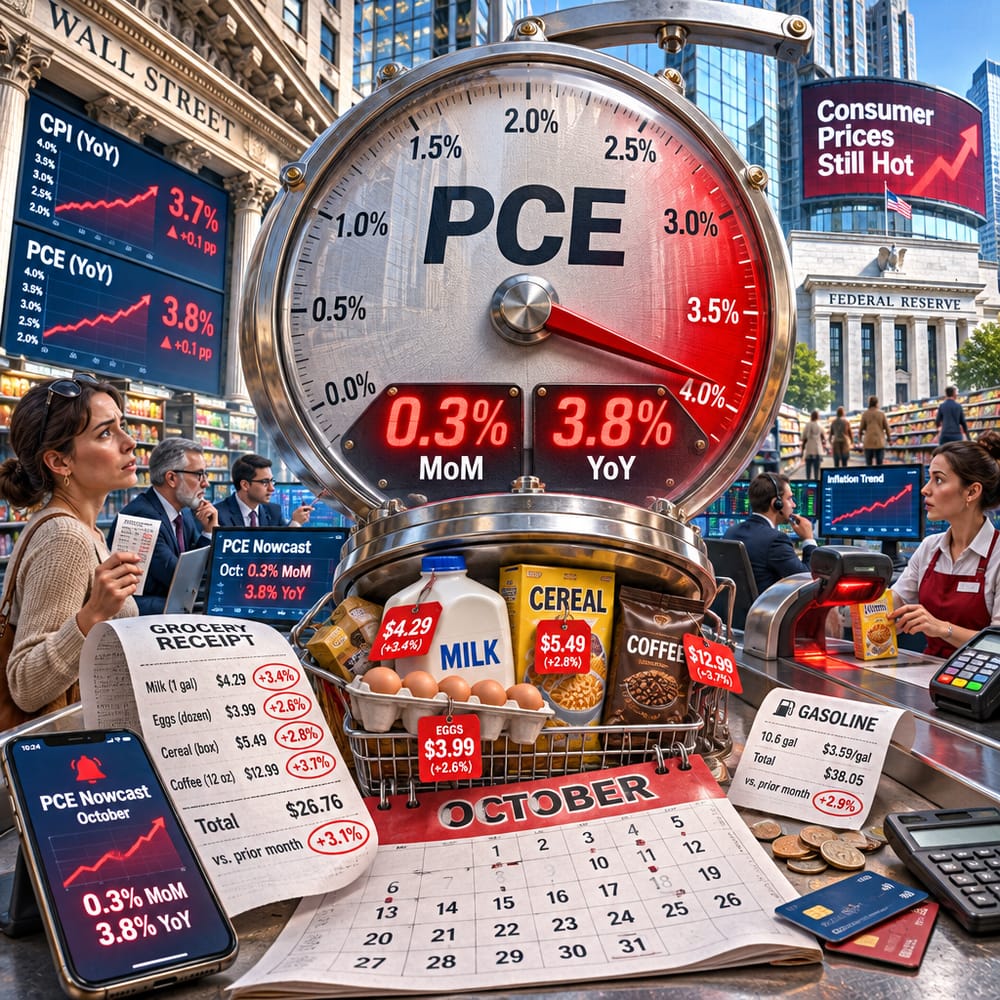
OCTOBER PCE INFLATION NOWCASTS INDICATE PERSISTENT PRICE PRESSURES
Hold onto your wallets, folks! Inflation, that sneaky thief of purchasing power, seems to be sticking around longer than an unwelcome houseguest. October’s Personal Consumption Expenditures (PCE) inflation forecasts are flashing a stubborn 0.3% rise month-over-month and a hefty 3.8% on a year-over-year basis. You might be tempted to dismiss these numbers as just more stats, but they hold the potential to tweak Fed policy and your stock portfolio in ways you can't ignore.
THE FED'S INFLATION DILEMMA
The Federal Reserve must be feeling a bit like a tightrope walker in a high wind, trying to balance economic growth against the fight against inflation. Persistent inflationary pressures make it tough for the Fed to ease its current aggressive stance. If inflation continues to simmer at these levels, don’t be surprised if the Fed keeps its rate-hiking boots on for longer than anticipated. This could mean higher borrowing costs for everything from your mortgage to your favorite startup's next big expansion.
MARKET REACTIONS: BUCKLE UP!
The markets are like a soap opera with plot twists that keep investors on the edge of their seats. October’s PCE data could very well be the next unexpected shocker. Persistent inflation tends to generate unease, and when investors are uneasy, the stock market feels it. A higher-than-expected inflation reading might lead to a sell-off in rate-sensitive sectors, like tech or real estate, as investors anticipate more rate hikes.
On the flip side, if the inflation news is less dire than predicted, we might see a rally. Market bulls have been waiting for signs that the Fed could ease off the gas pedal, and less scary inflation data could be just what they need to charge ahead.
SECTOR WINNERS AND LOSERS
Not all sectors are created equal when inflation is on the rise. Wondering who will feel the pinch the most? Your favorite consumer staples—the companies that bring you the groceries and toiletries you can’t live without—might find themselves caught between rising costs and consumers hesitant to bear higher prices. However, these companies often have some pricing power, meaning they can pass on costs without losing too much business.
Energy and commodities sectors could also see a boost. Rising prices might fatten their margins, especially if they coincide with supply constraints. However, these sectors can be volatile and depend heavily on geopolitical stability and production levels.
IT'S NOT ALL DOOM AND GLOOM
While persistent inflation is like an itch that won't go away, it’s not all bad news. Some sectors thrive when prices are on the rise. For example, financial services often benefit because higher interest rates mean more profit from lending. And if those rate hikes slow down economic growth just a smidge, it might cool off other issues like labor shortages or soaring asset prices.
WHAT YOU CAN DO
As an investor, how do you navigate this inflation-laden landscape? Diversification is your ally. Spread your investments across various asset classes to hedge against inflation’s unpredictable nature. Keep an eye on sectors that benefit from inflation, and don't panic-sell at the first sign of market jitters.
The inflation game is tricky, and October's PCE numbers are just the latest chapter. Whether the Fed will tighten its grip further or ease up is still in the air. But one thing's for sure: in this financial thriller, you'd better buckle up and stay informed, because the only constant is change.
This article is for informational purposes only and is not investment advice. Always do your own research or consult a licensed financial professional before making investment decisions.
© Copyright 2024. All Rights Reserved.
© Copyright 2024. All Rights Reserved.