

October PCE Inflation & Core Stubbornness — Fed’s December Decision in Focus
Thursday, November 26, 2026
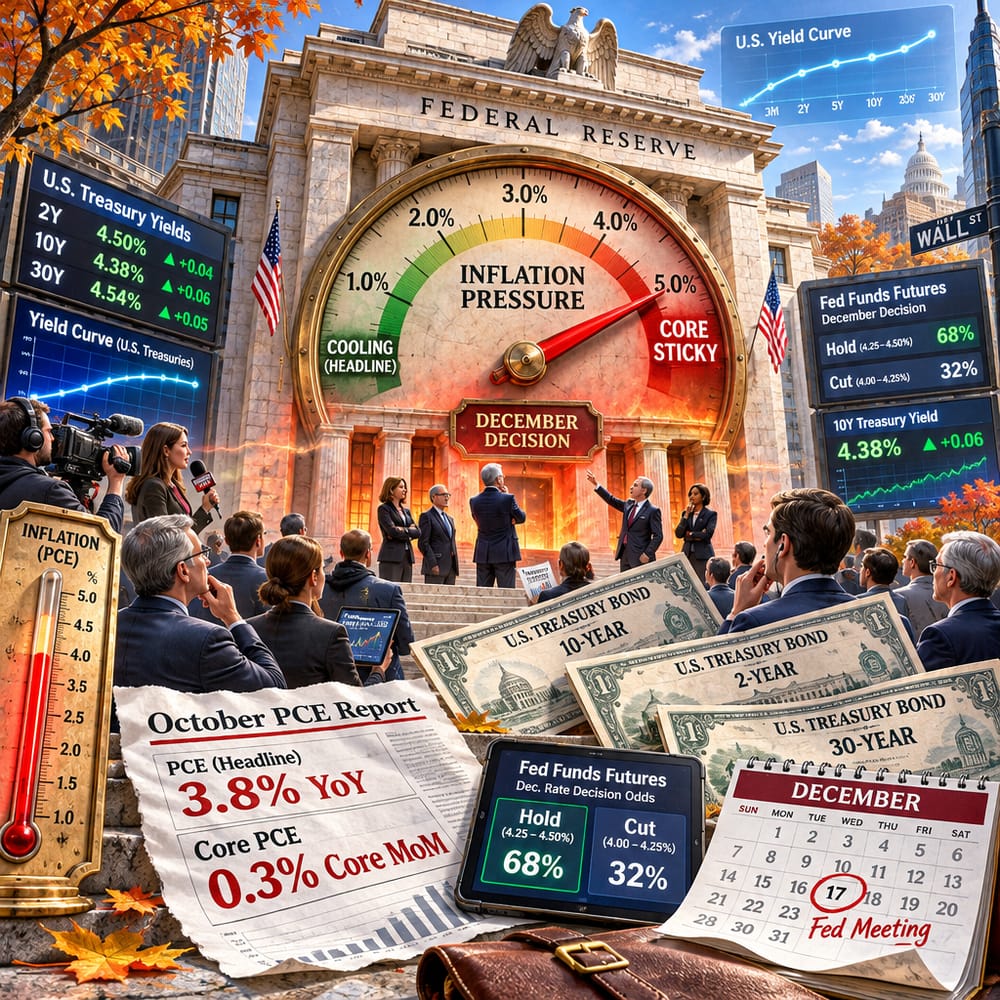
OCTOBER PCE INFLATION & CORE STUBBORNNESS — FED'S DECEMBER DECISION IN FOCUS
Grab your popcorn, folks. The Federal Reserve’s December meeting is shaping up to be the must-watch drama of the financial season. The latest inflation data just dropped, and it’s throwing more twists than a daytime soap. The Personal Consumption Expenditures (PCE) price index — the Fed’s favorite inflation barometer — showed year-over-year inflation ticking in at a spicy 3.8% for October. But here’s the kicker: core PCE, which strips out the volatile costs of food and energy, rose 0.3% month-over-month. Yep, inflation is still playing hard to get.
This persistent inflation is like that one stubborn character in a movie who refuses to leave town and let the plot resolve. And just like in those movies, this could mean trouble is brewing for potential interest rate hikes. If inflation keeps lurking around, the Fed might be tempted to reach for its trusty, albeit dreaded, tool: increasing interest rates. And we all know what that means — borrowing costs could shoot up faster than a meme stock on a social media frenzy.
SO, WHAT'S DRIVING THIS PERSISTENT INFLATION?
Imagine inflation as a stew simmering on the stove. The main ingredients? Factors like ongoing supply chain disruptions, labor market tightness, and global energy prices. Supply chains still haven’t fully untangled themselves, leading to bottlenecks that drive up costs. Meanwhile, a tight labor market is giving workers leverage to demand higher wages, which businesses often pass on as higher prices. And let's not forget the wild ride of energy prices recently. Despite some moderation, they're still adding heat to the inflation stew.
THE FED’S ROCK AND A HARD PLACE
So, will the Fed raise rates in December? The financial crystal ball remains a bit foggy, but the odds are not zero. The Fed has been playing coy lately, hinting at its “data-dependent” approach. Translation: They’re waiting to see how the economy is holding up before making a commitment. But with inflation not cooling as fast as some would hope, the Fed might feel pressured to act.
Higher rates could be a double-edged sword. On one hand, cooling off the economy to tame inflation sounds like a prudent plan. On the other, it could slow down economic growth faster than you can say “recession.” The Fed’s job is like walking a tightrope, except the safety net is made of anxious investors and nervous borrowers.
WHAT DOES THIS MEAN FOR CONSUMER BORROWING?
If the Fed goes ahead with a rate hike, borrowing costs for consumers could climb like Everest during peak season. Mortgage rates might inch their way up, making homebuying a tad less affordable. Credit card rates? They could rise too, potentially leading to higher monthly payments. If you’ve been eyeing that new car or a home renovation project, it might be time to lock in a loan before any rate changes kick in.
And let’s not forget about good old U.S. Treasury bonds. Higher interest rates generally mean better yields, which can be attractive for investors looking to park their money somewhere safe. But here's the twist — this could also make equities less appealing in comparison, leading to a potential shake-up in stock market dynamics.
THE WAITING GAME
As December approaches, all eyes will be on the Fed’s next move like a climactic scene in a thriller. Will they wield the rate hike hammer, or will they decide to sit tight and let more data roll in? Either way, smart investors should keep their ears to the ground and their strategies flexible. This isn’t the time to be caught off-guard by sudden plot twists.
In the meantime, prepare for some serious Fed-watching, and keep your financial plans as nimble as a cat on a hot tin roof. December’s decision could set the stage for what 2027 has in store for rates, borrowing, and beyond. Stay tuned, stay savvy, and maybe keep that popcorn handy — the show is just getting started.
This article is for informational purposes only and is not investment advice. Always do your own research or consult a licensed financial professional before making investment decisions.
© Copyright 2024. All Rights Reserved.
© Copyright 2024. All Rights Reserved.