

October PCE Inflation Accelerates to 3.8%—Reinforces Fed Rate Hike Odds for December
Friday, November 27, 2026
OCTOBER PCE INFLATION ACCELERATES TO 3.8%—REINFORCES FED RATE HIKE ODDS FOR DECEMBER
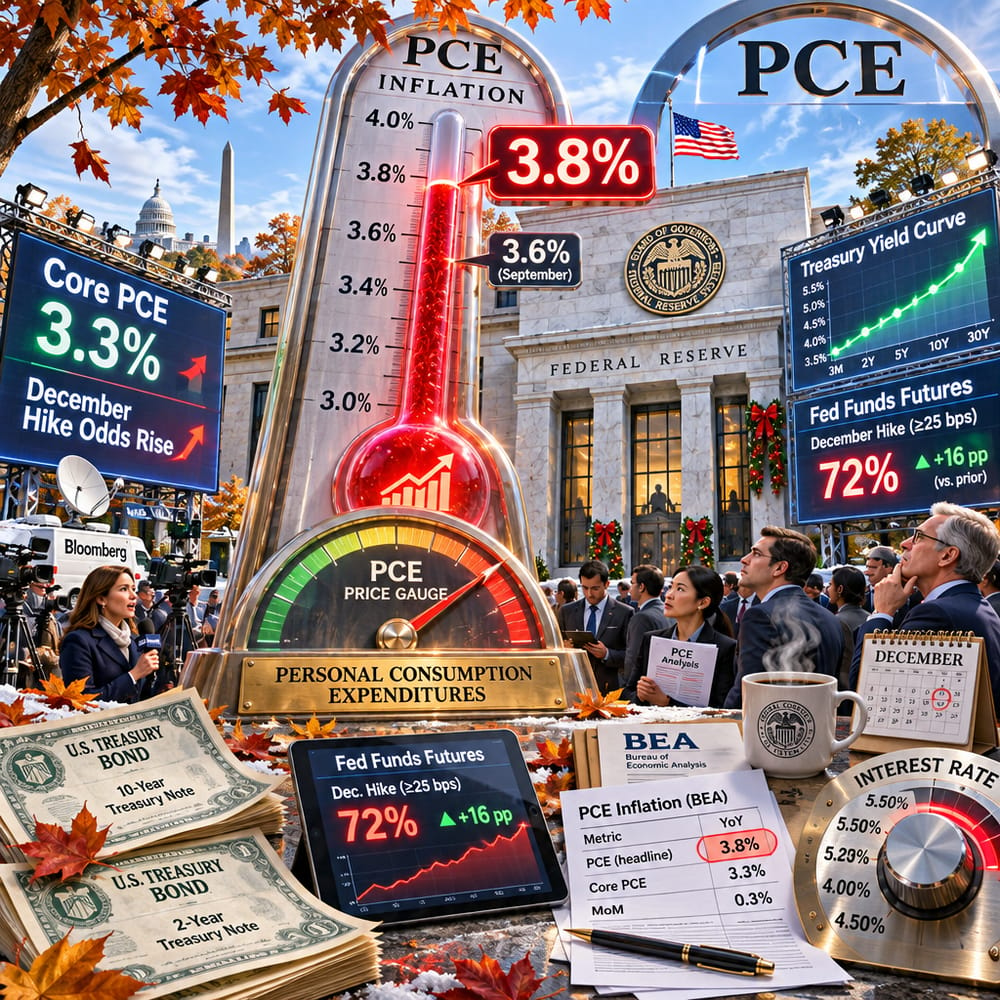
If you've been hoping inflation would quietly exit stage left, think again. Like a guest who overstayed their welcome, inflation is back, and it’s making its presence known. The Bureau of Economic Analysis just dropped a hot-off-the-presses report showing that headline Personal Consumption Expenditures (PCE) inflation rose 3.8% year-over-year in October. That’s up from September's 3.6%, and while a couple of percentage points might not sound like much, in the world of economics, it’s enough for the Federal Reserve to sit up and take notice.
With these numbers, the Fed’s December rate hike is looking as inevitable as your Aunt Ida’s fruitcake at Christmas. The core PCE, which excludes the volatile food and energy prices, is clocking in at 3.3%. That’s close enough to 2% to suggest the Fed isn’t ready to break out the confetti just yet. If anything, they might tighten the financial screws even further.
WHY YOU SHOULD CARE
Here's why this matters for anyone with a 401(k), mortgage, or just a piggy bank they're kind of fond of: Higher interest rates tend to make borrowing more expensive. That means those adjustable-rate mortgages could soon feel like they’re on steroids, and credit card debt? Let’s just say it won’t be shrinking any time soon. Stock markets don't exactly throw a parade for high interest rates either; they prefer the low-rate regime that’s sweeter for growth stocks. So, if you're investing, brace for some turbulence.
THE BOND MARKET'S REACTION
Now, let’s talk Treasury bonds. These little pieces of government debt advice are the go-to safe haven for investors. But as rates rise, the value of existing bonds tends to fall—basic economics 101. People want yesterday’s bonds like they want yesterday’s news. We’ve already seen U.S. Treasury yields inching up, which means investors are demanding a higher return for their cash. It’s also tightening the screws on equity valuations. So, don’t be surprised if you see some red splashes across your market tickers.
CONSUMER SPENDING WOES
And what about Main Street? High inflation is like a stealthy thief, quietly eroding your purchasing power. When everything from avocados to automobiles costs more, the average consumer has less cash to splurge on discretionary items. And discretionary spending is the secret sauce that keeps the U.S. economy ticking. So, if you see reduced foot traffic at your local mall, inflation could very well be the culprit.
WHAT'S NEXT FOR THE FED?
As for the Federal Reserve, it’s caught in a classic rock-and-a-hard-place scenario. They can’t ignore inflation, but each rate hike brings its own set of challenges, including the risk of tipping the economy into recession. December’s rate hike looks like a done deal, but the question is, what’s the playbook for 2024? The Fed will likely keep its hawkish stance until it sees inflation more convincingly making its way back to their 2% target.
The tricky part is balancing inflation without completely strangling economic growth. Fed Chair Jerome Powell and his merry band of policymakers have their work cut out for them. Already, the market is buzzing with speculation on whether they will hit the pause button on further hikes after December, or if they’ll continue tightening the screws.
THE BIGGER PICTURE
In the grand scheme of things, these inflation figures are more than just numbers on a page. They’re a snapshot of the delicate dance between consumer demand and purchasing power, interest rates, and market sentiment. Rising inflation adds fuel to the fire of rate hike expectations, which in turn sends ripples through the markets, affecting everything from bond prices to stock valuations.
So, dear reader, as you sip your morning coffee and scroll through the headlines, keep an eye on these inflation numbers. They're the canary in the coal mine signaling the Fed’s next move. And while nobody’s crystal ball is infallible, being informed can help you navigate the choppy waters of rising inflation and the Fed’s tightening grip.
In the meantime, perhaps it's best to channel your inner Zen master—stay informed, stay prepared, and keep a steady hand on the investment wheel. After all, as the markets teach us time and again, change is the only constant.
This article is for informational purposes only and is not investment advice. Always do your own research or consult a licensed financial professional before making investment decisions.
© Copyright 2024. All Rights Reserved.
© Copyright 2024. All Rights Reserved.